Establishing secure connection…Loading editor…Preparing document…

Notice of Filing Claim of Lien

This template is fully customizable. Edit the text, fill out the fields, and send it for signature. Give it a try!
Notice of Filing Claim of Lien

What the Notice of Filing Claim of Lien Is

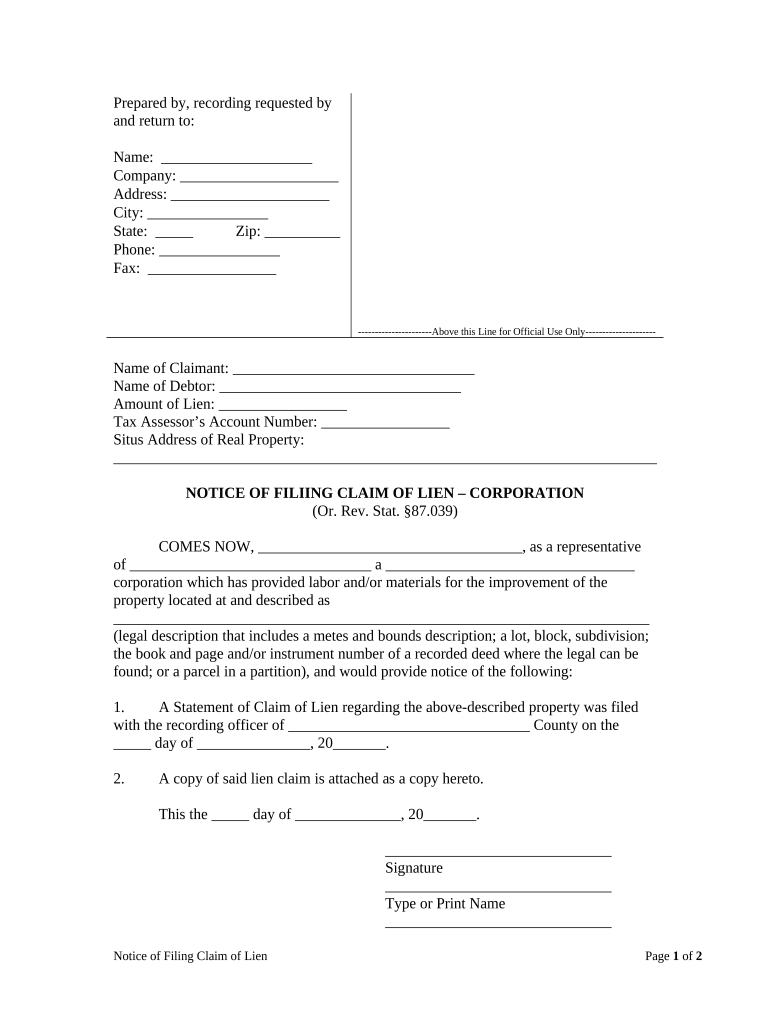
Notice of Filing Claim of Lien is a formal written notification that a claimant files a lien against real property or project assets to secure payment for labor, services, or materials provided. It informs property owners, lenders, and other stakeholders that a lien instrument has been recorded or will be recorded in a public land records office. The notice typically summarizes the claimant's identity, the amount claimed, the property description, and the filing date. It does not by itself create the lien in every jurisdiction, but functions as public notice and may affect title transfers and financing.

Why Filing This Notice Matters

A Notice of Filing Claim of Lien protects the claimant's legal rights by providing public notice, encouraging prompt payment, and preserving lien priority. It alerts lenders and buyers to potential encumbrances and can support enforcement steps if the underlying debt remains unpaid.

Why Filing This Notice Matters

Who Typically Prepares and Receives This Notice

Typical users include contractors, subcontractors, suppliers, and attorneys who need to protect payment rights on private or public projects.

  • General contractors and subcontractors filing liens for unpaid construction work on a project.
  • Material suppliers seeking payment for delivered goods who did not receive timely compensation.
  • Property owners' counsel and title companies monitoring recorded liens during transactions.

Step-by-Step: Prepare, File, and Serve the Notice

Follow these steps to complete and file a Notice of Filing Claim of Lien correctly to preserve lien rights.

  • 01
    Prepare Document: Assemble claimant info, amount, and property description.
  • 02
    Sign and Notarize: Sign in presence of notary if state requires notarization.
  • 03
    Record with County: File the instrument at the county recorder or land records office.
  • 04
    Serve Notice: Provide copies to owner, lender, and other interested parties per statute.

Setting Up an Online Workflow for the Notice

Configure an online workflow to prepare, sign, and distribute the notice securely and in compliance with state rules.

Field Configuration
Template Use saved template with conditional fields
Signer Roles Assign claimant and recipient roles; set signing order
Authentication Email link plus SMS code; KBA where required by state
Delivery File digitally and send certified mail copies to owner

Typical Recording and Distribution Flow

Routing for the Notice of Filing Claim of Lien typically includes recording, direct service, and stakeholder notification steps.

  • Upload: Upload final signed notice to recorder's office portal.
  • Record: Pay recording fee and obtain instrument number.
  • Serve: Send certified copies to property owner and lender.
  • Retain: Keep certified copy and proof of service for records.

Technical Requirements for eFiling and Signatures

Electronic preparation and submission require an eSignature platform, PDF support, and secure storage compliant with federal standards.

  • File Formats: PDF/A and DOCX accepted
  • Integrations: Connect to cloud storage or case mgmt
  • Authentication: Email, SMS, or advanced ID proofing

Key Deadlines and Time-Sensitive Steps

Several deadlines govern filing, service, and enforcement; these vary significantly by state and contract terms.

Filing Deadline:

Many states require filing within 60 to 120 days of last work performed.

Service Deadline:

Serve owner and lender within statutory period after recording.

Enforcement Period:

Lien enforcement actions commonly must start within 6 to 12 months.

Retention of Proof:

Keep proof of recording and service for statute of limitations.

Contract Terms:

Contract may shorten or lengthen statutory deadlines; check the agreement.

Milestone Timeline After Filing the Notice

Key milestones after filing the notice form a sequence from preparation to enforcement action if unpaid.

01

Prepare and Review

Document finalized and checked for accuracy before signing and notarization.

02

Record with County

Submit to recorder and obtain instrument number and official timestamp.

03

Serve Interested Parties

Mail or deliver certified copies to owner, lender, and subcontractors.

04

File Suit if Necessary

Commence foreclosure or suit within statutory enforcement window.

Common Preparation and Filing Errors to Avoid

  • Using incomplete or nonstandard legal descriptions that do not match county records, causing the notice to be rejected or misfiled.
  • Failing to serve required parties within statutory timeframes, which can forfeit enforcement rights or reduce lien priority in litigation.
  • Listing an incorrect claimant name or amount, triggering challenges to standing or creating ambiguity in title searches and settlements.
  • Neglecting notarization or witness formalities required by state law, resulting in administrative rejection or weakened enforcement position.

Potential Consequences of Incorrect or Late Notices

Lost Priority: Claims may lose priority
Statute Forfeiture: Enforcement rights may be forfeited
Title Encumbrance: Unresolved liens impede transfers
Penalties: Possible civil penalties
Attorney Costs: Litigation fees and expenses
Recording Rejection: Recorder may reject filing

Essential Data Elements Included in the Notice

Claimant: Full legal name as recorded
Claim Amount: Exact dollar amount with words
Property: Legal description or parcel ID
Filing Date: Enter in MM/DD/YYYY format
Recorder Info: Instrument number and county noted
Service Method: Certified mail or statutory method

Comparing Basic eSignature Pricing and Features

Compare basic pricing and feature availability for common eSignature vendors; signNow is listed first per table conventions.

signNow DocuSign Adobe Sign PandaDoc HelloSign
Starting Price $8/user/mo $15/user/mo $14/user/mo $19/user/mo $15/user/mo
Free Trial 7-day trial Varies by plan Varies by plan Varies by plan Varies by plan
Bulk Send Yes (Premium) Varies by plan Varies by plan Varies by plan Varies by plan
Audit Trail Yes Yes Yes Yes Yes
HIPAA Compliant Yes Yes Yes No No

Illustrative Examples of Notice Outcomes

Real-world examples show how filing a notice affects payment resolution, title clearance, and dispute outcomes.

Construction Claim — Subcontractor

A subcontractor filed a Notice of Filing Claim of Lien after a prime contractor missed two payments on a city renovation project.

  • Claim prompted escrow hold and payment negotiations.
  • The public notice accelerated settlement discussions; within three weeks the owner arranged partial payment and the parties signed a lien waiver following reconciliation. The recorded notice ensured priority protection during title checks.

Supplier Claim — Materials

A building materials supplier recorded a notice after deliveries remained unpaid for 90 days on a suburban residential development.

  • Notice triggered buyer inquiry and escrow hold.
  • The supplier used the recorded notice to secure a prompt partial payment and later negotiated a payment plan. Title insurers required lien release before closing, so early notification preserved leverage and reduced collection time.

Practical Best Practices to Strengthen Your Notice

Follow these best practices consistently to reduce errors, accelerate payment resolution, and strengthen enforcement prospects.

Verify Legal Description and Amount
Confirm the property legal description matches county records and that the claimed amount is supported by invoices and time records. Attach supporting documentation to reduce challenges and expedite title searches.
Confirm Recipient List and Service
Identify all statutorily required recipients, use certified mail or statutory methods, and document proof of service. Proper service preserves priority and reduces grounds for dismissal in enforcement proceedings.
Use Accurate Dates and Numbers
Record exact filing dates, instrument numbers, and amounts. Small discrepancies can be used to challenge standing or priority, so reconcile accounting records before filing.
Consult an attorney experienced in construction liens
Seek legal advice on state-specific filing rules, priority disputes, bonding alternatives, or when complex ownership and financing arrangements exist. Early counsel reduces litigation risk and ensures procedural compliance.

Core Components of a Professional Notice

Core elements of a professionally prepared Notice of Filing Claim of Lien ensure legal sufficiency and clarity for recorders, owners, and creditors.

Public Notice

A concise summary placed in public land records to alert stakeholders. It should clearly identify the claimant and affected property to show recorded interest.
Claim Details

Includes the amount claimed, basis for the claim, and supporting dates. Detailed backup helps resolve disputes and verifies entitlement.

Property Identification

Legal description, parcel ID, and street address as recorded. Accurate identification prevents misfiling and supports title searches.

Parties Notified

Lists owners, lenders, and other interested parties who must be served under state law. Proper service maintains enforcement rights.

Recording Data

Recorder instrument number, filing date, and county are recorded for chain-of-title transparency and priority determination.

Enforcement Notice

The notice signals potential enforcement steps such as foreclosure or suit; include instructions for payment or dispute resolution where applicable.

Frequently Asked Questions About Notices of Filing Claim of Lien

Answers to common questions about preparing, filing, serving, and enforcing a Notice of Filing Claim of Lien are provided below.


Need help? Contact support

be ready to get more
Join over 28 million airSlate SignNow users