Space identification
Clear description of the parking space, stall number, level, or permit code and any mapping attachment that locates the space on the property.
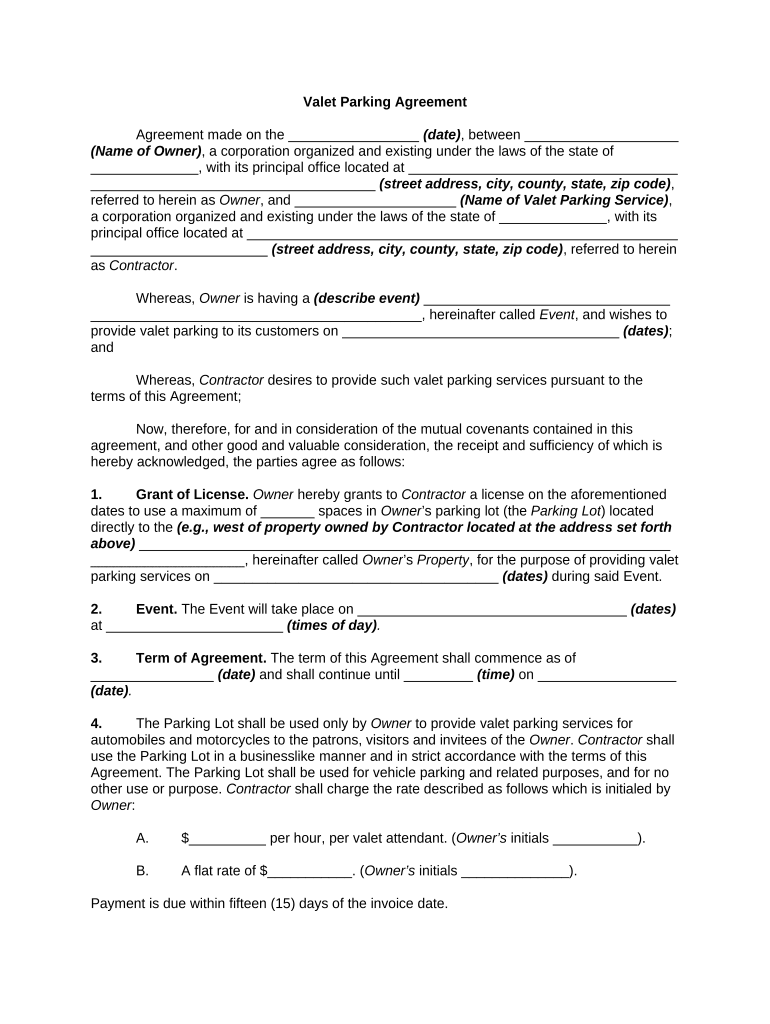
A well-drafted Parking Agreement reduces disputes over space allocation, payment timing, liability for damage, and enforcement actions. Clarity on term, permitted uses, insurance, and default remedies protects both the owner and the parker while establishing predictable collection and operational procedures.

Common parties include property owners, condominium associations, parking operators, commercial landlords, residential tenants, and individual drivers.
Each signer’s role affects which clauses are needed — for example, operators typically include access control and enforcement language, while individual renters focus on insurance and payment terms.
| Field | Configuration |
|---|---|
| Signature Type | Email + click-to-sign; enable stronger auth when required |
| Authentication | SMS code recommended for third-party payers |
| Template Name | Use a standard Parking Agreement template for reuse |
| Retention Settings | Enable automatic export to secure storage and audit logging |
Choose a platform that supports PDF and Word uploads, audit trails, and the authentication level you require.
Confirm the platform supports export to your records system, audit trail downloads, and any industry-specific compliance requirements before sending.
Clear description of the parking space, stall number, level, or permit code and any mapping attachment that locates the space on the property.
Start and end dates, auto-renewal mechanics, and notice periods for termination or non-renewal.
Monthly or periodic rates, due dates, late charges, security deposit terms, and methods of payment accepted.
Hours of access, guest parking rules, prohibited uses (e.g., storage or commercial repair), and towing procedures.
Minimum insurance required from the parker, owner liability disclaimers, and indemnity obligations for damage or theft.
Remedies for nonpayment or violation, including towing, booting, lien rights where permitted, and recovery of collection costs.
Specify day of month and grace period for late payments.
Use MM/DD/YYYY to mark when obligations begin.
State how many days before term end notice must be given (commonly 30 days).
Provide required notice period for early termination or eviction actions.
Describe when a vehicle may be towed and any advance notice required under local law.
| signNow | DocuSign | Adobe Sign | PandaDoc | HelloSign | |
|---|---|---|---|---|---|
| Starting Price | $8/user/mo | $15/user/mo | $14/user/mo | $19/user/mo | $15/user/mo |
| Free Trial | 7-day free trial | No trial listed | No trial listed | Trial available | Trial available |
| Bulk Send | Yes | Yes | Yes | Yes | No |
| Audit Trail | Yes | Yes | Yes | Yes | Yes |
| HIPAA Compliant | Yes | Yes | Yes | No | No |