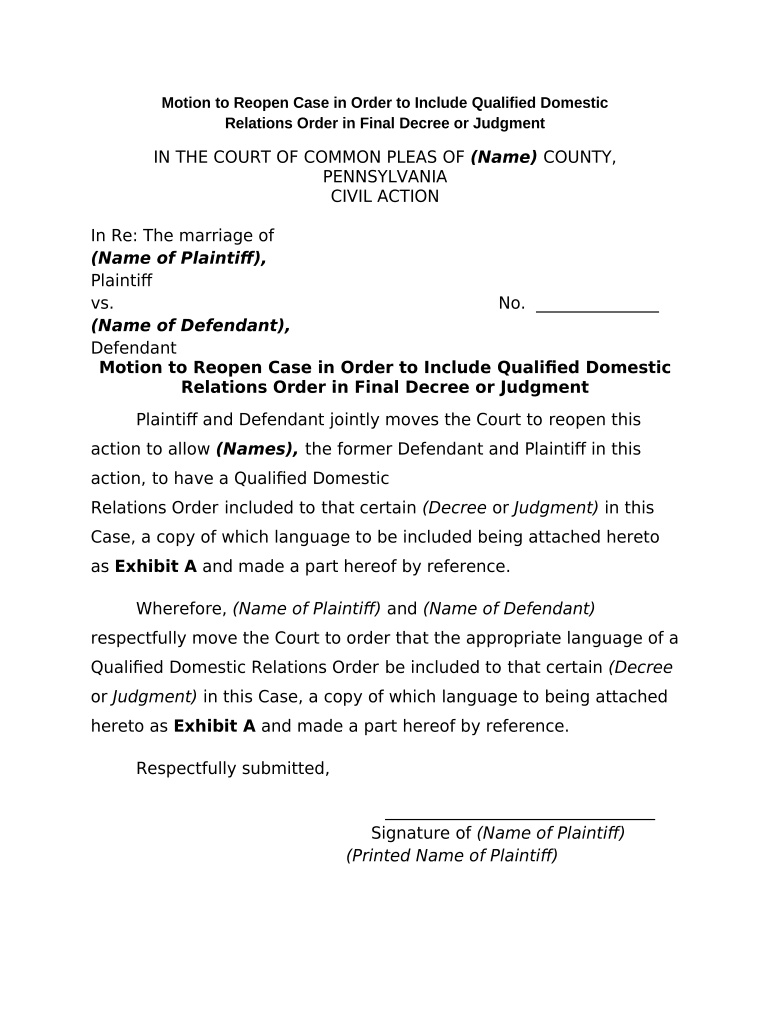
Pennsylvania Domestic Relations Form
What the Pennsylvania Domestic Relations Form Is
Why Accurate Domestic Relations Forms Matter
Complete, accurate Pennsylvania Domestic Relations Forms reduce delays, support enforceable court orders, and create a reliable administrative record for hearings, temporary relief, and enforcement proceedings under applicable court rules and statutes.
Who Typically Prepares and Files These Forms
Primary users include self-represented parties, family law attorneys, court clerks, mediators, and guardians ad litem involved in Pennsylvania family-court matters.
- Self-represented litigants: Individuals filing without counsel who must follow local court rules and proof-of-service procedures.
- Family law attorneys: Prepare petitions, financial affidavits, and proposed orders while coordinating service and hearings.
- Court administrators: Accept filings, assign docket numbers, collect fees, and manage e-filing and paper records.
Representative User Profiles
Self-Represented Litigant
A person without counsel who completes petitions, affidavits, and service paperwork. Courts supply packet instructions but not legal advice; accuracy in names, addresses, and financial entries is essential to avoid delays or default judgments.
Family Law Attorney
A licensed practitioner drafting pleadings, preparing exhibits, and ensuring compliance with Pennsylvania Rules of Civil Procedure and local court practice. Attorneys coordinate e-filing, service, and proposed orders to expedite hearings and reduce procedural objections.
Consequences of Errors or Omissions
Common Preparation Mistakes to Avoid
- Using inconsistent party names or abbreviations across documents, which causes identity confusion and may require corrective filings or supplemental affidavits.
- Submitting incomplete financial affidavits or failing to attach pay stubs and tax returns, which can delay support determinations and hearings.
- Failing to follow local service rules or omitting proof of service, resulting in continuances or dismissal for lack of proper notice.
- Relying on noncompliant electronic signatures or notarizations where the receiving county does not accept them, causing re-submission in paper form.
Step-by-Step: Preparing and Submitting the Form
-
01Gather Documents: Collect IDs, financial records, and child documentation.
-
02Complete Forms: Enter accurate names, dates, and addresses.
-
03Verify & Notarize: Sign in presence of notary when required.
-
04File & Serve: File with court clerk and serve opposing party.
What Happens After You Submit Forms
-
eFile: Submit via county electronic filing portals
-
Clerk Processing: Clerk reviews, assigns docket number
-
Service: Deliver documents per Pennsylvania rules
-
Hearing: Judge reviews submissions at scheduled hearing
Recommended Digital Workflow Settings
| Field | Configuration |
|---|---|
| Filing Method | eFile or paper per county |
| Authentication | Email, SMS code, or KBA |
| Service Method | Certified mail or personal service |
| Retention Policy | Retain signed originals per law |
Technical Requirements for Digital Completion and Submission
Use an e-sign and storage platform that supports PDF, audit trails, tamper-evident PDFs, and appropriate authentication workflows to meet court expectations.
- File Formats: PDF/A and DOCX accepted
- Integrations: Court eFile systems and cloud storage
- Authentication: Email verification or stronger MFA
Timing: Common Deadlines and Windows
Response Deadline:
Typically 20 days after service; local rules may differ.
Temporary Orders Hearing:
Often held within 30 to 60 days of filing.
Support Worksheet Submission:
Submit with petition or at the first scheduled hearing.
Final Hearing Scheduling:
Set after discovery or upon settlement readiness.
Appeal Period:
Usually 30 days after final decree entry.
Key Milestones from Filing to Final Order
File Petition
Submit initial petition with supporting exhibits to the clerk.
Serve Respondent
Provide proof of service according to Pennsylvania rules.
Temporary Relief Hearing
Judge may issue interim custody or support orders.
Final Decree Entry
Court signs final order resolving custody, support, and property.
eSignature Pricing and Feature Snapshot for Court-Facing Workflows
| signNow | DocuSign | Adobe Sign | PandaDoc | HelloSign | |
|---|---|---|---|---|---|
| Starting Price | $8/user/mo | $15/user/mo | $14/user/mo | $19/user/mo | $15/user/mo |
| Free Trial | 7-day trial | Varies | Varies | Varies | Varies |
| Bulk Send | Yes | Yes | Yes | Yes | No |
| Audit Trail | Yes | Yes | Yes | Yes | Yes |
| HIPAA Compliant | Yes | Yes | Yes | No | No |
| Envelope Cap | No cap | 100 envelopes/user/year | Varies | Varies | Varies |
Practical Examples: How Forms Are Used in Typical Cases
Contested Custody Case
A parent files a custody petition alleging relocation and requests temporary custody and visitation orders pending full hearing.
- Short-term relief requested for children's residence and schooling.
- The court schedules expedited hearings, orders interim parenting plans, and evaluates financial affidavits and school records; accurate service and complete exhibits reduced delays and supported enforceable temporary orders during litigation.
Uncontested Divorce
Couple files an uncontested divorce with a signed marital settlement agreement and joint petition for dissolution.
- Streamlined process with one hearing.
- When forms include complete financial disclosures, notarized signatures where required, and proof of service, clerks can docket the matter quickly and the court may enter a final decree without extended contested proceedings.
Best Practices for Accurate and Efficient Completion
Frequently Asked Questions and Troubleshooting
-
Can I use electronic signatures on these forms?
Electronic signatures are legally recognized under the ESIGN Act (15 U.S.C. ch. 96) and UETA in most states, but specific courts or document types may require wet ink or notarization. Family law decrees and certain court orders can be subject to local exceptions; verify acceptance before relying on e-signature.
-
What if names on documents do not match IDs?
Mismatched names can delay service and create identity issues. Correct inconsistencies before filing or attach a sworn affidavit explaining name variations to avoid clerical rejection and potential service disputes.
-
Is a notary always required?
Not all domestic relations filings need notarization; affidavits, verifications, and certain orders typically require a notary. Remote Online Notarization (RON) is permitted in many states but varies by jurisdiction; confirm county acceptance.
-
How do I correct a form already filed?
File a corrective or amended pleading per local rules and submit a cover letter to the clerk explaining changes. If the error affected service or hearing dates, notify opposing counsel and the court promptly to request relief.
-
How long must I store these records?
Retain originals for the life of the case and follow minimum federal standards: IRS-related records three years (IRC §6501(a)) and HIPAA-related records six years (45 CFR §164.530(j)); state rules may require longer retention.
-
Which e-sign platforms meet court needs?
Choose software that preserves audit trails, provides tamper-evident signed PDFs, and supports required authentication. Vendors such as signNow offer plans (Business, Business Premium, Enterprise, Site License) with audit trails and integrations; verify platform acceptance with the local court before filing.