Establishing secure connection…Loading editor…Preparing document…

Post Conviction Relief Application

This template is fully customizable. Edit the text, fill out the fields, and send it for signature. Give it a try!
Post Conviction Relief Application

What the Post Conviction Relief Application Is

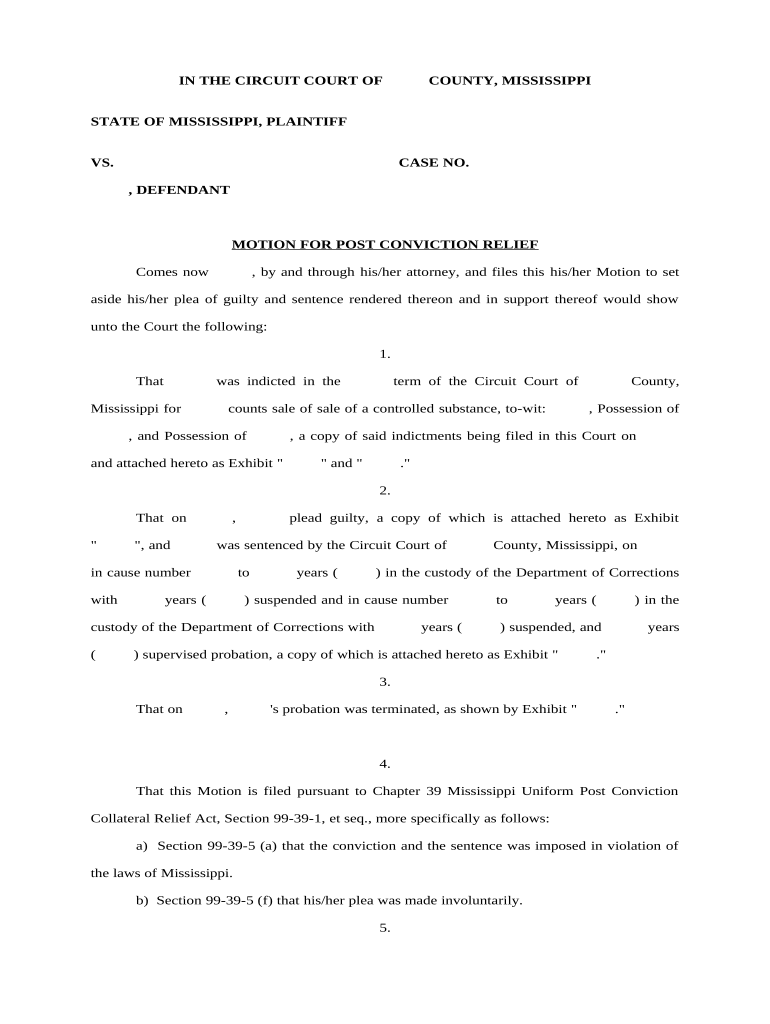
A Post Conviction Relief Application is a formal legal filing used by a convicted person to ask a court to correct, vacate, reduce, or set aside a conviction or sentence after trial or appeal. Common grounds include new evidence, constitutional violations, ineffective assistance of counsel, or a change in law. Procedures, available remedies, and terminology vary by jurisdiction; some states call it a petition for habeas corpus, motion to vacate, or application for post-conviction relief. This document initiates court review and usually triggers case-specific timelines and service requirements.

Why a Carefully Prepared Application Matters

A clear, complete application frames the legal issues, preserves procedural rights, and establishes factual and legal support for relief. Omissions, improper formatting, or missed service requirements can lead to dismissal without consideration on the merits.

Why a Carefully Prepared Application Matters

Who Typically Prepares or Signs This Application

The application is prepared by the convicted person, their attorney, or an authorized representative and may require court filing and service on the prosecutor.

  • Self-represented litigants: Individuals filing without counsel who need to follow local court rules closely and meet all service requirements.
  • Defense attorneys: Criminal defense counsel who prepare detailed factual, legal, and evidentiary attachments and handle hearings.
  • Authorized representatives: Post-conviction specialists, public defenders, or appointed counsel acting under court authority.

Step-by-step: Completing the Application

Follow a structured sequence to reduce procedural risk and ensure the court accepts the filing.

  • 01
    Gather case info: Collect case number, court name, conviction date, and sentence details.
  • 02
    State grounds: List specific legal and factual grounds for relief with supporting facts.
  • 03
    Attach exhibits: Include orders, transcripts, new evidence, affidavits, and counsel records.
  • 04
    File and serve: File with the clerk, pay fees or apply to proceed in forma pauperis, and serve the prosecutor.

How to set up an online filing and review workflow

Configure a digital workflow that mirrors court filing and service steps to ensure compliance and an auditable record.

Field Configuration
Document upload PDF/A preferred; include bookmarks for exhibits.
Signature type Use electronic signature with audit trail where permitted.
Authentication Enable email or SMS authentication for signers.
Service log Enable automated delivery receipts and timestamped audit trail.

Digital filing and eSignature considerations

Courts and clerks differ on permitted e-filing and e-signature methods; confirm local rules before e-submission.

  • E-filing systems: Most courts accept PDF filings via their e-filing portal.
  • eSignature standards: ESIGN and UETA support most electronic signatures for non-exempt filings.
  • Authentication: Use multi-factor where required by court rules.

Where to file and how documents move

Identify the correct court, clerk procedures, and the service method to ensure proper filing and notice to opposing counsel or prosecutor.

  • Clerk filing: Submit to the sentencing court clerk or appellate clerk as required.
  • E-filing portal: Upload through the court’s electronic filing system where available.
  • Paper filing: Deliver or mail with certificate of service when electronic filing is unavailable.
  • Service: Serve the prosecutor and relevant parties per local rules.

Essential fields and supporting items

Petitioner name: Full legal name
Court details: Court name and division
Case number: Exact docket number
Conviction date: MM/DD/YYYY format
Grounds stated: Clear legal bases
Supporting exhibits: Transcripts, affidavits, records

Common preparation errors to avoid

  • Missing or incorrect case number leads to administrative delay and may require refiling under the correct docket information.
  • Failing to serve opposing counsel properly can result in dismissal for lack of notice and forfeiture of a hearing.
  • Overbroad or conclusory grounds without factual support increase the chance the court will deny relief without an evidentiary hearing.
  • Submitting unsigned or improperly dated affidavits or exhibits can render key evidence inadmissible or insufficient for the court to act.

Consequences of incorrect or late filings

Dismissal risk: Application may be dismissed
Procedural default: Claims can be barred
Sanctions: Court may impose sanctions
Waived issues: Issues may be forfeited
Lost time: Delayed relief or hearings
Fee exposure: Possible filing or sanction fees

Key components of a professional application packet

Assemble each component carefully; completeness and clarity make it easier for the court to evaluate the merits and reduce procedural challenges.

Cover petition

A concise statement of the relief sought, the conviction and sentence details, and a short summary of the grounds for relief tailored to the court’s required format.
Statement of facts

Chronological account of relevant facts with citations to the trial record or newly discovered evidence, distinguishing factual assertions from legal argument.

Legal argument

Focused legal analysis explaining why the facts meet the legal standard for relief under governing state or federal post-conviction statutes and case law.

Exhibits

Supporting materials such as transcripts, police reports, expert affidavits, and documentary evidence clearly labeled and referenced in the petition.

Certificate of service

A signed statement showing how and when the petition and exhibits were served on the prosecutor and any other required parties.

Proposed order

A draft order or proposed form of relief for the court’s convenience, formatted per local rules to expedite judicial consideration.

eSignature vendor comparison for filing and executing applications

Compare common vendor attributes relevant to secure signing, audit trails, bulk sending, and HIPAA or legal compliance. signNow is listed first by design to match platform comparison requirements.

signNow DocuSign Adobe Sign PandaDoc HelloSign
Starting Price $8/user/mo $15/user/mo $14/user/mo $19/user/mo $15/user/mo
Free Trial 7-day free trial Varies by plan Varies by plan Varies by plan Varies by plan
Bulk Send Yes Yes Yes Yes No
Audit Trail Yes Yes Yes Yes Yes
HIPAA Compliant Yes Yes Yes No No

Realistic examples of typical applications

Two common factual scenarios illustrate how a petition may be framed and supported for initial filing.

New Evidence Example

A petitioner discovers a previously unavailable forensic report that undermines key trial evidence and files to vacate the conviction.

  • The new report is attached with an affidavit from the analyst.
  • The petition focuses on why the evidence is material, not merely cumulative, and requests an evidentiary hearing to test the report’s impact on the outcome.

Ineffective Counsel Example

A petitioner alleges trial counsel failed to investigate an alibi witness, and counsel’s affidavit is attached.

  • The petition outlines specific failures and resulting prejudice.
  • The filing includes exhibits, timeline, and a proposed order for an evidentiary hearing to evaluate prejudice and whether a new trial or resentencing is warranted.

Practical tips for accurate and efficient completion

Adopt consistent habits and checklists to reduce errors and preserve legal remedies when preparing a post conviction relief application.

Start with local rules and forms
Obtain the court’s required form or local form requirements before drafting. Courts often have specific formatting, margin, and caption rules; following those reduces the risk of administrative rejection and speeds judicial review.
Organize exhibits clearly
Number, tab, and reference exhibits in the petition. A clear exhibit index and internal citations to transcript pages and records make the petition easier to evaluate and reduce follow-up requests from the court or opposing counsel.
Preserve service proof
Use certified mail, return receipt, or electronic service with a timestamped audit trail. Courts may require proof of timely service and date of receipt to determine jurisdiction and response deadlines.
Maintain an audit trail
When using eSignature or e-filing, retain the complete audit record showing signer identity, timestamps, IP addresses, and delivery receipts to support authenticity and compliance with electronic-record rules.

Frequently asked questions about filing post conviction relief

Answers to common procedural and technical questions about preparing, signing, and filing the application.


Need help? Contact support

be ready to get more
Join over 28 million airSlate SignNow users