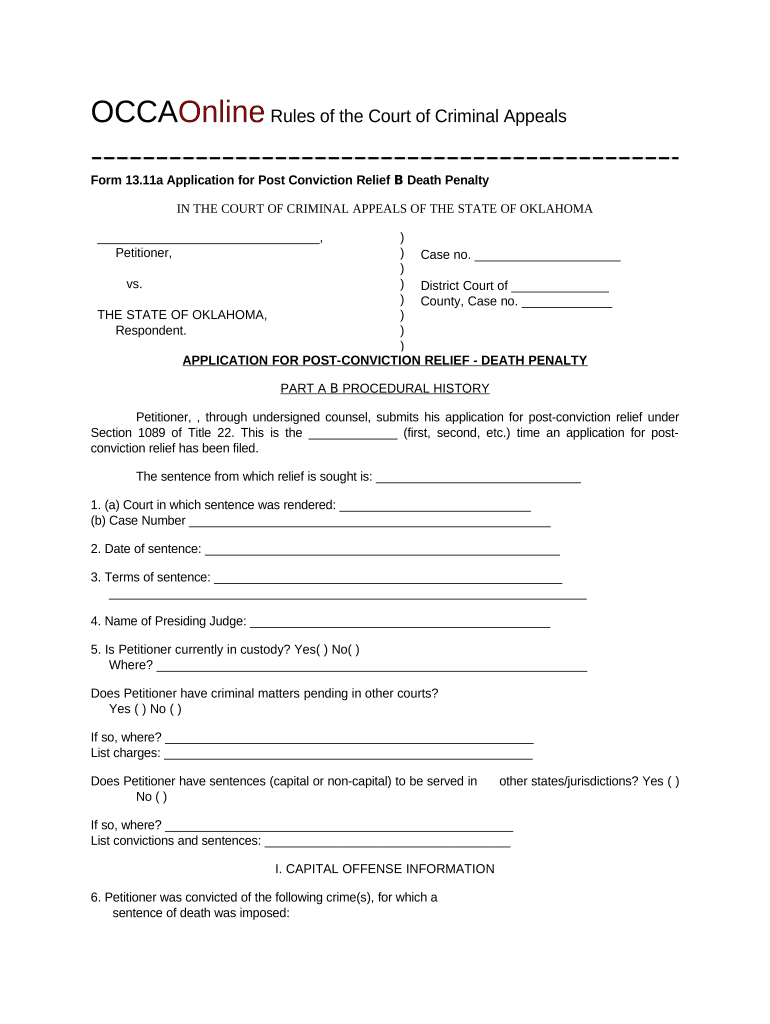
Post Conviction Relief Oklahoma
What Post Conviction Relief in Oklahoma Is and When It Applies
Why a Proper Post Conviction Relief Filing Matters
A well-prepared Post Conviction Relief petition preserves constitutional claims, can reopen factfinding, and may lead to sentence modification or vacatur. Clear documentation and correct venue and timing protect the petition from dismissal on procedural grounds.
Who Typically Prepares and Files These Petitions
Several parties commonly prepare or submit Post Conviction Relief petitions depending on case complexity and resources.
- Defendants and self-represented litigants preparing a pro se petition with court forms and supporting exhibits.
- Public defenders or appointed counsel drafting claims of ineffective assistance or constitutional error.
- Private criminal defense attorneys handling complex evidentiary records, forensic issues, or federal habeas pre-litigation.
Choose representation and document preparation consistent with the legal issues, deadlines, and procedural complexity of the case.
Step-by-Step: Preparing a Post Conviction Relief Petition
-
01Gather Records: Obtain judgment, sentencing order, trial transcript.
-
02Draft Claims: Describe legal bases and supporting facts concisely.
-
03Attach Evidence: Include affidavits, exhibits, and new evidence.
-
04File and Serve: File in sentencing court and serve the prosecutor.
How the Filing and Review Process Typically Flows
-
Intake: Clerk stamps and assigns a filing date.
-
Response: Prosecutor files an answer or motion to dismiss.
-
Discovery/Hearing: Court may allow evidentiary hearings if material facts are disputed.
-
Decision: Judge issues an order granting, denying, or remanding.
Digital Workflow Setup for Preparing and Sharing the Petition
| Field | Configuration |
|---|---|
| Document Template | Pre-populate petitioner, case number, and caption fields. |
| Signer Roles | Assign petitioner, counsel, or declarant signature fields. |
| Authentication | Enable SMS or email code verification for signers. |
| Retention | Set read-only archive and export PDF/A for court. |
Technical Requirements for eFiling and Secure Exchange
Confirm the court's accepted file formats, authentication expectations, and any eFiling portal prerequisites before submitting.
- Accepted File Types: PDF or PDF/A for court submissions.
- Signer Authentication: Email/SMS codes or multi-factor authentication.
- Storage Encryption: TLS in transit; AES-256 at rest.
Match the technical setup to the court portal and maintain an audit trail to demonstrate chain of custody for filed documents.
Potential Consequences of an Incorrect or Untimely Petition
Common Pitfalls to Avoid When Preparing the Petition
- Submitting incomplete records or failing to attach essential transcripts can cause a motion to be denied without consideration of the merits.
- Using incorrect case captions or docket numbers leads to misfiling and administrative delays at the clerk's office.
- Relying on unsupported factual assertions without affidavits, exhibits, or admissible evidence weakens claims and invites dismissal.
- Missing state-specific procedural steps—such as required certificates of service, proof of indigency forms, or local rule cover sheets—can result in rejection.
Timing Considerations and Typical Deadlines
Filing Promptly:
File as soon as new grounds or evidence are discovered.
Statutes of Limitations:
Many states impose a statute of limitations—check state law for exact timeframe.
Direct Appeal vs PCR:
PCR is collateral; pending direct appeal may limit or stay collateral review.
Stay and Tolling:
Tolling rules can pause limitations during appellate or federal proceedings.
Local Rules:
Local court rules may impose specific filing or service deadlines.
Key Milestones from Petition Draft to Court Decision
Intake and Filing
Clerk assigns case number and filing date.
Response Period
Prosecutor files an answer or motion to dismiss.
Evidentiary Stage
Court may order additional evidence or hold a hearing.
Final Order
Judge issues disposition; appeals may follow.
How to Amend or Update a Filed Petition
Assess Necessity:
Draft Amendment:
File Motion to Amend:
Notify Opposing Party:
Court Ruling:
Supplement Record:
Practical Tips to Improve Accuracy and Efficiency
Representative Examples of Petition Use and Outcomes
Public Defender Filing
A defender discovered an unserved witness statement that undermined the prosecution's timeline.
- The claim alleged ineffective cross-examination.
- The petition appended the witness affidavit and relevant transcript excerpts, the court ordered an evidentiary hearing, and the sentencing court reopened the record for further factfinding.
New Evidence Claim
A petitioner located DNA testing results not available at trial that contradicted key testimony.
- Counsel filed a supplemental petition with expert affidavit.
- The court granted testing access and the new results formed the basis for a negotiated reduction of sentence and an amended judgment.
Primary Signatories and Document Authorities
Petitioner
The individual convicted in the underlying case who files the petition or authorizes counsel to file on their behalf. The petition must clearly identify the petitioner and include an executed signature block and contact information for service and correspondence.
Defense Counsel
An attorney of record who prepares and signs filings, files notices of appearance, and ensures service on the prosecutor. Counsel is responsible for verifying factual allegations and attaching supporting exhibits before submission to the court.
eSignature Vendor Comparison for Preparing and Exchanging Petition Documents
| signNow | DocuSign | Adobe Sign | PandaDoc | HelloSign | |
|---|---|---|---|---|---|
| Starting Price | $8/user/mo | $15/user/mo | $14/user/mo | $19/user/mo | $15/user/mo |
| Free Trial | 7-day free trial | Varies by plan | Varies by plan | Varies by plan | Varies by plan |
| Bulk Send | Available (Business Premium+) | Available | Available | Available | Limited |
| Audit Trail | Yes | Yes | Yes | Yes | Yes |
| HIPAA Compliant | Yes (BAA) | Yes (BAA) | Yes (BAA) | No | No |
| Envelope Cap | No cap | 100 envelopes/user/year limit | Varies by plan | Varies by plan | Varies by plan |
Frequently Asked Questions About Post Conviction Relief in Oklahoma
-
Can I file without an attorney?
Yes. Self-represented litigants may file a petition, but courts apply procedural standards strictly. Consider at least limited-scope legal review for complex constitutional claims to avoid forfeiture for technical errors and to ensure supporting evidence is admissible.
-
Is notarization required for the petition?
Generally not for the petition itself in many states, but affidavits and many sworn statements attached as exhibits often require notarized signatures. Verify local rules for declarations and the court's acceptable acknowledgement form.
-
How do I prove newly discovered evidence?
Attach affidavits explaining why the evidence was not available at trial, provide expert reports if needed, and show materiality. The court assesses whether the evidence likely alters the outcome to decide if relief is warranted.
-
What if the petition is untimely?
Courts may dismiss untimely petitions unless tolling or exceptions (actual innocence) apply. File promptly and include any factual showing of why the filing period should be tolled or why the claim fits an exception.
-
Can documents be signed electronically?
Electronic signatures are generally valid under the ESIGN Act and UETA for most court submissions, subject to court or local eFiling rules. Maintain an audit trail showing signer identity, timestamp, and consent to electronic records.
-
How should I store the filed record?
Keep original signed documents, certified filings, and an electronic copy in secure encrypted storage. Preserve audit trails and any service receipts; retain records for the statute of limitations and at least seven years after final resolution.