Establishing secure connection…Loading editor…Preparing document…

Oconee County Statement of Creditors' Claim

This template is fully customizable. Edit the text, fill out the fields, and send it for signature. Give it a try!
Oconee County Statement of Creditors' Claim

What the Oconee County Statement of Creditors' Claim Is

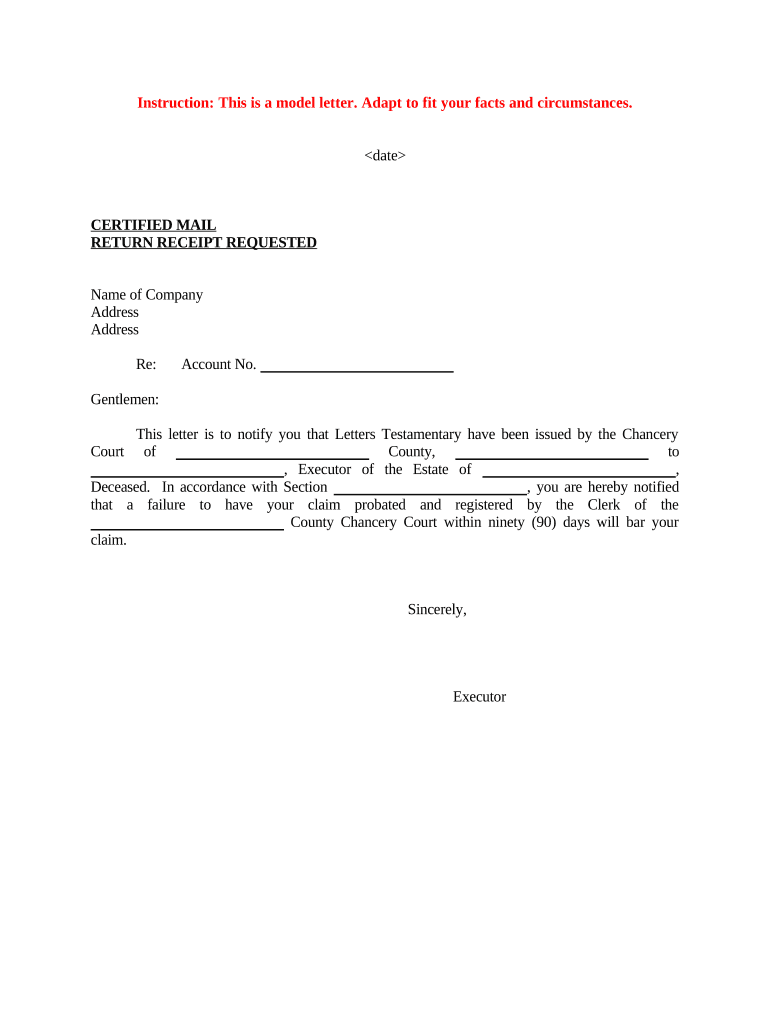
The Oconee County Statement of Creditors' Claim is a formal written statement submitted to a probate or estate administration office that identifies debts owed to a creditor by a decedent's estate. It documents the creditor's identity, the amount claimed, the legal basis for the claim, and supporting documentation. Proper completion starts the administrative process for allowance or rejection of the claim under applicable probate rules and timetables. Accurate filing helps ensure the creditor preserves its right to recovery while allowing the estate administrator and court to evaluate estate obligations.

Why Completing This Statement Matters

Filing a clear, timely Statement of Creditors' Claim preserves creditor rights, provides the estate with necessary information, and enables orderly resolution of creditor claims under probate procedures.

Why Completing This Statement Matters

Who Typically Prepares or Receives This Form

The form is used by creditors, collection agents, and in some cases counsel to assert claims against a decedent's estate. Provide accurate contact and claim details so the executor, personal representative, or probate court can act.

  • Individual or corporate creditors seeking payment from estate assets, including suppliers and lenders.
  • Estate administrators or personal representatives responsible for reviewing and adjudicating submitted claims.
  • Attorneys or collection agents filing on behalf of a creditor to document debt and provide proof.

Typical Roles Involved

Creditor Representative

A person or firm authorized to file on behalf of a creditor, such as an accounts receivable manager or outside counsel. This representative submits the claim, provides evidence, and handles correspondence with the estate administrator and probate court to protect the creditor's legal rights.

Estate Administrator

The personal representative, executor, or administrator appointed by the court to manage estate assets, evaluate submitted claims, and distribute funds per probate rules. This role receives claims, verifies documentation, and either allows, disputes, or reserves the claim for court determination.

Required Information Typically Included

Creditor Name: Full legal name of the creditor or business entity.
Creditor Address: Street address including city, state, and ZIP code.
Claim Amount: Exact dollar amount claimed, itemized if multiple items.
Basis of Claim: Brief description of why the debt exists (contract, invoice).
Supporting Documents: Invoices, contracts, statements, or judgments attached.
Signature and Date: Authorized signature and MM/DD/YYYY date of filing.

Step-by-Step: Completing the Statement

Follow these core steps to prepare a complete and acceptable creditor statement.

  • 01
    Gather Information: Collect invoices, contracts, and account records supporting the debt.
  • 02
    Complete the Form: Enter creditor details, claim amount, basis of claim, and date.
  • 03
    Attach Evidence: Include copies of invoices and signed agreements substantiating the claim.
  • 04
    File and Serve: Submit to the probate office and serve the estate representative per local rules.

Configuring an Online Submission Workflow

If you submit electronically, set up fields and routing so the estate receives a complete, auditable claim packet.

Field Configuration
Email Authentication Require signer email verification before signature is applied.
Signer Order Set ordering so creditor signs before administrative review.
Attachments Allowed Permit PDF or image uploads for invoices and contracts.
Automated Reminders Send reminders if signature or attachments are outstanding.

Where to File and How the Process Flows

Filing paths vary by county and state; use the probate office and serve the personal representative according to local rules.

  • Prepare Package: Complete form, sign, and collect supporting documents.
  • Submit to Court: File with Oconee County Probate Court or appropriate county office.
  • Serve the Estate: Deliver a copy to the personal representative per probate rules.
  • Monitor Response: Watch for allowance, objection, or court scheduling notices.

Digital Submission and Platform Considerations

Electronic submission can speed intake when the county accepts e-filings; verify accepted formats and authentication requirements beforehand.

  • File Formats: Use PDF or DOCX as accepted by the receiving office.
  • Authentication: Email or SMS verification and audit logs are commonly required.
  • Integrations: Platforms often integrate with cloud storage and case management systems.

Key Components of a Professional Statement

A complete Statement of Creditors' Claim is modular: identity, claim detail, evidence, signature, service history, and filing metadata. Each module helps the administrator evaluate and process the claim.

Claim Header

Includes creditor legal name, contact information, taxpayer identification when applicable, and a clear reference number to track the claim through the probate process and reduce administrative ambiguity.
Detailed Amounts

Provide a line-by-line breakdown of principal, interest, fees, and dates for each invoice or obligation so the estate can reconcile balances precisely and without repeated requests for clarification.

Legal Basis

Briefly summarize why the estate owes the amount (contract, goods delivered, judgment) and reference any contract clauses, invoice numbers, or court orders supporting the claim.

Evidence Attachments

Attach copies of invoices, contracts, delivery receipts, or judgment documents. Well-organized evidence reduces contestation and speeds allowance decisions by the personal representative.

Service Record

Document how and when the claim was served on the personal representative and any acknowledgements; this supports proof of compliance with local service requirements.

Signature Block

Include printed name, title, signature, and date. If filing electronically, include authentication metadata and a robust audit trail for attribution.

Practical Tips for Clear, Enforceable Claims

Adopt a consistent approach to documentation, authentication, and follow-up to reduce disputes and preserve legal rights.

Document Everything Promptly
Record invoices, delivery confirmations, and communications as they occur; contemporaneous documentation strengthens the claim and eases verification.
Use Exact Figures
Avoid rounding or estimates. State exact amounts, and itemize calculations for interest or fees to prevent confusion.
Confirm Authority to Sign
Ensure the signer is authorized to assert the claim; include title and contact information to allow the estate to verify authority quickly.
Maintain a Clear Audit Trail
When submitting electronically, preserve timestamps, IP addresses, and delivery receipts to evidence proper filing and service.

Timing and Common Deadlines to Watch

Timely filing and service are essential; missing local deadlines can bar recovery and complicate estate administration.

File Promptly:

Submit the claim as soon as possible after notice of death to protect priority.

Service Requirements:

Serve the personal representative per county rules, often by certified mail or personal delivery.

Court Response Window:

The estate or court may set a period to object or allow claims; monitor notices closely.

Statute of Limitations:

Underlying debt statutes still apply; verify relevant limitation periods for collection.

Follow-Up:

If you do not receive confirmation, contact the probate office to confirm receipt.

Consequences of Errors or Late Filing

Missed Deadline: Claim may be forever barred.
Incorrect Amount: Estate may contest or require amendment.
Missing Evidence: Claim could be disallowed for lack of proof.
Unauthorized Signature: Submission may be rejected or legally invalid.
Improper Service: Court may find service defective.
False Statement: Potential civil liability or perjury exposure.

Common Preparation Pitfalls to Avoid

  • Submitting incomplete documentation that forces repeated requests and delays resolution.
  • Failing to verify the estate representative's contact information before service, causing missed communications.
  • Using different legal names across documents, which can require corrective affidavits or re-filing.
  • Neglecting to retain a clear audit trail when filing electronically, which can complicate attribution disputes.

Representative eSignature Vendor Comparison for Document Filing

Comparison of common eSignature vendors and feature availability for submitting and signing creditor claim documents electronically.

signNow DocuSign Adobe Sign PandaDoc HelloSign
Starting Price $8/user/mo $15/user/mo $14/user/mo $19/user/mo $15/user/mo
Free Trial 7-day free trial, no credit card Varies by vendor Varies by vendor Varies by vendor Varies by vendor
Bulk Send Yes Yes Yes Yes Varies by plan
Audit Trail Yes Yes Yes Yes Yes
HIPAA Compliant Yes Yes Yes No No
Envelope Cap No envelope cap 100 envelopes/user/year Varies by plan Varies by plan Varies by plan

Real-World Illustrations of Digital Document Workflows

These brief examples show how organizations use electronic signing and clear documentation for estate and claims workflows.

Optica Ventures LLC — Workflow Simplicity

Optica's operations team reduced document friction by standardizing claim packets and signatures using an eSignature platform.

  • The interface is simple and easy to use.
  • As a result, their external partners return signed claim forms faster and internal processing time decreased, improving cash reconciliation during estate administration.

Martin Properties — Mobile Execution

A property management firm used mobile signing to submit contractor claims and invoices to estate administrators while on site.

  • Mobile signing enabled immediate execution.
  • The firm reported being able to manage claims and close accounts without delay, maintaining accurate records and chain-of-custody for supporting documents.

FAQs and Troubleshooting for Common Filing Issues

Answers to frequently asked questions about preparing, submitting, and following up on a Statement of Creditors' Claim.


Need help? Contact support

be ready to get more
Join over 28 million airSlate SignNow users