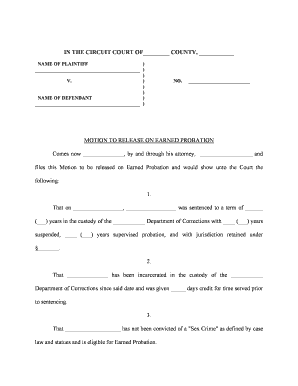
Probation Release
What a Probation Release Is and why it matters
Why a clear Probation Release benefits cases and records
The Probation Release clarifies legal status, prevents unnecessary supervision, and documents compliance for courts and agencies. It reduces administrative ambiguity, enables accurate recordkeeping for employers and licensing boards, and provides a clear basis for closing criminal supervision files when terms are satisfied.
Who prepares and receives the Probation Release
Probation officers, court clerks, and supervising agencies prepare or approve Probation Release forms to confirm completion, modification, or early termination of probation.
- Probation officers prepare releases, verify compliance, and recommend closure to courts and agency records.
- Court clerks accept and file completed releases, update dockets, and provide certified copies on request.
- Defense counsel and defendants review release terms to confirm conditions and future obligations are accurate.
Step-by-step workflow to complete a Probation Release
-
01Gather Records: Collect case file, court order, and compliance reports.
-
02Confirm Identity: Verify name and ID against official records.
-
03Record Terms: Enter release date, continuing conditions, and authority.
-
04Sign and File: Obtain signatures, notarize if required, then file.
Routing and approval steps for the completed release
-
Prepare: Draft form and attach supporting documents.
-
Review: Supervisor or legal counsel reviews for accuracy.
-
Authorize: Court or designee signs to approve release.
-
File: Submit to clerk and update case management.
Core elements every professional Probation Release should include
Identity
Verify full legal name, date of birth, and government-issued identification. Record any aliases and link the release to the original case number to ensure consistent identity attribution across agency files and background checks.
Terms
State the effective release date, any residual reporting obligations, restitution or treatment conditions, and the triggering event for full discharge. Use precise language to avoid later disputes about obligations.
Authorization
Include signature lines for the supervising officer, defendant, and, where required, a judge or court designee. Note the authority and title of signatories and whether notarization or witness signatures are mandatory.
Filing
Document the filing method, clerk's entry, docket number, and distribution list. Retain certified copies and provide copies to the probationer, defense counsel, and any supervising agencies to maintain an official chain of record custody.
Consequences of incorrect or incomplete Probation Releases
Common errors to avoid when preparing a release
- Failing to verify identity leads to disputed releases and potential retraction of the document when identity cannot be attributed confidently.
- Omitting continuing conditions or reporting requirements creates ambiguity that can delay case closure and hamper supervision records.
- Using inconsistent names or aliases across forms triggers verification requests and may cause backup withholding or employment barriers.
- Neglecting to attach court orders, discharge notices, or treatment attestations forces follow-up and can invalidate administrative release actions.
Typical signatories and their responsibilities
Supervising Officer
The supervising officer signs to confirm the probationer met release conditions, records any continuing obligations, and updates official case notes for closure or continued monitoring. This entry supports audits, future background checks, and coordination with treatment providers.
Court Official
The court official or clerk validates judicial orders, enters the release on the docket, and issues certified copies when required. Their action closes the court record or triggers follow-up remedies and provides an authoritative source for employers, licensing boards, or parole authorities.
Common deadlines and filing timeframes to watch
Filing Deadline:
Follow local court rules; some jurisdictions require immediate docket entry.
Effect Date:
Effective date may be the sign date or court order date.
Notice Period:
Provide notice to supervising agencies per probation policy timelines.
Appeal Window:
Courts may allow limited time to challenge or appeal release terms.
Record Retention:
Start retention clock from effective date or clerk filing date.
Pricing and feature snapshot for common eSignature vendors
| signNow | DocuSign | Adobe Sign | PandaDoc | HelloSign | |
|---|---|---|---|---|---|
| Starting Price | $8/user/mo | $15/user/mo | $14/user/mo | $19/user/mo | $15/user/mo |
| Free Trial | 7-day free trial | Varies by vendor | Varies by vendor | Varies by vendor | Varies by vendor |
| Bulk Send | Yes | Yes | Yes | Yes | No |
| Audit Trail | Yes | Yes | Yes | Yes | Yes |
| Envelope Cap | No cap | 100 envelopes/user/year | Varies | Varies | Varies |
Frequently asked questions about Probation Release documents
-
Is an electronic signature valid on a Probation Release?
Yes. Under federal ESIGN and state electronic transaction laws, properly completed electronic signatures are generally enforceable for administrative records like a Probation Release, provided intent, consent, signer attribution, and reliable record retention practices are met.
-
When is notarization required for a Probation Release?
Notarization depends on state and local court rules; many jurisdictions accept unsigned administrative releases while others require notary or witness signatures for official docket entries. Verify local clerk requirements before filing to avoid rejection or processing delays.
-
What happens if the release contains errors?
Errors such as incorrect names, missing signatures, or wrong dates can lead to administrative rejection, delayed case closure, or reopening of supervision. Correct errors promptly with an amended release or court order to ensure the record accurately reflects probation status.
-
Can a Probation Release be revoked or canceled?
Revocation depends on jurisdictional rules and the reason for revocation. Courts may reopen probation or issue new orders if fraud, material misstatement, or noncompliance is proven. Consult the supervising agency and court to determine the available remedies.
-
How long must records be retained after release?
Retention varies by record type: keep active case files for the supervision term plus multiple years, maintain fiscal and audit-related records under IRS or agency rules, and follow healthcare retention requirements for protected health information when applicable.
-
Is electronic submission accepted by courts and agencies?
Many courts and probation agencies accept electronic submissions, but acceptance varies. Use agency e-filing portals or verify clerk procedures. Where required, combine digital signatures with notarization or approved remote notarization workflows to meet jurisdictional standards.