Establishing secure connection…Loading editor…Preparing document…

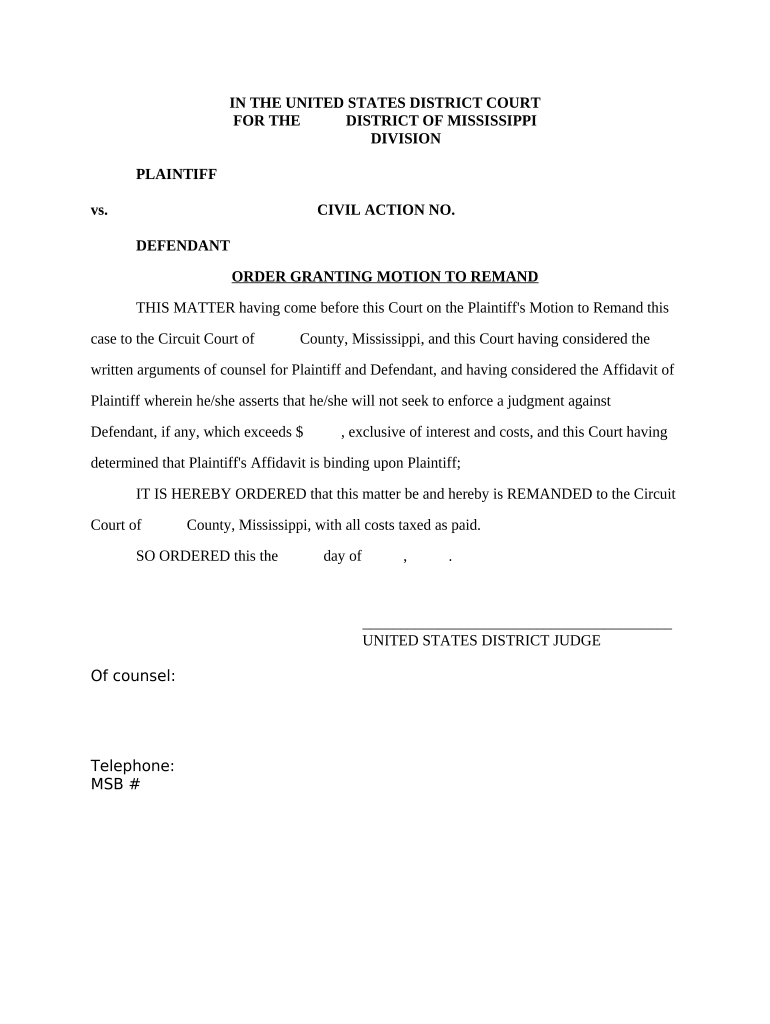
Proposed Granting Order

This template is fully customizable. Edit the text, fill out the fields, and send it for signature. Give it a try!
Proposed Granting Order

What a Proposed Granting Order Is and When it Matters

A Proposed Granting Order is a drafted order presented to a court, tribunal, or administrative body that specifies the exact relief, findings, and language a movant requests the decision-maker to enter. The document frames proposed findings of fact, legal conclusions, conditions on relief, and entry language so the issuing authority can review and, if appropriate, sign without substantial redrafting. Parties attach supporting exhibits and a short statement of grounds to reduce ambiguity and speed administrative or judicial disposition.

Why use a Proposed Granting Order in proceedings

Providing a clear, ready-to-sign draft reduces drafting burden on the court or agency, minimizes ambiguity about what relief is requested, and helps ensure the final order accurately reflects the mover's proposed terms and conditions.

Why use a Proposed Granting Order in proceedings

Who commonly prepares and submits a Proposed Granting Order

Typical users include attorneys, agency staff, corporate counsel, and pro se litigants preparing a draft order for judicial or administrative approval.

  • Private attorneys preparing dispositive or remedial orders for court entry.
  • Government agency staff drafting permit or license grant language precisely.
  • Corporate counsel or compliance officers seeking formal authorization document.

Core sections to include in a professional Proposed Granting Order

A well-structured Proposed Granting Order contains procedural context, findings, conclusions, the precise grant language, compliance conditions, and entry/signature instructions tailored to the issuing authority.

Procedural History

Summarize prior filings, hearing dates, and docket citations so the decision-maker can see procedural posture without reviewing the entire case file or administrative record.
Findings of Fact

State concise, supported factual findings with citations to the record or exhibits; avoid argumentative language and limit findings to matters necessary for the requested relief.

Conclusions of Law

List legal conclusions that connect the factual findings to the statutory or regulatory basis for granting relief, with brief citation to controlling authority.

Grant Language

Provide the exact operative order text you request the tribunal to enter, including durations, scope, and any limits or reserved rights.

Conditions & Compliance

Identify required compliance steps, reporting obligations, deadlines, and enforcement mechanisms the order should impose on the grantee.

Signature/Entry Block

Include the signature line, date, and entry language formatted per local rules so the judge or clerk can sign and date without reformatting.

Essential information to include at the top of the order

Caption/Case ID: Court name and docket number
Party Names: Plaintiff and defendant
Date Filed: Filing date
Hearing Date: If applicable
Relief Description: Short summary
Supporting Exhibits: List attached exhibits

Step-by-step process to prepare and file the order

Follow a clear drafting, review, service, and filing sequence to reduce rejection risk and meet procedural deadlines.

  • 01
    Draft: Prepare findings, conclusions, and operative language in plain, non-argumentative phrasing.
  • 02
    Internal Review: Have counsel or agency legal staff verify citations, exhibits, and signature authority.
  • 03
    Serve Parties: Serve opposing parties consistent with local rules before filing when required.
  • 04
    File/Submit: File with the clerk or upload via the agency portal according to accepted formats.

How to configure an online workflow for e‑submission

Set up the eWorkflow to capture signatures, attachments, and audit trails that comply with court or agency e‑filing rules.

Field Configuration
Document Format PDF/A preferred for archival
Signer Authentication Email + optional SMS code
Audit Trail Capture Timestamp, IP, signer identity
Attachment Handling Include exhibits as separate, labeled files

Where to file or send a Proposed Granting Order

Choose the destination based on whether the proceeding is judicial or administrative and whether local rules permit electronic submission.

  • Court Clerk: File via the court's e‑filing system or deliver a signed paper original.
  • Agency Docket: Upload through the agency's portal and attach required exhibits.
  • Opposing Counsel: Serve the proposed order concurrently when local rules require prior service.
  • Chambers: Send a courtesy copy to chambers if local practice requests it.

Technical and format considerations for electronic submission

Confirm acceptable file types, signature methods, and any required metadata before e‑submission.

  • PDF Format: PDF/A or flattened PDF recommended
  • Signature Method: Email link, SMS code, or PKI
  • Integrations: Works with case management systems

Typical timing and deadlines to track

Track service and filing deadlines, response windows, and any compliance timelines imposed by the proposed order or tribunal rules.

Service Deadline:

Serve parties within time required by local rules prior to filing.

Response Window:

Opponents may have a set period to object before entry; check local rules.

Entry Effective Date:

Effective date may be immediate on entry or a specified future date.

Compliance Deadlines:

State specific reporting deadlines and deliverables included in the order.

Appeal Period:

Appeal timing varies by jurisdiction; consult local appellate rules.

Common drafting and filing mistakes to avoid

  • Using argumentative or immaterial language in findings that invite revision or rejection by the court.
  • Failing to attach or properly label supporting exhibits that substantiate factual findings.
  • Omitting explicit compliance steps or deadlines, leaving obligations vague and hard to enforce.
  • Mismatching party names, docket numbers, or caption formatting that leads to misfiling or clerk rejection.

Consequences of errors or improper submission

Rejection or Return: Clerk may refuse to file
Delay in Relief: Entry postponed
Appeal Exposure: Ambiguity invites challenge
Service Defects: Service failures void order
Document Integrity: Tampered files undermine enforceability
E‑Signature Validity: Follow ESIGN and UETA

Typical eSignature provider comparison for executing Proposed Granting Orders

Compare price models and compliance features when selecting an eSignature provider for legal orders; signNow is listed first for clarity and comparison.

signNow DocuSign Adobe Sign PandaDoc HelloSign
Starting Price $8/user/mo $15/user/mo $14/user/mo $19/user/mo $15/user/mo
Free Trial 7-day free trial Varies by plan Varies by plan Varies by plan Varies by plan
Bulk Send Yes — premium tier Yes Yes Yes No
Audit Trail Yes Yes Yes Yes Yes
HIPAA Compliant Yes Yes Yes No No
Envelope Cap No cap 100 envelopes/user/year Varies by plan Varies by plan Varies by plan

FAQs and troubleshooting for Proposed Granting Orders

Common questions address eSignature validity, signature authority, required attachments, and steps after filing or upon discovering an error.


Need help? Contact support

be ready to get more
Join over 28 million airSlate SignNow users