Establishing secure connection… Loading editor… Preparing document…
Navigation

Fill and Sign the Qualified Domestic Trust Form
Fill and Sign the Qualified Domestic Trust Form

How it works

Open the document and fill out all its fields.
Apply your legally-binding eSignature.
Save and invite other recipients to sign it.

Rate template

4.6
67 votes
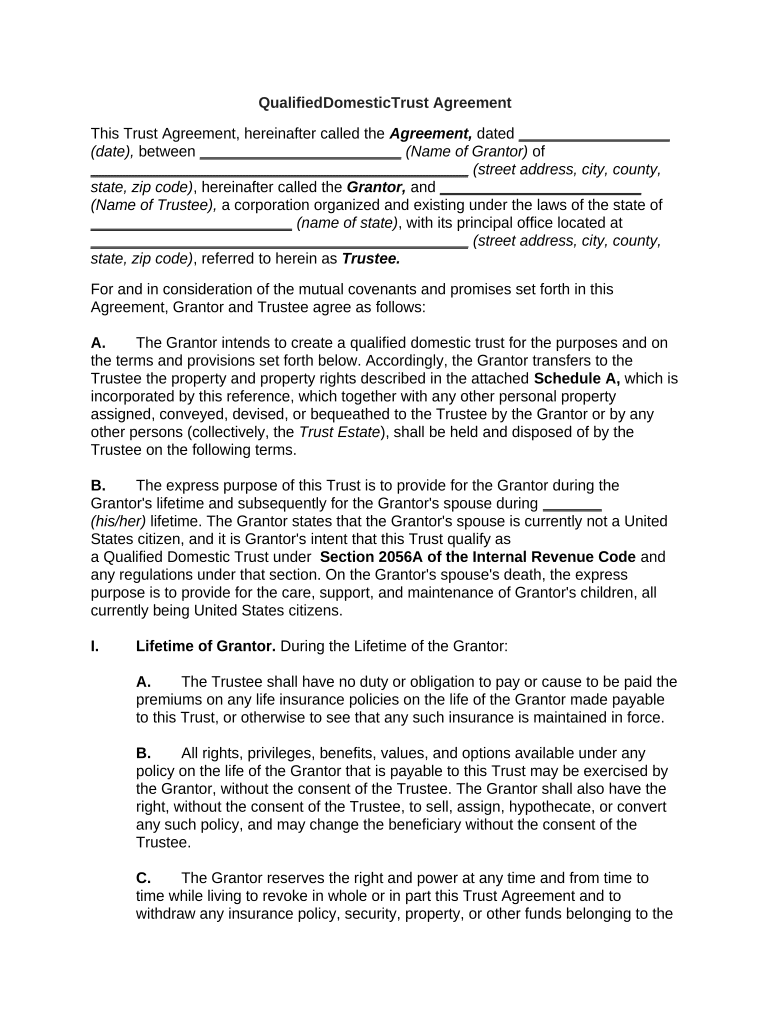
Qualified Domestic Trust Agreement This Trust Agreement, hereinafter called the Agreement, dated __________________ (date), between ________________________ (Name of Grantor) of _____________________________________________ (street address, city, county, state, zip code) , hereinafter called the Grantor, and ________________________ (Name of Trustee), a corporation organized and existing under the laws of the state of ________________________ (name of state) , with its principal office located at _____________________________________________ (street address, city, county, state, zip code) , referred to herein as Trustee. For and in consideration of the mutual covenants and promises set forth in this Agreement, Grantor and Trustee agree as follows: A. The Grantor intends to create a qualified domestic trust for the purposes and on the terms and provisions set forth below. Accordingly, the Grantor transfers to the Trustee the property and property rights described in the attached Schedule A, which is incorporated by this reference, which together with any other personal property assigned, conveyed, devised, or bequeathed to the Trustee by the Grantor or by any other persons (collectively, the Trust Estate ), shall be held and disposed of by the Trustee on the following terms. B. The express purpose of this Trust is to provide for the Grantor during the Grantor's lifetime and subsequently for the Grantor's spouse during _______ (his/her) lifetime. The Grantor states that the Grantor's spouse is currently not a United States citizen, and it is Grantor's intent that this Trust qualify as a Qualified Domestic Trust under Section 2056A of the Internal Revenue Code and any regulations under that section. On the Grantor's spouse's death, the express purpose is to provide for the care, support, and maintenance of Grantor's children, all currently being United States citizens. I. Lifetime of Grantor. During the Lifetime of the Grantor: A. The Trustee shall have no duty or obligation to pay or cause to be paid the premiums on any life insurance policies on the life of the Grantor made payable to this Trust, or otherwise to see that any such insurance is maintained in force. B. All rights, privileges, benefits, values, and options available under any policy on the life of the Grantor that is payable to this Trust may be exercised by the Grantor, without the consent of the Trustee. The Grantor shall also have the right, without the consent of the Trustee, to sell, assign, hypothecate, or convert any such policy, and may change the beneficiary without the consent of the Trustee. C. The Grantor reserves the right and power at any time and from time to time while living to revoke in whole or in part this Trust Agreement and to withdraw any insurance policy, security, property, or other funds belonging to the Trust Estate or any part of it; or to alter or amend any term or provision of the Trust agreement, except that the Grantor shall have no power to change the duties of the Trustee without its written consent. On the death of the Grantor, this Trust Agreement subsequently shall be irrevocable and not subject to alteration or amendment by any person. D. The Trustee shall pay from the income, if any, of the Trust Estate all costs, charges, and expenses of administering the trust, including all taxes levied against the Trust Estate or against the Trustee on account of the Trust Estate or any part of it. After such payment the Trustee shall pay the remaining net income, if any, to the Grantor in such installments as the Grantor may elect. E. During any period in the Grantor's life in which the Grantor is in the opinion of the Trustee incapacitated, the Trustee may in its discretion use so much of the net income and any portion or all of the principal for the support, comfort, and welfare of the Grantor and the Grantor's children in their accustomed manner of living or for any other purpose the Trustee believes to be in their best interests. Any income not so used shall be accumulated and added to principal from time to time. F. The Grantor or any other person shall have the right and power to assign, transfer, and deliver additional real and personal property to the Trustee or by will to devise and bequeath additional real and personal property to the Trustee, to be held, managed, invested, and distributed as a part of the Trust Estate and subject to all the terms and conditions of the same. II. Powers of Trustee. The Trustee shall have and possess and may exercise at all times, not only the rights, powers, and authority incident to the office or required in the discharge of the trusts in this agreement, or impliedly conferred on or vested in it, but there is now conferred on and vested in the Trustee all the rights, powers, and authority embodied in the following paragraphs in this Section II, which are shown by way of illustration but not by way of limitation: A. To retain and continue to hold in the Trustee's discretion, as a part of the Trust Estate any investment or property; to buy any assets desired from the estate of the Grantor. B. If there shall come into the Trustee's hands any business enterprise or a share in any such business enterprise and in particular an unincorporated business enterprise, the Trustee may, in its discretion, continue to operate or to participate in the operation of such business enterprise, to maintain in corporate form, incorporate, or participate in the incorporation of such business enterprise and subsequently operate or participate in the operation of the business enterprise in corporate form, cause such business enterprise to be sold or liquidated, and in any case, invest additional assets of the Trust Estate in the business enterprise. In operating, selling, liquidating, or investing additional assets of the Trust Estate in a business enterprise pursuant to the provisions of this paragraph, the Trustee shall not be obligated to comply with _______________ (citation of statute) , or any other statute or rule of law dealing with the operation, sale, liquidation, or investment of funds in business enterprises by a fiduciary, and shall not incur any liability for loss, waste, damage, or diminution in value, provided it exercises good faith and reasonable prudence. C. To sell at public or private sale, to grant options to sell, to exchange, re- exchange, or otherwise dispose of all or part of the property, real or personal, at any time belonging to the Trust Estate, on such terms and conditions and for such consideration as the Trustee shall determine, and to execute and deliver all instruments of sale or conveyance necessary or desirable for the same. D. To enforce, abandon, defend against, or have adjudicated by legal proceedings, arbitration, or compromise, any claim or demand arising out of or which may exist against the Trust Estate. E. To cause any property comprising a part of the Trust Estate to be issued, held, or registered in the Trustee's own name without disclosing the fiduciary relationship, in the Trustee's name as Trustee, in the name of the Trustee's nominee, or in such other form that title will pass by delivery. F. To invest any money in the Trust Estate in stocks, bonds, investment trusts, common trust funds, and any other securities or property, real or personal, secured or unsecured, whether the obligations of individuals, corporations, trusts, associations, governments, including shares and obligations of its own corporation, an affiliate, parent or subsidiary of the same, or otherwise, either within or outside __________________ (name of state) , as the Trustee shall deem advisable, without any limitation whatsoever as to the character of investment under any statute or rule of law now or later enacted or existing regarding Trust funds or investments by fiduciaries or otherwise. G. To receive, apply for, own and maintain life insurance on the life of any beneficiary under this Agreement; or other person, and the Trustee may exercise all rights contained in the insurance policies; to obtain and carry public liability, property damage, health and accident insurance, and such other insurance contracts as the trustee shall deem advisable to protect the Trustee, the Trust Estate, and any beneficiaries of any trusts under this Agreement against any and all hazards. H. To vote by proxy or in person any stock or security comprising a part of the Trust Estate, at any meeting, and on any question coming before the meeting. I. To employ and follow the advice of counsel and agents and to determine and pay to them compensation, whether from principal or income, as the Trustee shall decide. J. The Trustee is given broad discretionary powers to use the proceeds of insurance or other funds held by it to pay any part or all of the Federal and state estate, inheritance, and other succession taxes levied on the Grantor's Estate; to advance funds to the executor or administrator of the respective estates, with or without security; and to purchase assets, real or personal, from each estate; to pay all tax assessments, costs, insurance charges, and other expenses arising in connection with the administration of the Trust Estate, including taxes under the estate of the Grantor and reasonable compensation to the Trustee, its agents and attorneys, and to determine whether and to what extent the taxes, assessments, costs, charges, and expenses shall be deducted from and charged against income or principal. K. To make leases for any length of time whether longer or shorter than the duration of the trusts in this Agreement, to commence at the present time or in the future; to extend any lease, to grant options to lease, or to renew any lease, it being understood that the Trustee may grant or enter into __________________ (number) -year leases, renewable forever. L. To consent to the reorganization, consolidation, or readjustment of the financial structure, or the sale of the assets of any corporation or other organization, the stocks or securities of which are owned by the Trustee, and to take any action with reference to such stocks or securities, which in the opinion of the Trustee, is necessary to obtain the benefit of any such reorganization, consolidation, readjustment, or sale; to exercise any conversion privilege or subscription right given to it as the owner of any property constituting a portion of the Trust Estate; to accept and hold as a part of the Trust Estate the securities or stocks resulting from any such reorganization, consolidation, readjustment, sale, conversion, or subscription. M. To manage, improve, protect, exchange, mortgage, partition, contract to sell, and sell on any reasonable terms, convey with or without covenants of warranty, dedicate for public purposes, subdivide, or vacate for subdivision, make party wall contracts and agreements, grant easements or changes of any kind, construct, remodel, alter, repair, and maintain buildings on any real estate which may at any time be a part of the Trust Estate. N. To borrow money from time to time (from its own corporation or otherwise), without personal liability, for any purpose in the administration of the Trust Estate and for the purpose of making advancements or loans to the executor or administrator of the Grantor's Estate, or to continue to renew any loans made to the Trustee as in the Trustee's judgment shall seem wise and expedient and for the purposes set forth in this Agreement. O. The Trustee shall not be required to obtain the authority or approval of any court for any act which it may desire to do in the administration or management of the Trust Estate, or in the disbursement, investment, reinvestment, or management of the Trust funds. P. The Trustee in its discretion may permit any person, who has a right to receive income currently from the Trust Estate, to occupy any real property forming a part of the Trust Estate. The terms of such occupation, including, but not limited to, the consideration of whether the premises shall be occupied rent- free or in consideration of full or partial payment of taxes, insurance, maintenance, and ordinary repairs, shall be entirely within the discretion of the Trustee. III. Miscellaneous Provisions. A. During the period that any beneficiary as to income or principal of any Trust created in this Agreement or any person entitled to the distribution of corpus in termination of any Trust created in this Agreement is mentally or physically incapacitated for any reason, the Trustee may pay to or for the benefit of such beneficiary or person such part or amounts of income or principal as the Trustee, in its sole judgment and discretion, shall determine; the Trustee shall be fully authorized and empowered to make such payments of income or principal to the beneficiary or for the beneficiary's benefit without the appointment of a legal guardian. B. Except as otherwise specifically provided in this Agreement, if in the opinion of the Trustee, it shall appear that the total income of any beneficiary then entitled to income pursuant to any trust fund is insufficient for his or her proper or suitable support, care, comfort, and education and that of the beneficiary's children, the Trustee is authorized to pay to or for the beneficiary such additional amounts from the principal of the Trust Estate as it shall deem advisable in order to provide suitably for the support, care, comfort, and education of the beneficiary and of the beneficiary's children. The action of the Trustee in making such payments shall be binding on all persons. Such payments shall be made in due consideration of the needs of all beneficiaries in providing for their mutual care and maintenance. C. Any attempt to alienate any of the beneficial interests under any trusts created by this Agreement shall be dealt with in the following manner: if because of any alienation or attempted alienation by any beneficiary of any interest or right to receive payments under any Trust created by this Agreement, or if, from any cause whatsoever, such payments or any part of them shall, or but for this proviso would, at any time become payable to or pass to or for the benefit of any person other than the beneficiary, then the interest in and the right of the beneficiary to receive the payments shall cease and determine, and the payments, or such part of them, shall become so forfeited by the beneficiary or beneficiaries in the manner and portions as Trustee may deem best; provided further that notwithstanding any forfeiture of a beneficiary, the Trustee in its uncontrolled discretion, but without obligation so to do, may from time to time apply or direct the application of that part of the payments forfeited to the use of the beneficiary so forfeiting the same. In addition, no interest in the income or corpus of the Trust Estate shall be liable for any debt of the beneficiary to any creditor, __________________ (name of state) , or any other governmental body or subject to the process of seizure by any court. D. In the event of the death of any beneficiary of the income of the trusts created by this Agreement, the income payable to the beneficiary shall not be accrued to the date of death of the beneficiary and any collected or accrued income or investments of the trusts which otherwise would have become payable to the beneficiary shall be added to and become a part of the income payable to the next succeeding life estate(s) or remainder interest(s); provided, however, that the Trustee in its sole and uncontrolled discretion (but without any legal obligation so to do) may apply income or principal of the Trust Estate to the payment of the expenses of the last illness and funeral expenses of the deceased beneficiary where the Trustee deems such application proper and necessary and there are insufficient funds otherwise available for those expenses. E. Wherever the term income or principal appears in this Trust Agreement, it shall be defined to mean in the inclusive sense, either or both, as the case may be, according to the context of the provision where used and this Agreement as a whole. F. The Trustee shall incur no liability in the reasonable and prudent exercise of or omission of the exercise of any and all duties, powers, responsibilities, and discretion provided in this Trust Agreement or conferred or impliedly conferred on or vested in it by any provision of law now existing or later enacted or otherwise inherent as a Trustee function. G. All sections or shares created in this Agreement shall terminate no later than __________________ (number) years after the death of the last survivor of the beneficiaries under this Agreement, including the Grantor's legal issue and the appointees under any power of appointment granted in this Agreement who are living at the date of Grantor's death; and on the termination of the corpus of the Trust Estate, the Trust funds then held shall be distributed free of Trust to the then-income beneficiaries, each receiving as his or her share of the Trust assets the income from which is being paid or is payable to him or her. H. If the principal of the Trust Estate held for any income beneficiary of this Trust has been reduced to a fair market value of $ __________________ or less, the Trustee shall have the sole discretion to determine that, regardless of the age of any such beneficiary, it will be in his or her best interest to terminate this Trust and distribute the principal then remaining together with any accrued or undistributed net income. I. Notwithstanding the powers of the Trustee granted in Paragraphs B, C, F, G, K and M of Section II, the Trustee shall not exercise any of the powers granted in those paragraphs unless during the Grantor's lifetime the Grantor shall approve of the action proposed to be taken by the Trustee pursuant to those powers. If the Grantor shall be declared legally incompetent, or shall neither approve or disapprove any actions so proposed by the Trustee within __________________ (number) days after the mailing of the proposed action by the Trustee, the Trustee is authorized to proceed with the action so proposed in the Trustee's sole discretion and judgment, and such action shall be binding and conclusive as to all persons. J. For its services under this Agreement the compensation of the Trustee shall be as provided from time to time by the then-current schedule of fees of the Trustee applicable for similar fiduciary services, unless otherwise provided from time to time by separate written agreement or amendment to the same between the Trustee and the Grantor or the current beneficiary or beneficiaries. The Trustee shall have the right to resign at any time and on such resignation the Grantor shall appoint a successor trustee; the resignation shall be effective by the trustee delivering its written resignation to the Grantor, or if the Grantor is deceased, to the next beneficiary under this Agreement. K. The Trustee is specifically empowered to amend the terms of this Trust for the sole purpose of complying with the requirements of Section 2056A of the Internal Revenue Code and the rulings and regulations under that section, and any such amendment shall apply retroactively to the inception of the Trust. L. On the death of the Grantor, and if the Grantor's executor elects to treat probate assets as a qualified domestic trust , Trustee shall pay from the remaining principal of the Trust any federal estate taxes due on a distribution made to the Grantor's spouse during _______ (his/her) life from the principal of the Trust Estate. Further, on the death of the Grantor's spouse, or sooner if the Trust ceases to qualify as a qualified domestic trust , the Trustee shall pay from the remaining principal of the trust, without seeking reimbursement, recovery, or contribution from any person, any estate, or inheritance tax due on the remaining Trust property by reason of the Trust having been a qualified domestic trust . IV. Successor Trustee. A. If the Trustee, __________________ (name of trustee) , shall at any time change its name or combine with one or more corporations under one or more different names, or if its assets and business at any time shall be purchased and absorbed by another trust company or corporation authorized by law to accept these trusts, the new or successor corporation shall be considered as __________________ (name of trustee) , and shall continue the trusts and succeed to all the rights, privileges, duties, and obligations conferred on __________________ (name of trustee) . If the Trustee, ______________ (name of trustee) , merges or combines with another corporation which does not qualify as a trustee according to Section 2056A of the Internal Revenue Code, this Trust shall automatically and immediately be assigned to a successor trustee that does qualify as a domestic corporation. B. The Grantor while living may remove or cause the removal of __________________ (name of trustee) , or any successor trustee, as Trustee under the trusts and may designate, at the Grantor's discretion, another corporate trustee to serve as successor trustee under this agreement, but only if it is a qualified appointee. C. After the death of the Grantor and at any time during the continuance of the trusts, any guardian of any beneficiary under this Trust may remove or cause the removal of the Trustee, or any successor trustee, as trustee under the Trust and may designate, at his or her own discretion, another corporate trustee to serve as successor trustee, but only if it is a qualified appointee. V. Trust for Surviving Spouse. On the death of the Grantor, all of the Trust Estate shall be held as a single fund for the benefit of the Grantor's spouse for the following uses and purposes: A. After the payment or taxes, charges, and expenses attributable to the Trust Estate, the Trustee may pay any and all expenses of the last illness, funeral, and burial expenses of the Grantor out of the principal or income of the Trust Estate, unless the Trustee in the Trustee's discretion determines that other provisions have been made for the payment of those expenses. B. Commencing as of the date of the Grantor's death and during the life of the Grantor's spouse, the Trustee shall distribute to the Grantor's spouse: 1. The entire net income of the Trust in convenient installments as the spouse may elect, but at least as frequently as quarter-annually; and 2. as much or all of the principal of the Trust as the Trustee from time to time believes desirable for the health and support in reasonable comfort of the Grantor's spouse, considering all circumstances and factors deemed pertinent by the Trustee. 3. The Trustee shall pay from the remaining principal of the Trust any federal estate tax due on a distribution made under this clause. C. Notwithstanding any other provision of this instrument, on the death of the Grantor's spouse, all income of the Trust which is accrued or undistributed at the time of the spouse's death shall be paid to the estate of the Grantor's spouse. D. The balance of the Trust Estate shall be divided into as many equal shares as there are children of the Grantor then living and children of the Grantor then deceased but leaving issue then living. 1. One equal share shall be set aside for the benefit of each of the children of the Grantor who may then be living and shall constitute the Trust Estate of the child's trust. 2. One equal share shall be set aside for the benefit of the issue then living of each of the deceased children of the Grantor and shall constitute the Trust Estate of the Trust for such issue. E. Each share set aside for the benefit of each living child, in accordance with Subparagraph D-1 above, shall be distributed to such child immediately, subject to the following restrictions: 1. Until the child attains the age of _______ (18/21) years, the Trustee shall pay to or apply for the benefit of the child in monthly or other convenient installments so much of the net income from his or her share of the Trust Estate, up to the whole of such share, as the Trustee in its discretion deems advisable for the child's proper care, support, maintenance, and education. The Trustee shall accumulate and add to the principal of the child's share of the Trust Estate the undistributed balance, if any, of the net income at the end of the year. 2. When the child attains the age of _______ (18/21) years, the Trustee subsequently shall pay to or apply for the benefit of the child all of the net income from his or her share of the Trust Estate until the child attains the age of _______ (age) years, payable monthly or in other convenient installments, but in no event less often than annually. 3. If at any time in the discretion of the Trustee the child should be in need of funds for his or her proper care, support, or maintenance, the Trustee shall in its discretion, in addition to the payments provided above, pay to or apply for the benefit of the child such amounts from the principal of his or her share of the Trust Estate, up to the whole of such share, as the Trustee may from time to time deem advisable. 4. When the child attains the age of _______ (age) years, the Trustee shall distribute to the child _______ (fraction of principal) of the balance of the principal of his or her share of the Trust Estate. When the child attains the age of _______ (age) years, the Trustee shall then distribute to the child _______ (fraction of principal) of the balance of the principal of his or her share of the Trust Estate. When the child attains the age of (age) years, the Trustee shall distribute the remaining balance of his or her share of the Trust Estate. 5. If any child for whom a share of the Trust Estate has been set aside should die prior to attaining the age of _______ (age) years, then on the death of the child, the Trustee shall distribute all of the balance of the deceased child's share of the Trust Estate to his or her surviving issue, per stirpes and not per capita. If there should be no such surviving issue, then all of the balance of the deceased child's share of the Trust Estate shall be added equally to the other shares set aside for the benefit of the surviving issue of the Grantor then living, as provided above, including, proportionately, the undistributed portions of each such share, to be held, administered, and distributed as a part of such other shares. 6. If the Grantor's children and their issue should all die prior to the final distribution of the Trust Estate, all of the Trust Estate not disposed of as provided above shall be distributed as follows: The Trustee shall distribute to the Grantor's parents, or survivor of them, all of the net income and so much of the principal as is necessary for their health, care, support, and maintenance as the Trustee deems necessary in its discretion. On the death of the last surviving parent, the Trust shall terminate and the Trustee is directed to distribute the balance equally to the Grantor's nieces and nephews. F. Each share set aside for the benefit of the surviving issue of a deceased child of the Grantor, as provided above, shall be further subdivided immediately to the issue then living of the deceased child, such issue to take per stirpes and not per capita. Each such divided share shall be subject to the same distribution procedure as is outlined above in Subparagraphs E-1 through E-4 for shares of living children. The Grantor has executed this instrument and the Trustee has evidenced its acceptance of the Trust by also executing the instrument on the day and year first above-mentioned. ___________________________ (Signature of Grantor) ________________________ (Name of Grantor) ________________________ (Name of Trustee) By:_________________________ (Signature of trustee officer) ________________________ (Title of trustee officer) (Acknowledgments) (Attachment of schedule)

Useful advice on finalizing your ‘Qualified Domestic Trust’ online

Are you fed up with the inconvenience of handling documents? Look no further than airSlate SignNow, the top eSignature solution for individuals and companies. Bid farewell to the laborious process of printing and scanning files. With airSlate SignNow, you can effortlessly finalize and endorse documents online. Utilize the robust features packed into this straightforward and cost-effective platform and transform your method of document management. Whether you need to authorize forms or gather signatures, airSlate SignNow manages everything effortlessly, requiring only a few clicks.

Follow this detailed guide:

  1. Log into your account or sign up for a complimentary trial with our service.
  2. Click +Create to upload a document from your device, cloud storage, or our template library.
  3. Open your ‘Qualified Domestic Trust’ in the editor.
  4. Click Me (Fill Out Now) to set up the form on your end.
  5. Add and designate fillable fields for others (if necessary).
  6. Proceed with the Send Invite setup to request eSignatures from others.
  7. Save, print your version, or convert it into a reusable template.

No need to worry if you need to collaborate with others on your Qualified Domestic Trust or send it for notarization—our solution has everything you require to accomplish such tasks. Register with airSlate SignNow today and enhance your document management to new levels!

Here is a list of the most common customer questions. If you can’t find an answer to your question, please don’t hesitate to reach out to us.

Need help? Contact Support

The best way to complete and sign your qualified domestic trust form
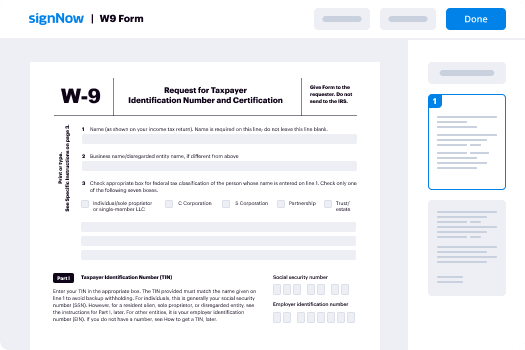
Save time on document management with airSlate SignNow and get your qualified domestic trust form eSigned quickly from anywhere with our fully compliant eSignature tool.

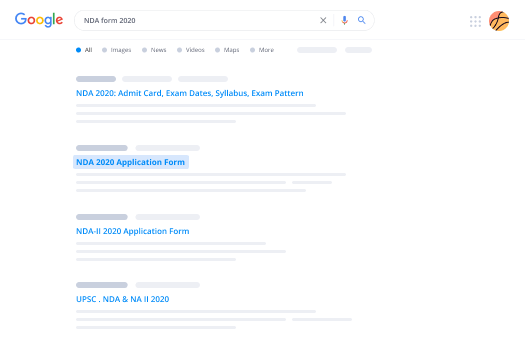
How to Sign a PDF Online How to Sign a PDF Online

How to complete and sign documents online

In the past, working with paperwork took pretty much time and effort. But with airSlate SignNow, document management is fast and easy. Our powerful and easy-to-use eSignature solution enables you to effortlessly fill out and eSign your qualified domestic trust form online from any internet-connected device.
Follow the step-by-step guide to eSign your qualified domestic trust form template online:

  • 1.Sign up for a free trial with airSlate SignNow or log in to your account with password credentials or SSO authorization option.
  • 2.Click Upload or Create and add a form for eSigning from your device, the cloud, or our form library.
  • 3.Click on the file name to open it in the editor and utilize the left-side toolbar to fill out all the empty areas appropriately.
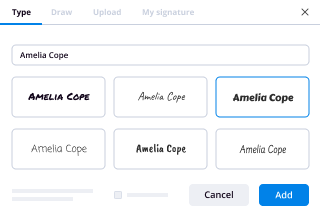
  • 4.Drop the My Signature field where you need to eSign your sample. Provide your name, draw, or upload a picture of your regular signature.
  • 5.Click Save and Close to accomplish editing your completed document.

As soon as your qualified domestic trust form template is ready, download it to your device, export it to the cloud, or invite other people to electronically sign it. With airSlate SignNow, the eSigning process only requires a couple of clicks. Use our powerful eSignature tool wherever you are to deal with your paperwork productively!
How to Sign a PDF Using Google Chrome How to Sign a PDF Using Google Chrome

How to fill out and sign paperwork in Google Chrome

Completing and signing paperwork is simple with the airSlate SignNow extension for Google Chrome. Adding it to your browser is a fast and beneficial way to deal with your forms online. Sign your qualified domestic trust form template with a legally-binding electronic signature in a couple of clicks without switching between programs and tabs.

Follow the step-by-step guidelines to eSign your qualified domestic trust form in Google Chrome:

  • 1.Go to the Chrome Web Store, locate the airSlate SignNow extension for Chrome, and install it to your browser.
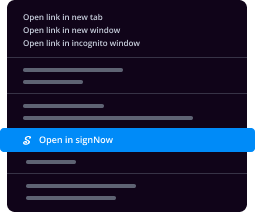
  • 2.Right-click on the link to a form you need to sign and select Open in airSlate SignNow.
  • 3.Log in to your account with your password or Google/Facebook sign-in buttons. If you don’t have one, you can start a free trial.
  • 4.Utilize the Edit & Sign toolbar on the left to fill out your template, then drag and drop the My Signature field.
  • 5.Upload a photo of your handwritten signature, draw it, or simply enter your full name to eSign.
  • 6.Verify all data is correct and click Save and Close to finish modifying your form.

Now, you can save your qualified domestic trust form sample to your device or cloud storage, send the copy to other individuals, or invite them to electronically sign your document with an email request or a secure Signing Link. The airSlate SignNow extension for Google Chrome enhances your document processes with minimum time and effort. Try airSlate SignNow today!

How to Sign a PDF in Gmail How to Sign a PDF in Gmail How to Sign a PDF in Gmail

How to fill out and sign documents in Gmail

Every time you get an email containing the qualified domestic trust form for approval, there’s no need to print and scan a document or download and re-upload it to another tool. There’s a better solution if you use Gmail. Try the airSlate SignNow add-on to quickly eSign any paperwork right from your inbox.

Follow the step-by-step guidelines to eSign your qualified domestic trust form in Gmail:

  • 1.Go to the Google Workplace Marketplace and locate a airSlate SignNow add-on for Gmail.
  • 2.Install the tool with a related button and grant the tool access to your Google account.
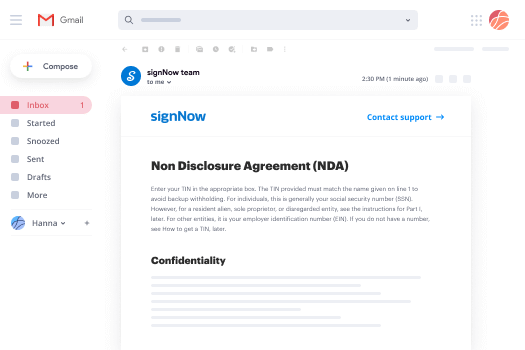
  • 3.Open an email containing an attachment that needs approval and use the S symbol on the right panel to launch the add-on.
  • 4.Log in to your airSlate SignNow account. Select Send to Sign to forward the file to other parties for approval or click Upload to open it in the editor.
  • 5.Place the My Signature option where you need to eSign: type, draw, or upload your signature.

This eSigning process saves time and only requires a few clicks. Take advantage of the airSlate SignNow add-on for Gmail to update your qualified domestic trust form with fillable fields, sign paperwork legally, and invite other individuals to eSign them al without leaving your inbox. Improve your signature workflows now!
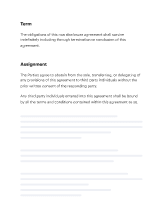
How to Sign a PDF on a Mobile Device How to Sign a PDF on a Mobile Device How to Sign a PDF on a Mobile Device

How to fill out and sign documents in a mobile browser

Need to rapidly complete and sign your qualified domestic trust form on a smartphone while working on the go? airSlate SignNow can help without the need to set up additional software applications. Open our airSlate SignNow tool from any browser on your mobile device and create legally-binding eSignatures on the go, 24/7.

Follow the step-by-step guidelines to eSign your qualified domestic trust form in a browser:

  • 1.Open any browser on your device and follow the link www.signnow.com
  • 2.Register for an account with a free trial or log in with your password credentials or SSO option.
  • 3.Click Upload or Create and add a file that needs to be completed from a cloud, your device, or our form collection with ready-made templates.
  • 4.Open the form and complete the blank fields with tools from Edit & Sign menu on the left.
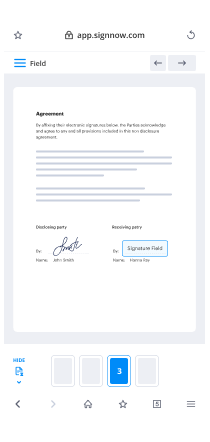
  • 5.Add the My Signature area to the sample, then type in your name, draw, or add your signature.

In a few simple clicks, your qualified domestic trust form is completed from wherever you are. As soon as you're finished editing, you can save the document on your device, generate a reusable template for it, email it to other individuals, or invite them eSign it. Make your paperwork on the go quick and efficient with airSlate SignNow!
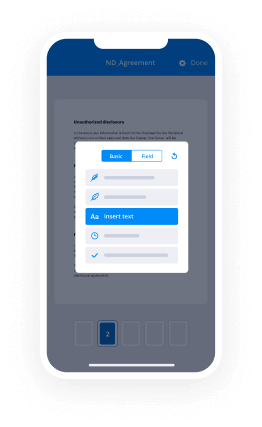
How to Sign a PDF on iPhone How to Sign a PDF on iPhone

How to fill out and sign documents on iOS

In today’s corporate environment, tasks must be done rapidly even when you’re away from your computer. Using the airSlate SignNow mobile app, you can organize your paperwork and sign your qualified domestic trust form with a legally-binding eSignature right on your iPhone or iPad. Set it up on your device to close deals and manage documents from anyplace 24/7.

Follow the step-by-step guide to eSign your qualified domestic trust form on iOS devices:

  • 1.Open the App Store, search for the airSlate SignNow app by airSlate, and install it on your device.
  • 2.Open the application, tap Create to upload a form, and select Myself.
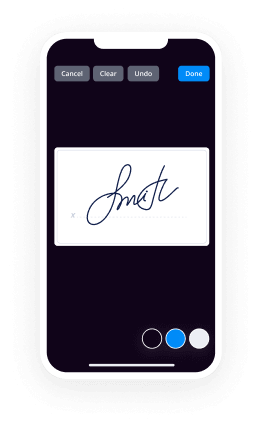
  • 3.Opt for Signature at the bottom toolbar and simply draw your signature with a finger or stylus to eSign the form.
  • 4.Tap Done -> Save right after signing the sample.
  • 5.Tap Save or utilize the Make Template option to re-use this paperwork later on.

This method is so easy your qualified domestic trust form is completed and signed within a few taps. The airSlate SignNow app works in the cloud so all the forms on your mobile device are kept in your account and are available any time you need them. Use airSlate SignNow for iOS to enhance your document management and eSignature workflows!
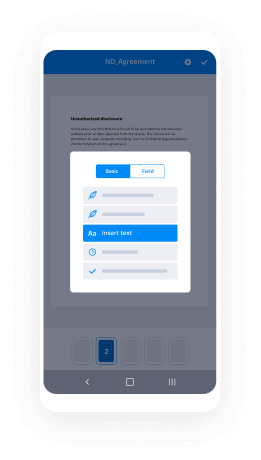
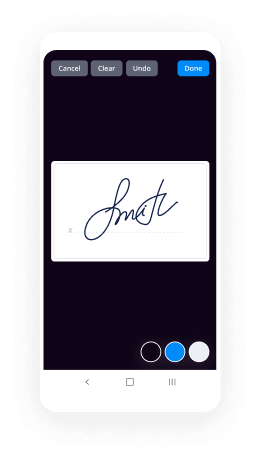
How to Sign a PDF on Android How to Sign a PDF on Android

How to complete and sign forms on Android

With airSlate SignNow, it’s simple to sign your qualified domestic trust form on the go. Set up its mobile application for Android OS on your device and start improving eSignature workflows right on your smartphone or tablet.

Follow the step-by-step guide to eSign your qualified domestic trust form on Android:

  • 1.Go to Google Play, search for the airSlate SignNow app from airSlate, and install it on your device.
  • 2.Log in to your account or register it with a free trial, then import a file with a ➕ button on the bottom of you screen.
  • 3.Tap on the uploaded document and select Open in Editor from the dropdown menu.
  • 4.Tap on Tools tab -> Signature, then draw or type your name to eSign the template. Fill out blank fields with other tools on the bottom if necessary.
  • 5.Use the ✔ button, then tap on the Save option to end up with editing.

With a user-friendly interface and full compliance with major eSignature laws and regulations, the airSlate SignNow app is the best tool for signing your qualified domestic trust form. It even operates without internet and updates all form adjustments when your internet connection is restored and the tool is synced. Fill out and eSign documents, send them for approval, and create re-usable templates whenever you need and from anyplace with airSlate SignNow.

Sign up and try Qualified domestic trust form
  • Close deals faster
  • Improve productivity
  • Delight customers
  • Increase revenue
  • Save time & money
  • Reduce payment cycles