Establishing secure connection…Loading editor…Preparing document…

Rebuttal Motion

This template is fully customizable. Edit the text, fill out the fields, and send it for signature. Give it a try!
Rebuttal Motion

What a Rebuttal Motion Is and When It’s Used

A Rebuttal Motion is a written response filed to address or counter arguments raised in an opposing party’s motion or evidence. It focuses on correcting factual inaccuracies, disputing legal theories, or presenting additional authority and facts the court should consider. Rebuttal motions are typically limited in scope and length by local rules and are intended to address points raised for the first time in reply or to emphasize weaknesses in the original motion. Proper form, timely filing, and proof of service are essential for the court to accept and consider the filing.

Why a Clear Rebuttal Motion Matters

A well-crafted Rebuttal Motion helps the court see factual errors or legal gaps in the other side’s motion and can influence the judge’s decision. It clarifies your position, preserves issues for appeal, and can prevent an adverse ruling based on incomplete or misleading assertions.

Why a Clear Rebuttal Motion Matters

Who Typically Prepares a Rebuttal Motion

Lawyers, paralegals, and self-represented litigants commonly prepare rebuttal motions to respond to opposing filings in civil and administrative cases.

  • Litigators and defense counsel who need to address new arguments raised by the other party promptly.
  • Paralegals and support staff who assemble exhibits, citations, and proof of service for filing.
  • Pro se litigants responding personally when no attorney represents them, following local formatting rules carefully.

Who Signs and Submits a Rebuttal Motion

Litigation Counsel

An attorney of record signs most rebuttal motions and certifies service under court rules. The attorney must include contact information, bar number if required, and may need to attest to personal knowledge of cited facts.

Pro Se Filers

A self-represented party signs their own motion and is responsible for compliance with formatting, deadlines, and service requirements. Courts often enforce rules strictly for pro se filers, so attention to procedure is critical.

Core Parts of a Professional Rebuttal Motion

A professional rebuttal motion is concise, organized, and focused on the specific points to rebut. It follows court form and local rules for captions, notices, and exhibits.

Caption

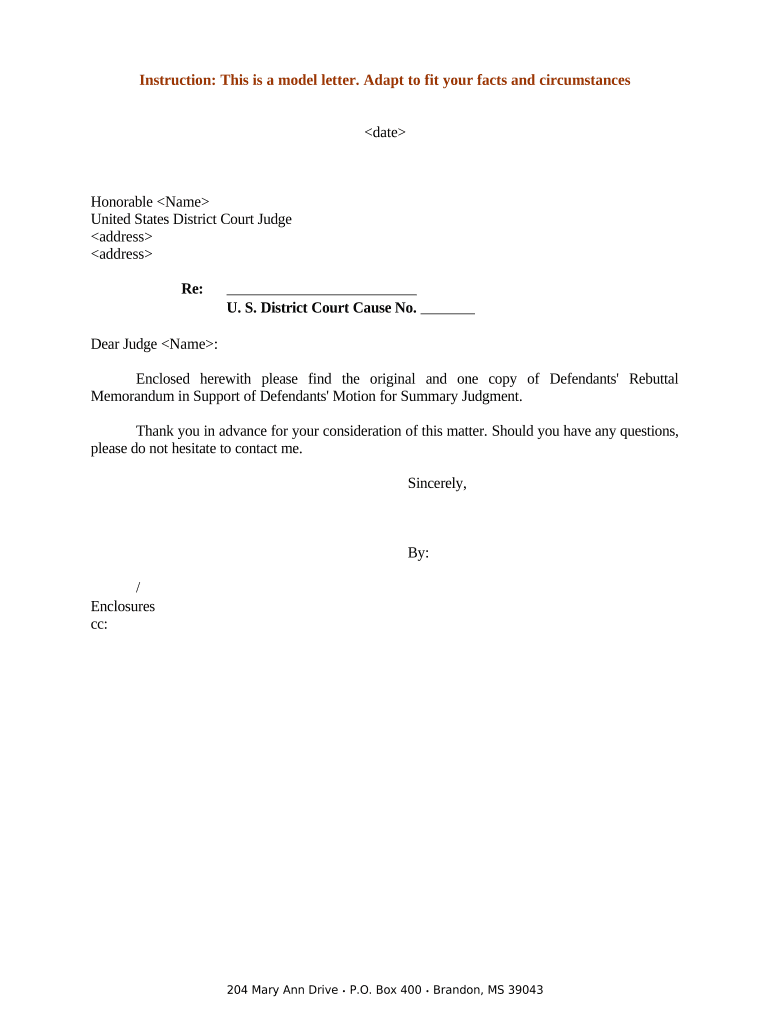
Case caption following local court format, showing court name, docket number, and party names to ensure the clerk files the document in the correct case and location.
Introduction

Brief opening paragraph stating you file to rebut specific arguments and identifying the opposing motion or evidence by date and title.

Statement of Facts

Concise factual recitation limited to facts material to the rebuttal with citations to the record or attached exhibits supporting corrections or contradictions.

Legal Argument

Targeted legal analysis addressing the opponent’s citations and explaining why the court should reject their conclusions or give them less weight.

Evidence Attachments

Exhibits or authenticated documents referenced in the rebuttal; include an exhibit index and follow court rules on sealing or redaction.

Signature Block

Typed name, signature (electronic or handwritten per court rules), date, and contact details. Include certificate of service showing how and when opposing parties were served.

Step-by-Step: Preparing a Rebuttal Motion

Follow a concise sequence to draft, assemble evidence, serve opposing counsel, and file with the court clerk while observing local timing and format rules.

  • 01
    Draft Motion: Focus strictly on newly raised points; keep argument tight and cite record evidence.
  • 02
    Attach Exhibits: Include only necessary documents; paginate and reference exhibits in the motion text.
  • 03
    Serve Opponent: Serve per local rules (email, e-service portal, or mail) and retain proof of service.
  • 04
    File with Clerk: File electronically or in person per court rules; include filing fee or fee waiver paperwork if applicable.

Filing and Service Workflow Overview

Rebuttal motions move through drafting, service, filing, and eventual court consideration; timing and accepted formats vary by jurisdiction and court level.

  • Prepare Document: Complete motion text, exhibits, and certificate of service in required format.
  • Serve Parties: Deliver copies to opposing counsel and interested parties by approved methods.
  • File with Court: Submit via the court’s electronic filing system or file in person if required.
  • Await Ruling: Court schedules consideration or hearing according to local rules and calendar availability.

Configuring an Online Rebuttal Motion Workflow

Set up your digital workflow to mirror court and service requirements: authentication, routing, attachments, and format selection are key.

Field Mapping Map caption, docket, and signature fields to your template for consistent filings.
Authentication Method Choose email, SMS, or advanced signer authentication for signer verification.
Routing Order Define signer and reviewer order to ensure proper approvals before filing.
Notifications Enable email confirmations for signing events and completed filings.
File Format Export as PDF/A or court-preferred PDF for compatibility with e-filing systems.

Technical Considerations for Digital Submission

Verify the court’s permitted e-filing formats, electronic signature acceptance, and authentication standards before submitting digitally.

  • File Types: PDF, PDF/A, DOCX supported by most e-filing systems.
  • Integrations: Link with systems like Microsoft 365, NetSuite, or Google Workspace.
  • Authentication: Use email or SMS MFA where courts require signer verification.

Typical Deadlines and Timing Considerations

Deadlines for rebuttal motions vary by court; check local rules and any scheduling orders that set strict filing and service windows.

Response Window:

Often 14–21 days after motion service; check local rule for exact days.

Hearing Scheduling:

Hearing may be set weeks after filing depending on court calendar.

Page Limits:

Many courts impose page or word limits on replies and rebuttals.

Service Timing:

Service deadlines may differ from filing deadlines; plan accordingly.

Extensions:

Request extensions in writing before expiry when permitted by court rules.

Key Milestones in the Motion Cycle

Track milestones from opposing motion to final ruling to ensure timely responses and preserve appellate issues if needed.

01

Opposing Motion Filed

Start point for calculating response and service deadlines.

02

Rebuttal Drafted

Assemble key facts and exhibits tied directly to points raised.

03

Rebuttal Served

Serve parties and file proof of service per jurisdictional rules.

04

Court Ruling or Hearing

Court issues decision or schedules oral argument after briefing complete.

Common Pitfalls to Avoid When Preparing a Rebuttal

  • Missing the court’s page or timing limits; an overlong or late rebuttal may be stricken or ignored by the judge.
  • Including new claims or evidence not permitted in rebuttal; courts often restrict rebuttal to responses of points newly raised.
  • Failing to properly cite the record or provide authenticated exhibits; unverified attachments are less persuasive and may be excluded.
  • Improper service or filing method that violates local e-filing rules can result in rejection and lost response time.

Consequences of Procedural Errors

Motion Stricken: Court may refuse to consider the rebuttal.
Sanctions Risk: Improper filings can expose counsel to sanctions.
Default Outcome: Failure to rebut key claims can lead to adverse rulings.
Waiver of Issues: Late or untimely arguments may be waived on appeal.
Missed Deadlines: Loss of right to respond or seek relief.
Increased Costs: Additional filings, motions, or attorney time needed.

Security and Compliance When Handling Filing Documents

Encryption: TLS 1.2/1.3 in transit
Data at Rest: AES-256 encryption at rest
Certifications: SOC 2 Type II available
Healthcare Compliance: HIPAA compliance with BAA
Regulatory Support: 21 CFR Part 11 capabilities
Accessibility: WCAG 2.0 Level AA

eSignature Pricing Comparison for Filing and Signing

Compare baseline pricing and key capabilities when selecting an eSignature platform for preparing and submitting court documents; signNow appears first for reference.

signNow DocuSign Adobe Sign PandaDoc HelloSign
Starting Price $8/user/mo $15/user/mo $14/user/mo $19/user/mo $15/user/mo
Free Trial 7-day free trial Varies Varies Varies Varies
Bulk Send Yes Varies Varies Varies Varies
Audit Trail Yes Yes Yes Yes Yes
HIPAA Compliant Yes Yes Yes No No

Frequently Asked Questions and Troubleshooting

Answers to common questions about validity, signatures, service, and deadlines when preparing or filing a Rebuttal Motion.


Need help? Contact support

be ready to get more
Join over 28 million airSlate SignNow users