Establishing secure connection…Loading editor…Preparing document…

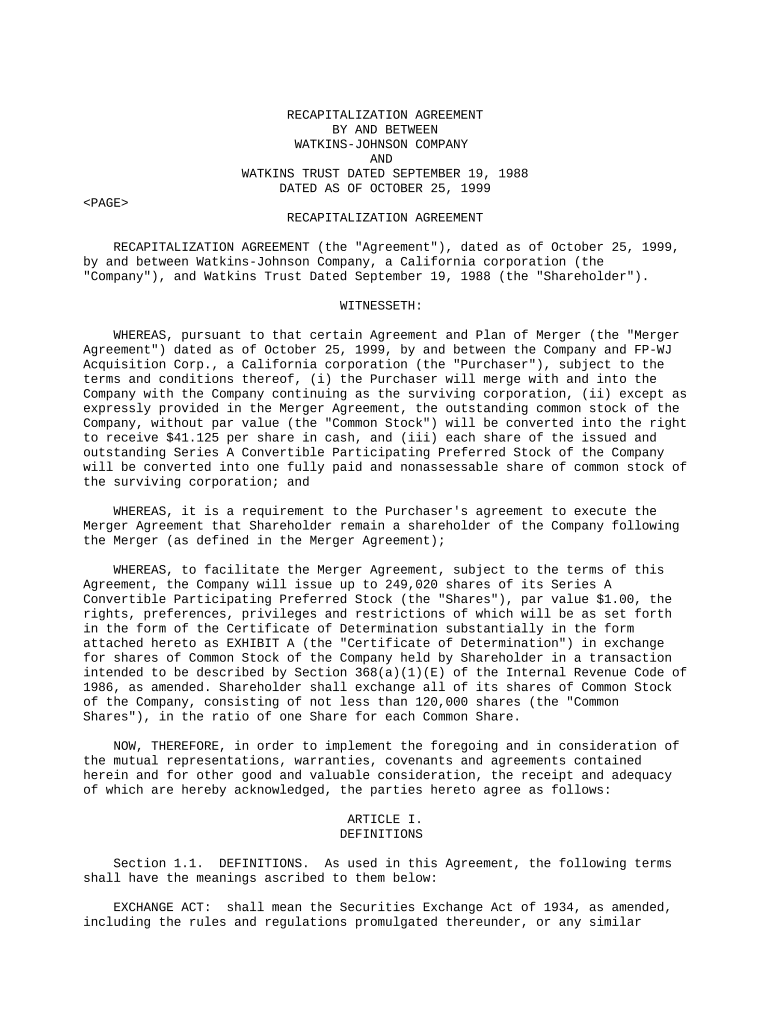
Recapitalization Agreement

This template is fully customizable. Edit the text, fill out the fields, and send it for signature. Give it a try!
Recapitalization Agreement

What a Recapitalization Agreement Is and When It’s Used

A Recapitalization Agreement is a legally binding contract that restructures a company’s capital structure by changing the mix or terms of equity and debt. It sets the economic and governance terms for new and existing securities, describes consideration exchanged, records amendments to charter documents when required, and allocates rights among investor classes. Typical uses include private-company restructurings, distressed-debt reorganizations, private equity recapitalizations, and M&A-related rebalancing. The agreement often triggers board and shareholder approvals, lender consents, and updates to capitalization schedules and may require regulatory or filing actions.

Why a Clear Recapitalization Agreement Matters

A well-drafted agreement clarifies ownership and creditor treatment, reduces litigation risk, preserves value for stakeholders, and documents operational and governance changes tied to the recapitalization.

Why a Clear Recapitalization Agreement Matters

Who Typically Prepares, Reviews, and Signs This Agreement

Primary participants are parties with capital interests, their legal and financial advisors, and corporate officers who implement corporate actions.

  • Private equity sponsors and investors who negotiate economic and liquidity terms for portfolio companies.
  • Company boards and C-suite officers who approve governance changes and execute corporate filings.
  • Lenders, noteholders, and creditors who must consent to modified payment terms or collateral arrangements.

Typical Signers and Their Roles

Sponsor / Investor

Private equity firms or strategic investors that negotiate the recapitalization structure, fund consideration, and often require protective covenants and repurchase or exit mechanics in the agreement.

Company CFO

Chief financial officer who certifies schedules, implements accounting treatment, coordinates lender consents and shareholder approvals, and signs as an authorized officer when required.

Essential Data and Confidentiality Notes to Include

Confidentiality: Identify any non-disclosure terms applicable to financial disclosures.
Material Terms: Summarize conversion ratios, interest rates, and liquidation preferences.
Capital Table: Provide a current cap table with pre- and post-recapitalization shares.
Debt Schedule: List outstanding debt instruments and priority details.
Valuation Method: Explain the valuation approach used for new securities.
Board Resolutions: Record board approvals that authorize the recapitalization.

Key Legal and Financial Risks to Watch For

Breach Claims: Damages or injunctions for contractual violations.
Tax Consequences: Potential taxable events for shareholders or the company.
Creditor Remedies: Acceleration, foreclosure, or litigation by lenders.
Regulatory Violations: Securities law or filing noncompliance risk.
Equity Dilution Risk: Changes to ownership percentages and voting power.
Contract Rescission: Courts may unwind defective transactions.

Common Preparation Errors to Avoid

  • Incomplete or outdated capitalization schedules that misstate pre-transactions shares and options, leading to execution errors and disputes.
  • Vague description of consideration (e.g., 'equity interests') without specific conversion ratios, closing mechanics, or payment timelines.
  • Missing corporate approvals or shareholder consents required by charter documents, which can render the recapitalization voidable.
  • Failure to obtain lender consents or address intercreditor rights, resulting in collateral disputes or acceleration risks.

Step-by-Step: Completing a Recapitalization Agreement

Follow a structured sequence: prepare schedules, confirm approvals, draft precise economics, execute with proper signatures, and file required notices.

  • 01
    Prepare Schedules: Assemble cap table, debt schedule, and exhibits.
  • 02
    Secure Approvals: Obtain board, shareholder, and lender consents.
  • 03
    Draft Terms: Specify conversion, valuation, and governance mechanics.
  • 04
    Execute & File: Sign, notarize if required, and update public filings.

How Execution and Distribution Typically Work

Execution flows from internal approval to signing by authorized parties, then distribution to stakeholders and any required filing or recording.

  • Document Assembly: Combine agreement, schedules, and required exhibits.
  • Signature Placement: Designate signature blocks and execution dates.
  • Authentication: Confirm signer authority and identity methods.
  • Distribution: Provide copies to parties, counsel, and registrars.

Core Sections of a Professional Recapitalization Agreement

A comprehensive agreement organizes negotiation outcomes into distinct sections that define economics, governance, closing mechanics, and remedies.

Recapitalization Structure

Describe precisely how existing securities convert or exchange, including ratios, classes created, and priority between debt and equity interests.
Consideration

State cash amounts, newly issued shares, warrants, or debt instruments, timing of payments, and any escrow arrangements tied to closing.

Governance Changes

Detail board composition, voting rights, protective provisions, and any amended charter or bylaw language that alters control mechanics.

Protective Covenants

Include affirmative and negative covenants, financial covenants, and events of default that preserve lender or investor protections post-closing.

Closing Conditions

List conditions precedent such as approvals, third-party consents, material adverse change clauses, and delivery of required documents.

Post-Closing Adjustments

Specify true-up mechanics, escrow releases, indemnity claims process, and procedures for correcting errors after closing.

Supporting Documents and Exhibits Commonly Attached

Attach the documents that substantiate the transaction and enable accurate post-closing administration.

Cap Table Exhibit

A detailed pre- and post-transaction capitalization schedule listing shareholders, option pools, convertible instruments, and resulting ownership percentages.

Debt Instruments

Copies of promissory notes, security agreements, and amendment schedules showing current creditor terms and collateral priorities.

Board/Shareholder Resolutions

Certified resolutions or written consents authorizing the recapitalization and delegating execution authority to specified officers.

Legal Opinions

Counsel opinions on enforceability, authority to enter the agreement, and any necessary securities law or tax qualifications.

Digital Workflow Settings for Online Completion

Configure a digital workflow to enforce signer order, authentication, notifications, and storage for auditability and compliance.

Field Configuration
Signature Order Sequential or parallel signing as required.
Authentication Level Email, SMS code, or stronger identity checks.
Conditional Fields Show or hide fields based on signer choices.
Notifications Email reminders and completion confirmations.

Technical Requirements for Electronic Execution

Confirm the chosen platform preserves an immutable audit trail and supports export to secure repositories for retention and compliance.

  • File Formats: PDF, DOCX, and PDF/A for long-term records.
  • Integrations: Connectors for ERP, CRM, or document storage systems.
  • Authentication Options: Email, SMS OTP, KBA, or enterprise SSO.

How a Recapitalization Agreement Differs from Related Documents

Compare the Recapitalization Agreement to other documents that may be considered during a corporate restructuring.

Document Type Typical Focus
Recapitalization Agreement capital structure terms and governance
Equity Purchase Agreement share sale buyer/seller transfer
Debt Restructuring Agreement debt terms creditor remedies
Merger Agreement business combination integration mechanics

eSignature Vendor Pricing and Capability Snapshot

Compare basic price points and common capability indicators across leading eSignature providers; signNow appears first per vendor listing requirements.

signNow DocuSign Adobe Sign PandaDoc HelloSign
Starting Price $8/user/mo $15/user/mo $14/user/mo $19/user/mo $15/user/mo
Free Trial 7-day free trial Varies by vendor Varies by vendor Varies by vendor Varies by vendor
Bulk Send Yes Yes Yes Yes Yes
Audit Trail Yes Yes Yes Yes Yes
HIPAA Compliant Yes (BAA available) Available with BAA Available with BAA Varies by plan Varies by plan
Envelope Cap No cap 100 envelopes/user/year limit Varies by plan Varies by plan Varies by plan

Key Milestones and Typical Timing for a Recapitalization

Track negotiation, approval, closing, and post-closing obligations as discrete milestones with assigned owners and dates.

01

Negotiation

Agree on structure, valuation, and material commercial terms.

02

Approvals

Obtain board, shareholder, and lender consents as required.

03

Closing

Exchange consideration, deliver closing conditions, and execute final documents.

04

Post-Closing Compliance

Complete filings, update cap table, and resolve post-closing adjustments.

Frequently Asked Questions About Recapitalization Agreements

Answers to common legal, execution, and recordkeeping questions to help avoid delays and preserve enforceability.


Need help? Contact support

be ready to get more
Join over 28 million airSlate SignNow users