Establishing secure connection…Loading editor…Preparing document…

Reconsideration Letter

This template is fully customizable. Edit the text, fill out the fields, and send it for signature. Give it a try!
Reconsideration Letter

What a Reconsideration Letter Is and when to use it

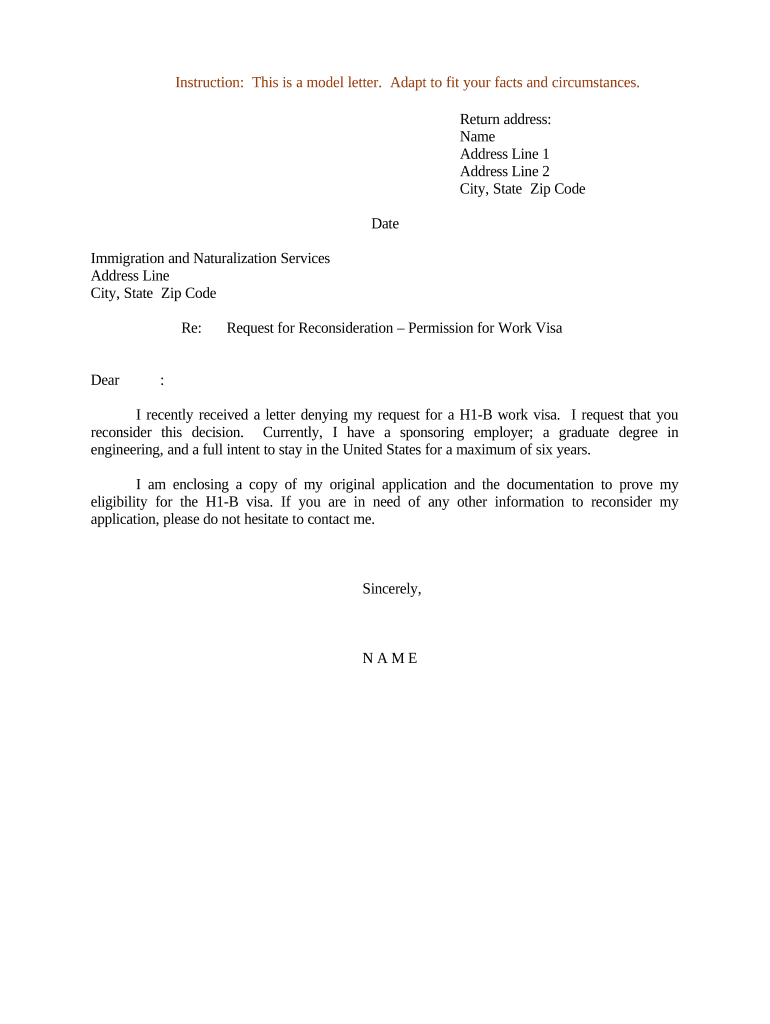
A Reconsideration Letter is a formal written request asking an organization or agency to review and change a prior decision. Common uses include insurance claim denials, benefits eligibility, academic admissions decisions, loan or credit denials, and administrative determinations. The letter summarizes the original decision, explains why the decision should be reviewed, provides supporting facts and documentation, and requests a specific outcome or remedy. Draft the letter clearly, address it to the appropriate reviewer or department, and include contact information and any required identifiers (claim number, account number, student ID, or file number).

Why a clear Reconsideration Letter matters

A focused Reconsideration Letter creates an organized record, improves the odds that the reviewer understands the basis for your request, and speeds administrative handling. It concentrates evidence, corrects factual errors, and documents procedural or legal omissions relevant to the original decision.

Why a clear Reconsideration Letter matters

Who commonly prepares Reconsideration Letters

People and organizations prepare these letters when they seek review of an adverse administrative or commercial decision.

  • Individuals disputing an insurance denial or claim decision
  • Students or families requesting academic admissions or financial aid reviews
  • Employees challenging workplace discipline or benefit denials
  • Businesses appealing permit, licensing, or procurement rejections
  • Attorneys and advocates filing administrative appeals on behalf of clients

The writer should be the party with standing or an authorized representative (attorney, agent, or designated advocate) and must include documentation that proves authority to act if not the primary party.

Essential parts of a professional Reconsideration Letter

A complete letter follows a standard structure: identification, clear timeline of events, legal or policy basis for reconsideration, supporting evidence list, precise request, and signature block.

Header

Sender name, organization (if any), contact details, date, and recipient name and department for accurate routing and recordkeeping.
Reference Info

Include claim, account, or file number plus original decision date to ensure the request gets associated with the correct record.

Statement of Issue

One-paragraph summary of the decision being challenged and the specific action you want the reviewer to take.

Grounds for Review

Concise legal, factual, or procedural reasons why the decision was incorrect, citing policy, contract terms, or law where applicable.

Supporting Evidence

List attached documents and summarize key points from medical records, correspondence, invoices, expert opinions, or other proof.

Signature Block

Typed name, printed name, title (if applicable), physical or electronic signature, and date to establish intent and attribution.

Stepwise process to prepare and submit a Reconsideration Letter

Follow these steps to create a complete, properly routed reconsideration request that meets common administrative requirements.

  • 01
    Gather Documents: Collect decision notice, relevant records, and any correspondence.
  • 02
    Draft Letter: Write a clear issue statement, grounds for review, and requested remedy.
  • 03
    Attach Evidence: Label and number exhibits; include a table of contents if many documents.
  • 04
    Submit & Track: Send via the required channel and keep proof of delivery and filing date.

Where to send the letter and typical routing steps

Identify the correct recipient and route to ensure timely processing; agencies and companies often specify an appeals address, email, or portal.

  • Designated Office: Appeals or grievance department contact listed on denial notice.
  • Mail Submission: Certified mail or courier with delivery receipt for proof of filing.
  • Email or Portal: Use the agency's secure portal or appeals email if permitted.
  • In-Person Filing: Some offices accept hand-delivery with a timestamped receipt.

How to set up an electronic workflow for submissions

Configure an online workflow to route, sign, and archive reconsideration letters securely and consistently.

Field Configuration
Document Template Create a reusable letter template with placeholders for names and reference numbers
Signature Order Set signer roles and signing sequence (author → reviewer → counsel)
Authentication Require email verification or SMS code for signer attribution
Archive Policy Save final PDF and audit trail to secure storage with retention tags

Digital submission and eSignature considerations

Ensure the platform you use supports legal e-signatures, secure attachments, and an auditable trail before e-submitting a reconsideration request.

  • File Formats: PDF or DOCX accepted by most portals
  • Authentication: Email/SMS or stronger KBA options
  • Audit Trail: Timestamp, IP, and action log required

Use a platform that preserves the final signed PDF and an immutable audit trail to meet ESIGN/UETA evidentiary requirements and support later review or litigation.

Typical timelines and appeal deadlines to watch

Deadlines vary by program or contract; note statutory or contractual appeal windows and service-of-process rules.

Insurance Appeals:

Often 30–180 days from denial date

Federal Benefits:

Varies by program; check agency notice promptly

Academic Appeals:

Commonly tied to semester deadlines or 15–60 days

Loan or Credit Appeals:

Typically 30 days after adverse notice

Agency Reconsideration:

Some agencies impose strict filing windows; missing them may forfeit rights

Common mistakes that delay or derail reconsideration requests

  • Missing or incorrect reference numbers cause routing failures and processing delays at the receiving office.
  • Submitting incomplete or unindexed evidence forces reviewers to request more information and extends time to decision.
  • Relying on hearsay or undocumented assertions rather than attaching primary records undermines the persuasive value of the request.
  • Failing to follow the agency’s specified appeals format, address, or submission portal can result in outright rejection as untimely or misfiled.

Risks of an incorrect or untimely Reconsideration Letter

Forfeiture: Loss of appeal rights
Delays: Extended review time
Denial: Administrative rejection
Financial Risk: Unrecovered costs or benefits
Legal Exposure: Possible estoppel or waiver issues
Record Issues: Poorly documented facts may harm later litigation

Data and security fields to confirm before submitting

Encryption: TLS 1.2/1.3; AES-256 at rest
Audit Trail: Timestamped events and IP logging
HIPAA BAA: Required for health records exchange
Access Controls: Role-based access and SSO options
Retention: Secure storage with retention metadata
Certifications: SOC 2 Type II, ISO 27001 available

Representative eSignature vendor pricing and capability snapshot

Basic pricing and common feature availability across vendors. Place signNow first for reference; verify vendor plans for current details before purchasing.

signNow DocuSign Adobe Sign PandaDoc HelloSign
Starting Price $8/user/mo $15/user/mo $14/user/mo $19/user/mo $15/user/mo
Free Trial 7-day free trial Yes Yes Yes Yes
Bulk Send Yes Yes Yes Yes No
Audit Trail Yes Yes Yes Yes Yes
HIPAA Compliant Yes Yes Yes No No

Frequently asked questions about Reconsideration Letters

Answers to common procedural and drafting questions that arise when preparing and submitting reconsideration requests.


Need help? Contact support

be ready to get more
Join over 28 million airSlate SignNow users