Establishing secure connection…Loading editor…Preparing document…

Renunciation Form

This template is fully customizable. Edit the text, fill out the fields, and send it for signature. Give it a try!
Renunciation Form

What a Renunciation Form is and when it applies

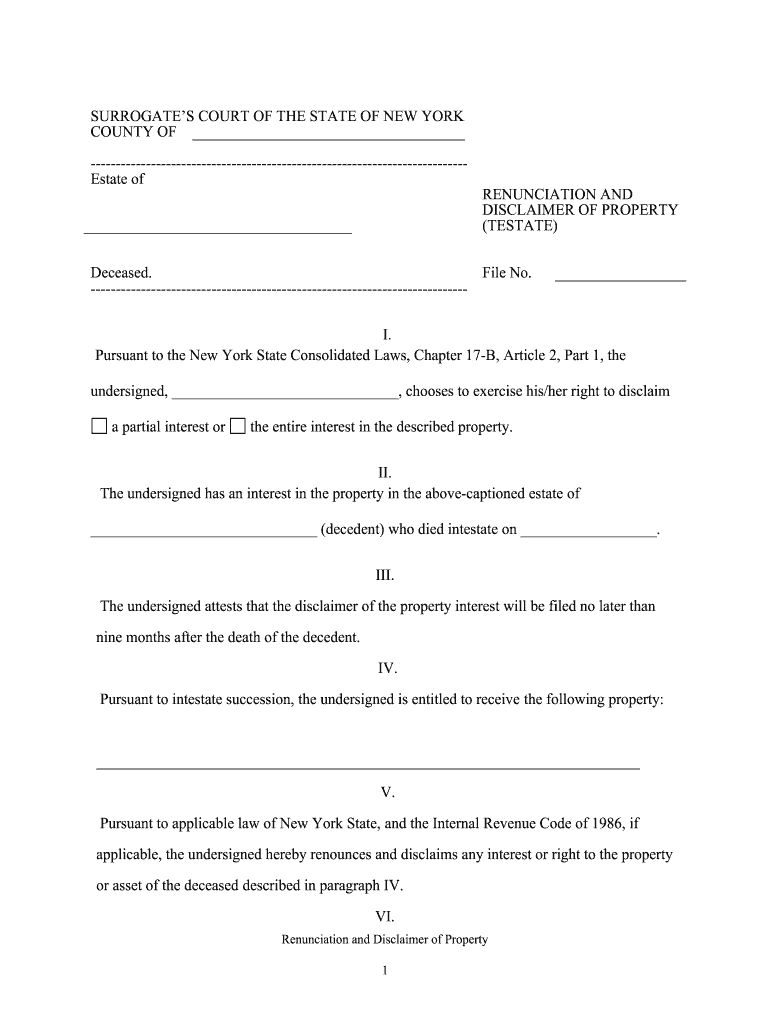
A Renunciation Form is a written declaration where an individual formally gives up a legal right, claim, interest, or benefit. Common uses include renouncing inheritance or disclaiming an interest in property, renouncing parental rights, or rejecting appointed executorships. The document records the signer’s clear intent, identifies the subject right, names affected parties, and states the effective date. Renunciation can affect statutory deadlines, tax reporting, and property records, so accuracy and appropriate authentication—such as notarization or witness attestation—are often required.

Why a clear Renunciation Form matters

A correctly completed Renunciation Form creates a permanent record of voluntary relinquishment and helps avoid disputes over ownership, probate claims, or statutory obligations.

Why a clear Renunciation Form matters

Who typically completes a Renunciation Form

Legal counsel commonly reviews the form when potential tax, estate, or property-record consequences exist; courts may require strict formalities.

  • Heirs and beneficiaries asked to disclaim probate interests or inheritances, often before estate distribution.
  • Appointees (executors, trustees, guardians) who refuse a role for personal or conflict reasons.
  • Property owners or borrowers who renounce specific rights or liens to clear title or resolve disputes.

Step-by-step: completing a Renunciation Form

Follow these steps in order to create a clear, legally durable renunciation.

  • 01
    Prepare Document: Identify parties, describe the interest, and set the effective date.
  • 02
    Review Legal Consequences: Confirm tax and estate effects with counsel if liability or probate is possible.
  • 03
    Authenticate: Execute the form with required signatures, witnesses, or notarization.
  • 04
    File or Deliver: Send the signed form to relevant parties, registries, or the court as required.

Typical routing and processing for a Renunciation Form

Renunciation documents move from signer to recipients, and may require filing, recordation, or court acceptance depending on the subject matter.

  • Signer: Completes and signs the form.
  • Authentication: Notarization or witnesses added when required.
  • Delivery: Form sent to estate counsel, registry, or interested parties.
  • Recordation: Placed in public records or probate file if applicable.

Common digital workflow settings for online completion

Configure your eSignature workflow to include authentication, conditional fields, and audit logging for traceability.

Field Configuration
Signature Authentication Email link plus optional SMS code for signer verification
Conditional Fields Show witness or notary fields when jurisdiction requires them
Template Library Save a reusable Renunciation Form to ensure consistency
Audit Trail Enable timestamps, IP, and action logs for legal evidence

Technical requirements for e-submission and signing

Confirm the chosen platform can produce a downloadable signed PDF with an audit trail and, if needed, support notarization or RON workflows.

  • File Formats: PDF and DOCX supported for upload and export
  • Integrations: Connectors for Google Workspace and Microsoft 365
  • Authentication: Email, SMS, or multi-factor as needed

Timelines and time-sensitive considerations

Several deadlines can apply depending on the renunciation type; missing a deadline may have tax or probate consequences.

W-9 / TIN Requests:

Provide a valid TIN on request to avoid backup withholding

Estate Renunciation Window:

Some states require disclaimers within nine months of death for tax-free disclaimers

Notarization Scheduling:

Allow extra time for in-person or RON notarization sessions

Court Filings:

Allow lead time for probate clerk review and docketing

Tax Reporting:

Renunciations affecting income or gain may affect the next tax return cycle

Key milestones in processing a Renunciation Form

Track these sequential milestones from initial decision through final recordation.

01

Decision and Draft

Prepare a clear written renunciation and identify affected interests.

02

Legal Review

Obtain counsel review for tax or probate implications if necessary.

03

Execution

Sign in presence of required witnesses or notary, or complete RON session.

04

Delivery and Recording

Send to stakeholders and record with county recorder or probate court as required.

Common preparation errors to avoid

  • Using vague language that fails to identify the specific right being renounced, which can create ambiguity in probate or title disputes.
  • Failing to match the signer’s legal name to identification documents, leading to challenges to validity or delays in recordation.
  • Skipping required authentication—omitting notarization or witness signatures where state law or a receiving authority requires them.
  • Not considering tax consequences or filing requirements, which may trigger IRS backup withholding or unexpected reporting obligations.

Security, privacy, and compliance considerations

Encryption in Transit: TLS 1.2/1.3
Encryption at Rest: AES-256
Audit Trail: Detailed signing logs and timestamps
HIPAA Support: BAA available for PHI
ESIGN / UETA: Legal framework recognition
ISO and SOC: ISO 27001 and SOC 2 Type II

Consequences of incorrect or late renunciation

Tax Withholding: Backup withholding 24%
IRS Penalties: Information return penalties under IRC §6721
Probate Delay: Extended administration and contested claims
Title Issues: Clouded title or lien disputes
Loss of Rights: Permanent relinquishment if validly executed
Revocation Limits: Some renunciations are irrevocable

Typical eSignature pricing and feature comparison for Renunciation Form workflows

Compare entry-level pricing, trial availability, bulk send, audit trail, HIPAA support, and envelope limits to choose a platform that meets authentication and recordkeeping needs.

signNow DocuSign Adobe Sign PandaDoc HelloSign
Starting Price $8/user/mo $15/user/mo $14/user/mo $19/user/mo $15/user/mo
Free Trial 7-day free trial, no credit card No No Yes, limited Yes, limited
Bulk Send Yes Yes Yes Yes No
Audit Trail Yes Yes Yes Yes Yes
HIPAA Compliant Yes Yes Yes No No

FAQs and troubleshooting for Renunciation Forms

Common questions address enforceability, necessary formalities, revocation options, and how electronic signatures affect validity.


Need help? Contact support

be ready to get more
Join over 28 million airSlate SignNow users