Establishing secure connection…Loading editor…Preparing document…

Mutual Rescission Agreement

This template is fully customizable. Edit the text, fill out the fields, and send it for signature. Give it a try!
Mutual Rescission Agreement

What a Mutual Rescission Agreement Is

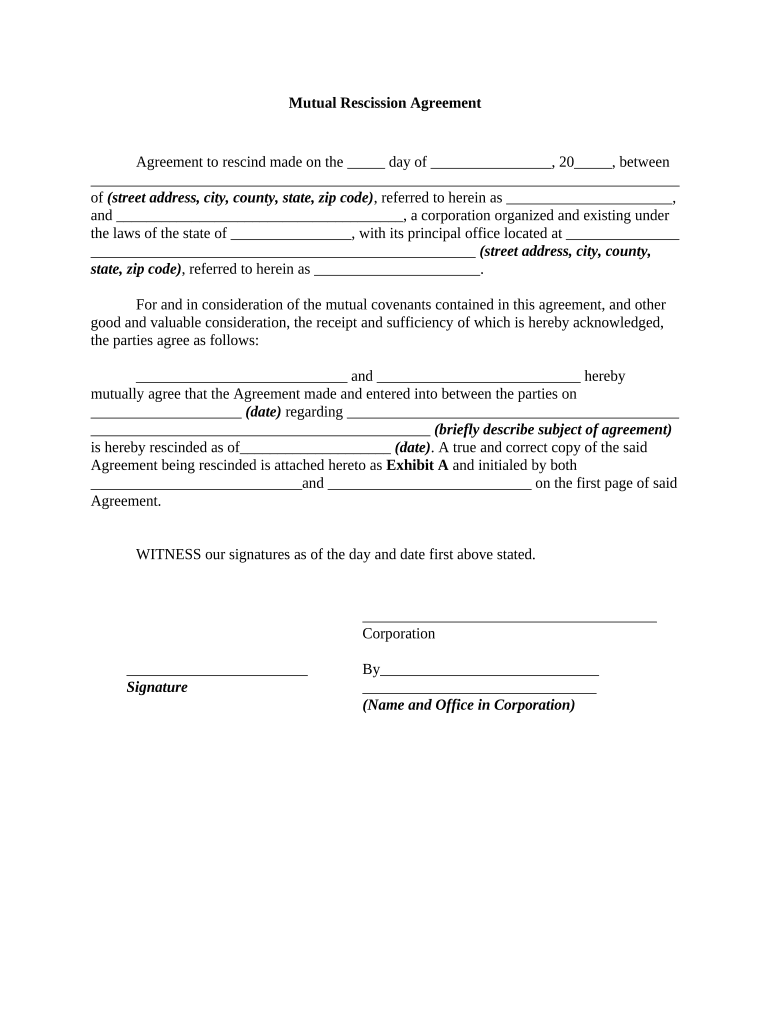
A Mutual Rescission Agreement is a signed document in which all original contracting parties agree to cancel an existing contract and restore the parties, insofar as practicable, to their pre-contract positions. It identifies the original agreement, sets the effective rescission date, specifies actions each party will take (refunds, returns of property, release of claims), and records any surviving obligations. The goal is to avoid litigation by documenting mutual consent, consideration or waiver terms, and execution details such as signatures, notarization, and governing law.

Why a Clear Rescission Agreement Matters

A properly drafted Mutual Rescission Agreement reduces uncertainty, limits future disputes, clarifies return-of-consideration obligations, and records mutual releases. It creates a clear written record that courts and third parties can rely on if questions arise about whether obligations were extinguished.

Why a Clear Rescission Agreement Matters

Who Commonly Prepares or Signs These Agreements

Real estate professionals, corporate counsel, contract managers, HR teams, and small business owners commonly use Mutual Rescission Agreements to unwind transactions and document mutual releases.

  • Real estate professionals: resolve purchase or escrow cancellations and coordinate recording when deeds are affected.
  • Corporate legal teams: terminate commercial contracts, allocate liabilities, and preserve confidentiality or IP carve-outs.
  • Employers and HR: formalize termination terms and return of assets when employment or contractor relationships end.

Use counsel when rescission affects property rights, third-party liens, or regulatory reporting to ensure enforceability and proper notice.

Typical Signers and Their Roles

Buyer (Individual)

An individual party who agreed to buy goods or property; responsible for accepting return terms, receiving refunds, and signing to confirm release of claims. Counsel or escrow agents often assist with funds return and confirmation when real estate or large sums are involved.

Seller (Business)

A corporate or sole-proprietor seller that must confirm receipt of returned items, process refunds, and make representations about liens, title, or outstanding obligations; an authorized officer should sign to bind the organization and avoid later authority disputes.

Core Elements to Include in a Professional Rescission

A comprehensive Mutual Rescission Agreement contains parties, recitals, release language, return-of-consideration terms, surviving clauses, and execution details to minimize later disputes.

Parties

Full legal names, entity types, addresses, and identification of authorized signatories for each party so there is no ambiguity about who is bound by the rescission.
Recitals

A concise factual background citing the original agreement (title and date), the reason for rescission, and the mutual intent to unwind obligations to create an evidentiary baseline.

Mutual Release

Precise release language extinguishing claims arising from the original contract; include carve-outs for fraud, criminal acts, or obligations expressly preserved by the parties.

Consideration

Detailed description of refunds, credits, return of property, and payment timing; specify amounts, payment method, and any offsets or deductions to avoid later disputes.

Survivorship

Identify which provisions (for example, confidentiality or indemnity) survive rescission and state whether tax or regulatory reporting obligations remain active.

Execution

Signature blocks with printed name, title, date, and optional notary or witness sections where state law, the original contract, or parties require authentication.

Step-by-Step: Preparing and Executing the Rescission

Follow these steps to prepare, review, and execute a Mutual Rescission Agreement to ensure clarity, authority, and compliance with any applicable formalities.

  • 01
    Draft Terms: Summarize cancellation actions and return-of-consideration obligations.
  • 02
    Legal Review: Have counsel confirm language and authority to rescind.
  • 03
    Signatures: Execute with authorized signers, notarize or witness if required.
  • 04
    Record and Distribute: Provide executed copies to parties and retain originals.

Typical Workflow for E-signing and Finalizing

A predictable digital workflow speeds execution while preserving evidence: upload, place fields, invite signers, authenticate, sign, and distribute executed copies.

  • Upload Document: Add the rescission PDF or Word file to the signing platform.
  • Place Fields: Insert signature, date, and initial fields where needed.
  • Invite Signers: Send secure signing links or email invites to all parties.
  • Authenticate & Sign: Use agreed authentication level, collect signatures, and capture the audit trail.

Digital Setup Checklist for Online Completion

Configure the document for electronic completion and select authentication and distribution settings before sending to signers.

Field Configuration
Upload Format PDF or DOCX accepted
Signature Fields Add signature and date fields
Authentication Email, SMS code, or stronger methods
Notary / Witness Enable RON or witness fields when required

Technical Considerations for Digital Execution

Confirm supported file types, authentication options, and integrations before sending the document for e-signing.

  • File Types: PDF, DOCX
  • Integrations: Salesforce, NetSuite, Google Workspace
  • Authentication: Email, SMS, KBA, or SSO

Ensure the platform you choose supports audit trails, tamper-evident signed PDFs, and any required notarization workflows.

Timing Considerations and Typical Deadlines

Identify timing for effectiveness, refunds, property transfers, and any recording or tax reporting that may follow rescission.

Effective Date:

Rescission becomes effective on the date specified in the agreement.

Return of Funds:

Payment timing should be specified; common practice is within 30 days of execution.

Property Transfer:

Real estate changes may require deed recording and county recording timelines.

Tax Reporting:

Address any tax year impacts and reporting adjustments when payments or credits are involved.

Statute Impact:

Note how the rescission date affects limitation periods for claims and defenses.

Key Milestones from Negotiation to Recordkeeping

Track major stages to ensure each party fulfils obligations and records are complete for legal or regulatory scrutiny.

01

Negotiation

Parties agree on terms to unwind the original contract.

02

Execution

All authorized signers sign the rescission agreement.

03

Authentication

Obtain notary or witness verification if required.

04

Recordkeeping

Distribute executed copies and retain originals per retention policy.

Common Mistakes to Avoid

  • Leaving consideration vague or unspecified, which can cause enforcement disputes and ambiguity.
  • Failing to confirm signatory authority, producing later challenges to corporate or agent signatures.
  • Overlooking third-party rights, such as liens, subcontracts, or assignees, that survive rescission.
  • Neglecting notarization or witness requirements when state law or the original contract requires them.

Risks and Consequences of an Incorrect Rescission

Enforceability: Agreement may be void
Residual Liability: Claims may persist
Tax Risk: Reporting errors; IRC §6501(a)
Regulatory Risk: Industry sanctions possible
I-9 Concerns: Employment forms may need correction
Litigation Costs: Increased fees and delay

Mutual Rescission vs Other Termination Options

Compare mutual rescission to unilateral termination and mutual release to select the correct approach based on consent and remedy structure.

Criteria Mutual Rescission Unilateral Termination
Requires mutual consent
Commonly notarized varies
Affects third parties
Creates release of claims sometimes

eSignature Vendor Pricing Snapshot for Rescission Workflows

Platform pricing and features affect cost and compliance when you execute rescission agreements electronically; compare starting price, trial availability, bulk send, audit trails, HIPAA support, and envelope limits.

signNow DocuSign Adobe Sign PandaDoc HelloSign
Starting Price $8/user/mo $15/user/mo $14/user/mo $19/user/mo $15/user/mo
Free Trial 7-day free trial Varies Varies Varies Varies
Bulk Send Yes Varies Varies Varies Varies
Audit Trail Yes Yes Yes Yes Yes
HIPAA Compliant Yes Varies Varies Varies Varies

Practical Examples of Mutual Rescission Use

Short, practical scenarios show how parties use rescission agreements to resolve disputes and return consideration without litigation.

Real Estate Closing

A buyer and seller mutually agreed to rescind a home purchase contract following inspection issues and title complications.

  • Escrow funds returned within 30 days.
  • The agreement required a notarized signature and an escrow instruction to disburse funds, then parties recorded a rescission memo or coordinated deed correction as needed to clear title.

Employment Separation

An employer and contractor agreed to rescind a services agreement after scope disputes and missed milestones.

  • Parties exchanged releases and final payment.
  • The agreement specified final compensation, return of company property, mutual release of claims, and preserved confidentiality obligations while confirming there would be no further claims related to the contract.

Practical Tips for Accurate and Efficient Completion

Adopt clear drafting habits and verification steps to reduce rework and future disputes when creating rescission agreements.

Define Consideration Precisely
Use specific dollar amounts or clearly described property transfers, include payment methods and deadlines, and avoid vague phrases like 'reasonable' or 'market value' to prevent interpretation disputes.
Confirm Authority to Sign
Obtain corporate resolutions or proof of signatory authority when an entity signs; record officer names and titles to prevent post-execution challenges to validity.
Address Third Parties
Identify and address any third-party interests such as liens, assignees, or subcontractors; obtain consents or include representations that none exist if that is true.
Preserve Evidence
Keep executed originals, e-signature audit trails, payment receipts, and correspondence demonstrating mutual intent to rescind and performance of return obligations.

Frequently Asked Questions

Answers to common questions about enforceability, notarization, third-party effects, and electronic execution of Mutual Rescission Agreements.


Need help? Contact support

be ready to get more
Join over 28 million airSlate SignNow users