Establishing secure connection…Loading editor…Preparing document…

Response Interrogatories

This template is fully customizable. Edit the text, fill out the fields, and send it for signature. Give it a try!
Response Interrogatories

What Response Interrogatories Are and when they matter

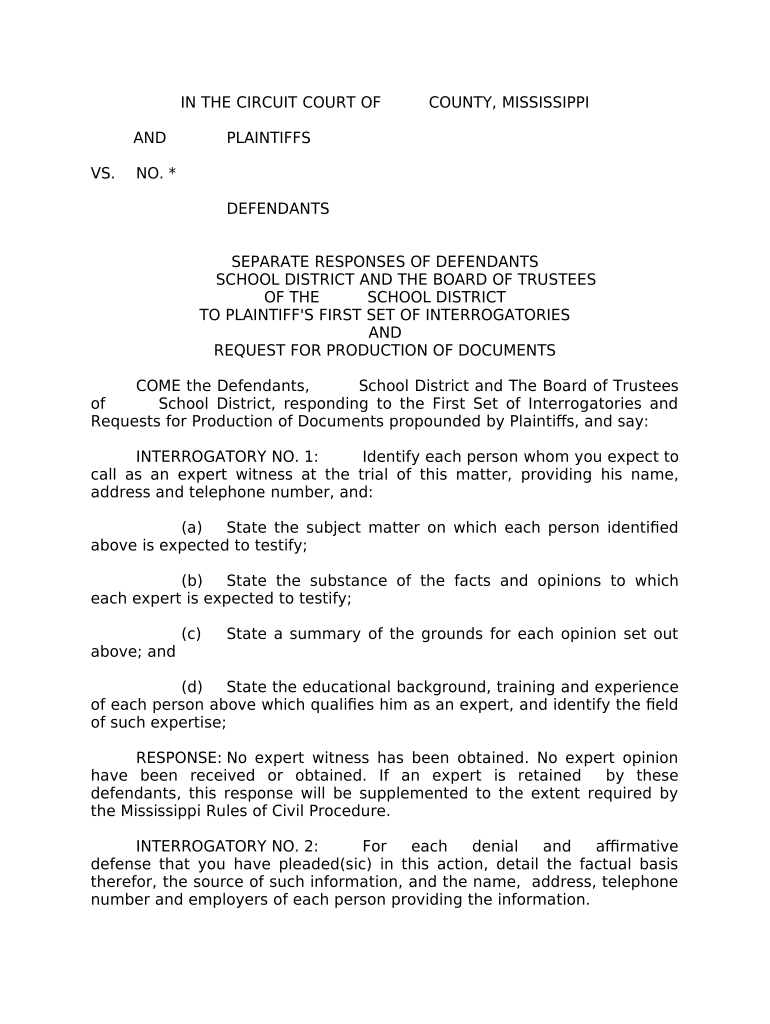
Response Interrogatories are written answers provided by a party in civil litigation to a set of interrogatories served by an opposing party as part of pretrial discovery. They record facts, contentions, and the identity of witnesses or documents relied on for the case. Properly prepared responses are signed, verified, and preserved as part of the case record. Responses can be amended, supplemented, or challenged by motion; accuracy, timeliness, and appropriate objections are essential to avoid sanctions or evidentiary exclusion.

Why accurate Response Interrogatories matter in litigation

Clear, complete answers limit surprises at trial, preserve objections, and create a defensible factual record under court rules.

Why accurate Response Interrogatories matter in litigation

Who prepares and signs Response Interrogatories

Parties, their attorneys, and designated corporate representatives typically prepare written responses under supervision of counsel.

  • Plaintiffs and defendants: Parties respond or instruct counsel to answer on their behalf in coordinated fashion.
  • In-house counsel: Reviews facts, approves objections, and signs verified answers where required.
  • Corporate representatives: Provide factual answers about the entity’s knowledge and document custodians.

Responsibility for signature and verification varies by rule and jurisdiction; attorneys commonly review and certify responses.

Core elements every professional Response Interrogatories package includes

A complete response package combines formal answers, specific objections, document references, witness IDs, verification, and service details arranged to match the interrogatory numbering and court rules.

Answer Text

Direct responses keyed to each interrogatory number, clear and concise, avoiding extraneous commentary while addressing the question posed.
Objections

Specific, rule-based objections (e.g., overbroad, vague, privileged) stated where applicable and not used as a default avoidance tactic.

Document References

Identify responsive documents by production ID or Bates range and list custodians or repositories where they are maintained.

Witness Identification

Provide names, contact information, and general subject areas for witnesses the party expects to rely on or who possess relevant information.

Verification

A signed verification or affidavit confirming that answers are true to the affiant’s knowledge, as required by jurisdictional rule.

Service Record

Proof of service showing to whom, how, and when the responses were delivered, including certificates or email delivery receipts.

Essential data elements to include

Case Number: Exact docket number
Party Name: Full legal name
Interrogatory ID: Original numeric label
Answer Date: MM/DD/YYYY
Verifier: Name and title
Service Method: E‑service or mail

Consequences of deficient or late responses

Court Sanctions: Monetary or evidentiary penalties
Motion to Compel: Court-ordered production
Default Risk: Judgment or adverse inference
Perjury Exposure: Criminal risk for false verification
Costs Award: Pay opposing counsel’s fees
Reputational Harm: Credibility loss at trial

Common mistakes to avoid when preparing responses

  • Answering informally without matching the interrogatory number causes confusion and wastes court and counsel time.
  • Using boilerplate objections for every question undermines credibility and invites motions to compel.
  • Failing to reference produced documents by Bates number leaves reviewers unable to verify assertions.
  • Signing a verification without confirming factual accuracy exposes the signer to perjury allegations.

Step-by-step: preparing and serving Response Interrogatories

Follow this sequence to prepare compliant, verifiable answers and to document service for the record.

  • 01
    Collect Facts: Gather documents and interview witnesses promptly.
  • 02
    Draft Answers: Respond to each interrogatory in order with citations.
  • 03
    Review Privilege: Log privileged materials and assert specific objections.
  • 04
    Verify & Serve: Signer executes verification; serve according to rule.

Where Response Interrogatories go and how they move through the case

Responses travel from the responding party to opposing counsel and may be filed with the court in support of motions or as exhibits.

  • To Opposing Counsel: Delivered via e-service, email, or mail per local rule.
  • Court Filing: File only when required by motion or order.
  • Document Production: Accompany answers when referencing produced materials.
  • Discovery Record: Maintain originals in case file and litigation system.

Configuring an online workflow for Response Interrogatories

Set up fields, signer authentication, and retention rules to ensure compliant e-signing and defensible records.

Field Mapping Place numbered answer, objection, verification, and service fields.
Signer Auth Use email+SMS or advanced authentication for verification.
Templates Save standard response templates for recurring cases.
Notifications Automate reminders and delivery receipts to recipients.
Retention Set archival period per retention policy.

Technical considerations for e-signing and submitting responses

Choose a platform that supports court-admissible audit trails, verification, and secure storage.

  • File Formats: PDF and DOCX supported
  • Integrations: Connects with Google Workspace, NetSuite
  • Security: TLS and AES-256 encryption

Ensure the platform retains a tamper-evident audit trail and can produce time-stamped certificates for court or opposing counsel.

Typical deadlines and timing expectations

Responding timeframes depend on the governing rules; federal practice and most states set a 30-day default for interrogatory answers.

Federal Rule:

FRCP 33(b)(2) — 30 days to answer

Extension:

Parties may stipulate to extend response time

Motion Practice:

Motions to compel follow local briefing schedules

Service Proof:

File certificate of service promptly

Amendments:

Supplement or amend answers as facts develop

Key milestones from receipt to trial-ready record

Track these sequential milestones to maintain a defensible discovery record and avoid late-response sanctions.

01

Receipt

Count calendar days from date of proper service.

02

Internal Review

Collect documents and consult witnesses within first weeks.

03

Draft & Sign

Prepare answers and execute verification in time to serve.

04

Supplementation

Update responses before depositions or at new-discovery points.

How Response Interrogatories differ from other discovery requests

Compare Response Interrogatories to common discovery tools so you can choose the right method to obtain or provide information.

Criteria Response Interrogatories Requests for Production
Purpose written factual answers document production
Formality answer under oath document identification and production
Typical Deadline 30 days 30 days or per rule
Verification Required typically not

eSignature vendor pricing and feature snapshot for filing responses

A concise vendor comparison highlighting starting price, trial availability, bulk send, audit trails, HIPAA compliance, and envelope caps for common eSignature platforms.

signNow DocuSign Adobe Sign PandaDoc HelloSign
Starting Price $8/user/mo $15/user/mo $14/user/mo $19/user/mo $15/user/mo
Free Trial 7‑day free trial Varies by vendor Varies by vendor Varies by vendor Varies by vendor
Bulk Send Yes Yes Yes Yes No
Audit Trail Yes Yes Yes Yes Yes
Envelope Cap No cap 100 envelopes/user/year Varies Varies Varies

Real-world examples of Response Interrogatories in practice

These short case sketches show how organizations use structured responses to move cases forward while preserving compliance.

Optica Ventures LLC

A small portfolio firm used templated responses to accelerate discovery

  • Reduced attorney drafting time by standardizing answers
  • The streamlined process improved turnaround and preserved a clear audit trail for settlement discussions.

Martin Properties

A regional real estate firm centralized discovery responses in a secure system

  • Consolidated document references with Bates numbers
  • That approach shortened dispute resolution cycles and maintained consistent verification language across properties.

Frequently asked questions about Response Interrogatories

Answers to common procedural and technical questions about preparing, signing, and serving interrogatory responses.


Need help? Contact support

be ready to get more
Join over 28 million airSlate SignNow users