Party Details
Full legal names, aliases, dates of birth, and contact addresses for petitioner and respondent to ensure accurate identification and valid service of process.
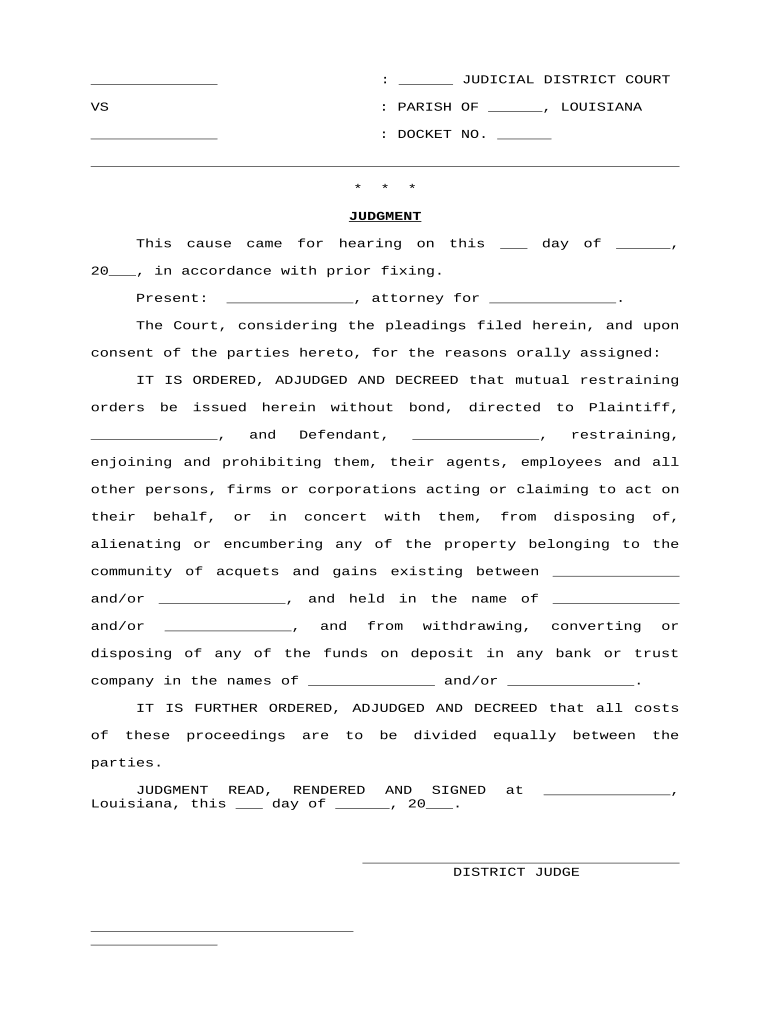
A restraining order provides legally enforceable protections, creates a formal record of abuse or threats, and enables law enforcement to act when violations occur. It preserves rights and documents relief options like stay-away terms, temporary custody, or property control.

Victims, their advocates, and attorneys commonly prepare petitions; courts and law enforcement rely on the resulting orders for enforcement.
Roles and available help vary by jurisdiction; many jurisdictions offer court forms, victim advocates, or pro bono legal services to assist with drafting and service.
A petitioner signs the sworn petition and verifies facts under penalty of perjury; accuracy is essential because false statements can carry legal consequences and may affect credibility at hearings.
A judge signs and issues temporary or final orders; clerks enter the order into court records and provide certified copies for law enforcement and served parties.
Full legal names, aliases, dates of birth, and contact addresses for petitioner and respondent to ensure accurate identification and valid service of process.
A concise, dated, factual account of alleged acts with locations and witnesses; avoid legal conclusions and focus on observable behavior and harm.
Specific protections such as no contact, stay-away distance, temporary custody, or exclusive possession of a residence, including precise geographic or practical limits.
Specify whether relief is emergency/temporary pending hearing and what final duration is requested if a judge grants a full order after hearing.
Preferred service method, known addresses, and any safety concerns for process servers or law enforcement executing service.
Sworn signature, printed name, date, and any required notarial language or court verification fields.
| Field | Configuration |
|---|---|
| Document Template | Use a court-approved PDF template for consistency. |
| Signer Order | Petitioner signs first; court or attorney receives final copies. |
| Authentication | Enable email or SMS verification for signer identity. |
| Storage and Export | Export signed PDF and audit trail for court filing. |
Choose a platform that produces court-acceptable PDFs, preserves an audit trail, and supports secure signer authentication.
Ensure the chosen workflow preserves timestamps, signer attribution, and a tamper-evident signed document; keep certified copies for court filing and provide law enforcement with certified copies when enforcement is needed.
Same-day or next-business-day hearing possible if immediate danger is shown.
Often remains until the full hearing, typically 10–21 days after filing.
Generally set within 10–30 days; some courts extend based on availability.
Respondent must be served before the hearing per local rules.
Final orders may last months to years depending on statute and judge's findings.
A petitioner documents repeated physical threats and stalking incidents
An employee reports threats from a former coworker outside workplace hours
| signNow | DocuSign | Adobe Sign | PandaDoc | HelloSign | |
|---|---|---|---|---|---|
| Starting Price | $8/user/mo | $15/user/mo | $14/user/mo | $19/user/mo | $15/user/mo |
| Free Trial | 7-day free trial | Varies by vendor | Varies by vendor | Varies by vendor | Varies by vendor |
| Bulk Send | Yes (Business Premium) | Varies by vendor | Varies by vendor | Varies by vendor | Varies by vendor |
| Audit Trail | Yes | Yes | Yes | Yes | Yes |
| Envelope Cap | No cap | 100 envelopes/user/year | Varies by vendor | Varies by vendor | Varies by vendor |