Establishing secure connection…Loading editor…Preparing document…

Holiday Letter

This template is fully customizable. Edit the text, fill out the fields, and send it for signature. Give it a try!
Holiday Letter

What the Holiday Letter Is and When It’s Used

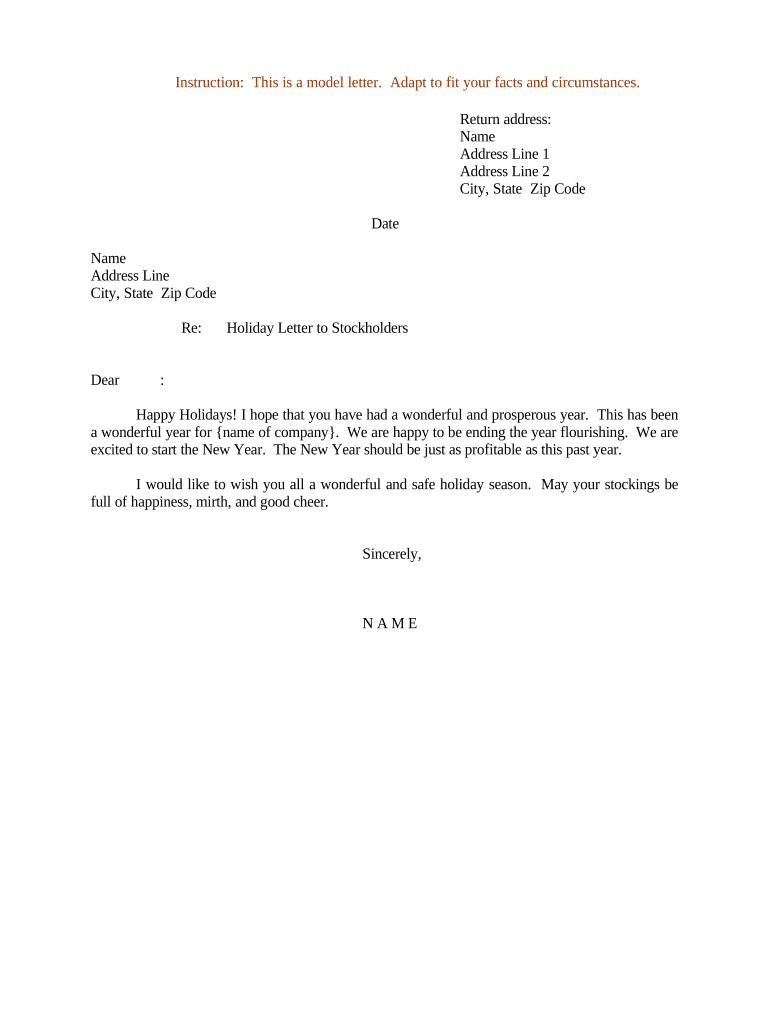
A Holiday Letter is a short written communication typically sent at the end of the calendar year to customers, partners, donors, or employees. It combines seasonal greetings with brief status updates, acknowledgements, or business developments and occasionally includes attachments such as event invitations, donation receipts, or year-end summaries. For organizations it supports relationship-building, regulatory disclosure when required, and archived evidence of outreach. A Holiday Letter can be delivered as a printed mailing, PDF email attachment, or as an electronically signed record where signature or consent is required.

Why a Clear, Compliant Holiday Letter Matters

A concise Holiday Letter preserves professional relationships, documents year-end communications, and establishes a record of outreach when governance or donor acknowledgment is needed.

Why a Clear, Compliant Holiday Letter Matters

Who Commonly Prepares and Receives Holiday Letters

Typical authors include communications teams, development officers, HR leaders, and small-business owners preparing end-of-year messages.

  • Nonprofit development staff sending donor acknowledgments and tax-related receipts
  • Human resources issuing employee holiday updates and benefit reminders
  • Small business owners or account managers sharing client appreciation notes and service summaries

Recipients range from individual customers and employees to boards and institutional partners; the format adapts to audience and any compliance needs.

Quick Steps to Complete a Holiday Letter

Follow these steps for efficient completion and consistent formatting, whether sending by mail or electronically.

  • 01
    Choose template: Select a branded template or plain layout appropriate for the audience.
  • 02
    Populate fields: Complete sender, recipient, date, and message fields with accurate data.
  • 03
    Review and approve: Obtain internal review from communications or legal if disclosures are included.
  • 04
    Distribute: Send via mail, email attachment, or eSignature-enabled delivery as required.

Typical Delivery Workflow for a Holiday Letter

A straightforward flow ensures consistent approvals and preserves an audit trail for recordkeeping.

  • Draft: Create the letter and attach any supporting documents.
  • Approval: Route for required internal approvals and edits.
  • Send: Choose delivery channel and send the final version.
  • Archive: Store a signed or final copy in records with metadata.

Essential Elements of a Professional Holiday Letter

A professional Holiday Letter balances warmth with clarity: it conveys appreciation, contains accurate recipient information, and documents any transactional or compliance-related content.

Personalization

Address recipients by name and reference the relevant relationship or contribution to make the message feel tailored and to reduce confusion in batch mailings.
Clear Purpose

State why you are writing—appreciation, year-end update, invitation, or acknowledgment—so recipients understand any requested actions.

Concise Content

Keep the letter focused; limit to essential points and avoid dense legal or financial language unless required for compliance.

Compliance Notes

Include specific disclosures when the letter contains tax acknowledgments, fundraising receipts, or health-related information that triggers regulatory rules.

Signature

Provide a clear signature area with printed name and title; use eSign if formal acceptance or acknowledgement is required.

Archival Metadata

Record sender, recipient, date, and delivery method in your records system to support retention policies and audits.

Format and File Options for Sending

Choose a delivery format that suits both audience preferences and your recordkeeping needs; preserve an unalterable final copy where possible.

PDF

Standard for distribution and archival; preserves layout and is compatible with eSignature workflows and audit trails.

DOCX

Useful for internal editing and mail-merge before finalizing to PDF for distribution and archiving.

HTML Email

Good for personalized mass-email campaigns; ensure accessibility and that attachments are available for download.

Signed Record

Store a signed PDF or completion certificate when the letter requires acknowledgement or acceptance by recipients.

Technical Requirements and Integrations to Consider

Determine file formats and integrations needed before automating distribution or eSigning.

  • File formats: PDF, DOCX, HTML, Excel supported
  • Integrations: Salesforce, Microsoft 365, NetSuite, Google Workspace
  • Authentication: Email link, SMS code, or stronger methods

Verify platform security and retention features to match your organizational policies prior to broad roll-out.

Configuring a Simple eDelivery Workflow

The table below lists common setup items when automating Holiday Letter creation and distribution.

Field Configuration
Template Brand header, signature block, and merge fields
Recipient List CSV import with name, email, and segment tag
Authentication Email token or SMS code for signer verification
Archival Save final PDFs to chosen cloud storage

eSignature Vendor Pricing and Feature Snapshot

Compare common pricing and feature points for eSignature platforms relevant to sending and archiving Holiday Letters.

signNow DocuSign Adobe Sign PandaDoc HelloSign
Starting Price $8/user/mo $15/user/mo $14/user/mo $19/user/mo $15/user/mo
Free Plan 7-day free trial No No Limited free plan Limited free plan
Bulk Send Yes Yes Yes Yes No
Audit Trail Yes Yes Yes Yes Yes
HIPAA Compliant Yes Yes Yes No No
Envelope Cap No cap 100 envelopes/user/year Varies by plan Varies by plan Varies by plan

Common Pitfalls Preparing Holiday Letters

  • Using outdated recipient lists leads to returned mail and privacy issues if sensitive data is exposed
  • Failing to include an accurate date or signature when acknowledgement is required undermines record validity
  • Including PHI or financial details without proper consent or secure delivery can trigger regulatory violations
  • Neglecting to archive the final distributed version removes audit evidence for donor acknowledgments or compliance checks

Risks from Incorrect or Noncompliant Letters

Privacy Breach: Regulatory liability possible
Misaddressing: Lost receipts or acknowledgments
Invalid Signature: Disputed acknowledgments
Tax Issues: Incorrect donor statements
Reputational Harm: Public complaints or loss of trust
Record Gaps: Failed audits or inquiries

Real-World Examples of Year-End Communications

Organizations use short, documented letters to acknowledge donors, update stakeholders, or close out the fiscal year; two brief examples follow.

Optica Ventures LLC

The interface is simple and easy-to-use for our team; more importantly, it is just as easy for our customers.

  • Use in client outreach programs to ensure receipt and tracking.
  • The company used documented letters to confirm year-end account status and archived signed copies for audit readiness.

Martin Properties

I can process and execute all of these documents online with 100% compliance and built-in security.

  • Apply for tenant communications and lease acknowledgments to avoid in-person handling.
  • The firm reduced turnaround time for tenant acknowledgements while preserving signed records for property files.

Practical Tips for Accurate and Efficient Holiday Letters

Adopt consistent templates, verify recipient data, and use secure delivery methods to reduce errors and maintain records.

Use a single approved template
Maintain a standardized, branded template with fixed signature and metadata fields to ensure consistency across mailings and to simplify approvals.
Verify recipient data before send
Cross-check names, addresses, and email addresses against your CRM to prevent delivery failures and to avoid exposing information to incorrect recipients.
Limit sensitive content
Avoid including protected health information or detailed financial data in general Holiday Letters; use secure channels and explicit consent when such details are necessary.
Archive final versions
Save the final signed or distributed PDF and related metadata in a records system for the applicable retention period to support audits and inquiries.

Suggested Timing and Internal Deadlines

A simple schedule helps coordinate approvals, printing, and distribution for seasonal mailings.

Content Finalization Deadline:

Allow two weeks for approvals and edits

Printing Cutoff:

Set at least one week before mailing to accommodate production

Electronic Send Window:

Early December often maximizes engagement

Record Archival:

Archive within 48 hours of send

Post-Send Follow-up:

Allow up to 30 days for responses or acknowledgments

FAQs: Common Questions About Holiday Letters and eDelivery

Answers below address format, signature options, privacy, and recordkeeping for Holiday Letters.


Need help? Contact support

be ready to get more
Join over 28 million airSlate SignNow users