Establishing secure connection…Loading editor…Preparing document…

Letter Requesting Document Production

This template is fully customizable. Edit the text, fill out the fields, and send it for signature. Give it a try!
Letter Requesting Document Production

What a Letter Requesting Document Production Is

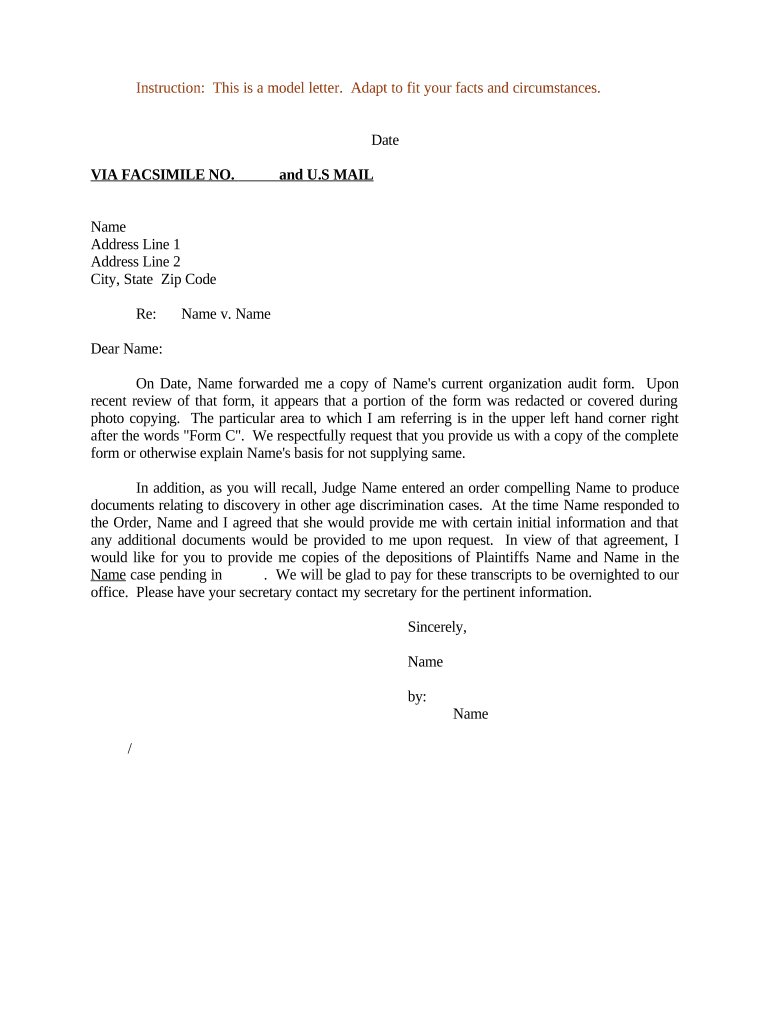
A Letter Requesting Document Production is a formal written request asking a person, organization, or custodian to produce specified documents or records. Commonly used in litigation, internal investigations, audits, and compliance reviews, it identifies the requester, lists the documents or categories sought, sets a date for production, and explains delivery instructions. The letter creates a documented chain of communication, can trigger preservation obligations, and often precedes or accompanies discovery motions if the recipient does not comply.

Why this Letter Matters for Compliance and Discovery

A clear request narrows scope, documents the demand, and gives recipients a chance to comply or object in writing. Properly drafted letters reduce disputes, support motions to compel, and preserve evidence for court or regulatory review under ESIGN and state e‑transaction laws where applicable.

Why this Letter Matters for Compliance and Discovery

Who Typically Prepares and Receives These Letters

Organizations and counsel use these letters to obtain records during disputes, audits, or regulatory inquiries.

  • Plaintiff and defense attorneys seeking discovery records in civil litigation.
  • Corporate legal and compliance teams requesting internal or vendor records.
  • Regulators and auditors asking for documents during investigations and reviews.

Recipients should review scope and preserve responsive materials, then respond within the stated timeframe or lodge a written objection.

Essential Elements to Include in the Letter

Draft the letter to be specific, authoritative, and easy to execute. Include identification, scope, timing, delivery instructions, objections process, and signature to ensure enforceability and reduce ambiguity.

Header

Include sender contact, recipient name, firm or company, and date to establish a clear communication record and point of contact.
Case or Matter ID

Reference a docket number, internal matter code, or audit identifier so the recipient can match documents to the right matter and reduce production delays.

Document Description

List specific documents or categories using date ranges, custodians, and keywords to avoid overbreadth and limit disputes about scope.

Time Frame

Specify clear date ranges (e.g., MM/DD/YYYY to MM/DD/YYYY) for requested records so custodians know which records are responsive.

Production Instructions

State preferred format (PDF, native files), delivery method (secure email, portal, courier), and any metadata requirements such as creation date or custodian field.

Signature

Signer name, title, and signature line with date to show authority and create an auditable request record for future enforcement.

Step-by-Step: Preparing and Serving the Letter

Follow these steps to draft, approve, and deliver a defensible request that minimizes objections and preserves rights.

  • 01
    Draft scope: Define precise document categories and relevant date ranges.
  • 02
    Identify custodians: Name people, departments, or vendors holding responsive records.
  • 03
    Include instructions: Specify format, production method, and metadata requirements.
  • 04
    Serve and track: Send via permitted service method and retain proof of delivery.

How to Configure an Online Production Request Workflow

When using an electronic platform, configure authentication, delivery, and retention settings to maintain chain of custody and access controls.

Field Configuration
Authentication Email link with optional SMS code or SSO for stronger identity assurance.
Delivery Method Secure portal upload, encrypted email, or licensed file transfer service.
Attachments Allowed Accept PDFs, native files, and associated metadata where needed.
Reminder Schedule Set automatic reminders at 7 and 3 days before deadline.

Where to Send or File the Document Production Request

Choose the most appropriate recipient and use a method that creates verifiable delivery records.

  • Opposing Counsel: Email or certified mail to the attorney of record for direct discovery communication.
  • Court Clerk: File a notice with the court when required by local rules for formal discovery motions.
  • Third‑Party Custodian: Send to vendor or records manager with custodian contact and production portal link.
  • Internal Records Custodian: Deliver to company records manager with an internal ticket or compliance reference.

Digital Delivery and eSubmission Considerations

Digital submissions must preserve metadata, provide audit trails, and meet any court or regulator authentication requirements.

  • File Formats: PDF, DOCX, and native file formats with searchable text preferred.
  • Authentication: Use email verification, SMS codes, or SSO based on sensitivity.
  • Integrations: Platforms often integrate with case management and cloud storage systems.

Retain logs showing who accessed or uploaded files, and store production copies securely to meet audit and potential court review requirements.

Typical Production Deadlines and Timing Expectations

Expect timing requirements to be set by statute, local rules, or the letter itself; be precise to avoid disputes.

Standard Response Window:

30 days is common for initial production demands.

Preservation Notice:

Immediate duty to preserve begins upon receipt of a formal request or litigation notice.

Motion to Compel Timeline:

Local rules often require meet‑and‑confer attempts before a motion to compel.

Expedited Requests:

Shorter deadlines require written justification and may trigger priority processing.

Service Methods:

Deadlines may differ for email service versus certified mail or courier.

Common Mistakes When Preparing a Production Letter

  • Overbroad categories that request documents without date ranges or custodians, causing objections and delays.
  • Failing to specify file format or metadata requirements, resulting in inconsistent or unusable productions.
  • Omitting a clear deadline or failing to define whether days are business or calendar days.
  • Neglecting to include preservation language, which can lead to spoliation disputes and sanctions.

Penalties and Risks of an Improper or Ignored Request

Sanctions: Monetary or evidentiary penalties.
Motion to Compel: Court may force production and award fees.
Spoliation: Destroyed evidence can lead to adverse inferences.
Cost Shifting: Offending party may bear production costs.
Evidence Exclusion: Critical documents may be barred from trial.
Contempt: Persistent noncompliance can lead to contempt charges.

Pricing and Feature Snapshot for eSignature Tools Commonly Used with Production Letters

Compare starting price, trial availability, bulk send, audit trails, HIPAA compliance, and envelope limits when selecting an eSignature provider to manage requests and responses.

signNow DocuSign Adobe Sign PandaDoc HelloSign
Starting Price $8/user/mo $15/user/mo $14/user/mo $19/user/mo $15/user/mo
Free Trial 7-day free trial Varies by vendor Varies by vendor Varies by vendor Varies by vendor
Bulk Send Yes Yes Yes Yes No
Audit Trail Yes Yes Yes Yes Yes
HIPAA Compliant Yes Yes Yes No No
Envelope Cap No cap 100 envelopes/user/year Varies Varies Varies

Frequently Asked Questions and Troubleshooting

Answers to common questions about serving, responding to, and enforcing a Letter Requesting Document Production, including electronic delivery and preservation obligations.


Need help? Contact support

be ready to get more
Join over 28 million airSlate SignNow users