Establishing secure connection…Loading editor…Preparing document…

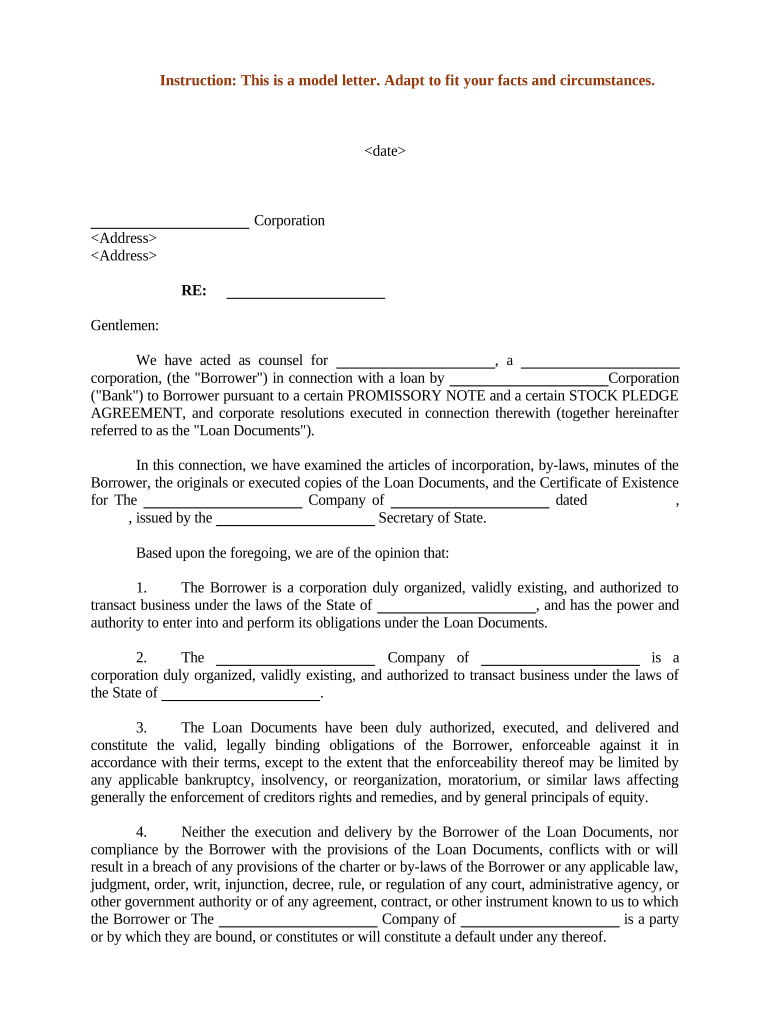
Letter of Opinion Regarding Loan Documents

This template is fully customizable. Edit the text, fill out the fields, and send it for signature. Give it a try!
Letter of Opinion Regarding Loan Documents

What a Letter of Opinion Regarding Loan Documents Is

A Letter of Opinion Regarding Loan Documents is a lawyer-written formal statement delivered to a lender or other intended recipient confirming legal conclusions about loan-related instruments. Typical topics include the borrower’s formation and authority, enforceability of the loan agreement and security interests, perfection steps, absence of conflicts, and governing law. The letter narrows scope with defined assumptions, qualifications, and reliance limitations. Where delivered electronically, the opinion may be provided as a signed PDF or e-signed document consistent with the ESIGN Act (15 U.S.C. ch. 96, 2000) and applicable state electronic transactions law (UETA or a state ESRA).

Why a Formal Opinion Matters to Closings

A reasoned opinion allocates legal risk, supports lender reliance, and confirms steps needed to perfect collateral and enforce remedies. It reduces closing friction by identifying defects, required third-party consents, and timing for cure or supplemental documentation.

Why a Formal Opinion Matters to Closings

Who Typically Prepares and Receives These Opinions

Lawyers, lenders, and closing agents rely on clear opinions to coordinate closing deliverables and risk allocation.

  • Lenders and counsel: review legal sufficiency and enforceability before funding and taking collateral.
  • Borrower counsel: draft the opinion to support borrowers while limiting qualifications and assumptions.
  • Title and closing agents: use opinions to verify title, recording and perfection steps.

Primary Elements of a Professional Opinion Letter

A concise opinion letter identifies parties, states the documents covered, and sets out clear legal conclusions and any qualifications. It must be organized for reliance by named recipients and include assumptions, factual bases, and the signer’s authority.

Opinion Scope

Defines which loan documents are covered and the date at which facts are assumed to be true; critical to limit reliance.
Governing Law

Specifies the state law governing interpretation and acknowledges any choice-of-law or forum-selection clauses affecting enforcement.

Authority & Capacity

Confirms that the borrower has authority to enter the loan documents, and that signatories were properly authorized.

Perfection & Priority

Describes required filings, recording, or possession steps to perfect security interests and any known priority issues.

Qualifications

Lists factual assumptions, reliance limits, public record searches performed, and known exceptions to the conclusions.

Reliance & Delivery

Names permitted recipients and the permissible delivery methods (paper, emailed PDF, or electronic delivery consistent with ESIGN/UETA).

Step-by-Step: Preparing and Delivering the Opinion

Follow a structured process from drafting through delivery to ensure the opinion is accurate, timely, and admissible for lender reliance.

  • 01
    Draft Opinion: Prepare scope, assumptions, and legal conclusions aligned with loan documents.
  • 02
    Internal Review: Obtain partner sign-off and verify factual attachments and searches.
  • 03
    Delivery Method: Determine and document whether delivery is paper, PDF, or e-signed per ESIGN/UETA.
  • 04
    Confirm Reliance: Ensure the addressee accepts the opinion and records reliance limitations in closing file.

Configuring an Electronic Workflow for Opinion Letters

Design a workflow that preserves chain of custody, audit logs, and signer authentication for lender reliance and record retention.

Field Configuration
Authentication method Email + SMS code or stronger KBA for high-risk transactions
File formats Use PDF/A or PDF for immutable signed records; keep source DOCX for edits
Audit trail Capture IP, timestamps, and signer events for reproducibility
Access controls Restrict download and sharing to named reliance parties

Technical Requirements for eDelivery and eSigning

Use a platform that captures a tamper-evident audit trail, stores signed originals, and supports required authentication methods.

  • Integrations: Salesforce, NetSuite, Box, and Google Workspace integrations ease delivery
  • File types: PDF and Word DOCX are widely supported for opinion documents
  • Authentication: Email, SMS, and two-factor options protect signer identity

Where to Send or File the Letter of Opinion

Identify primary recipients and preferred channels before signing so reliance and delivery timing are clear at closing.

  • Lender Counsel: Deliver to the named counsel address listed in closing checklist
  • Borrower File: Retain a copy in the borrower’s corporate records
  • Closing Agent: Provide to the closing or escrow agent for funding conditions
  • Title Company: Send if opinion covers recording or title/perfection matters

Common Timelines and Deadlines to Track

Set and communicate concrete deadlines tied to funding, perfection steps, and any expiration of the opinion to avoid missed conditions.

Pre-closing delivery window:

Typically 3–5 business days before funding for review and comments

Opinion expiration period:

Often limited to the closing date unless expressly extended

Objection response time:

Allow 24–72 hours for lender counsel to raise issues

Supplemental deliveries deadline:

Set a latest date for required supplemental opinions or certificates

Record retention schedule:

Preserve signed originals according to retention rules and client policy

Key Risks and Consequences of an Incorrect Opinion

Lender Damages: Monetary exposure to lender reliance claims
Professional Liability: Malpractice or disciplinary complaints
Delay Costs: Funding postponement and commercial losses
Invalid Security: Unperfected collateral risk
Compliance Gaps: Failure to meet ESIGN/UETA delivery requirements
Record Deficiencies: Incomplete files complicate audits and disputes

Essential Information to Include in the Letter

Borrower Identity: Exact legal name
Lender Identity: Named relying party
Document List: Titles and dates
Opinion Date: MM/DD/YYYY
Governing Law: State specified
Signer Details: Name, firm, title

Practical Examples of Opinion Letter Use

Real-world examples illustrate how opinions remove ambiguity and support funding in different settings.

Martin Properties (Real Estate)

The client needed rapid confirmation of enforceability for a construction loan

  • Counsel limited opinion to recorded mortgages
  • The opinion clarified recording defects, enabled funding the same day, and reduced post-closing title disputes by documenting required cures and timing.

Optica Ventures (Commercial Loan)

Borrower counsel provided a narrowly scoped opinion covering corporate authority

  • Lender counsel relied on public filing evidence
  • The letter identified perfection steps and allowed conditional funding while title matters were resolved, streamlining the closing process.

eSignature Platform Comparison for Delivering Opinion Letters

Comparison of common eSignature vendors and core plan attributes relevant to delivering legally sound opinion letters. signNow appears first for parity.

signNow DocuSign Adobe Sign PandaDoc HelloSign
Starting Price $8/user/mo $15/user/mo $14/user/mo $19/user/mo $15/user/mo
Free Trial 7-day free trial Trial available Trial available Trial available Trial available
Bulk Send Yes (premium tier) Yes Yes Yes Yes
Audit Trail Yes Yes Yes Yes Yes
Envelope Cap No cap 100 envelopes/user/year Varies by plan Varies by plan Varies by plan

FAQs and Troubleshooting for Opinion Letters

Answers to frequent questions about validity, delivery, signature methods, and remedies when an opinion is challenged.


Need help? Contact support

be ready to get more
Join over 28 million airSlate SignNow users