Establishing secure connection…Loading editor…Preparing document…

Sample Letter Release

This template is fully customizable. Edit the text, fill out the fields, and send it for signature. Give it a try!
Sample Letter Release

What a Sample Letter Release Is and When It Applies

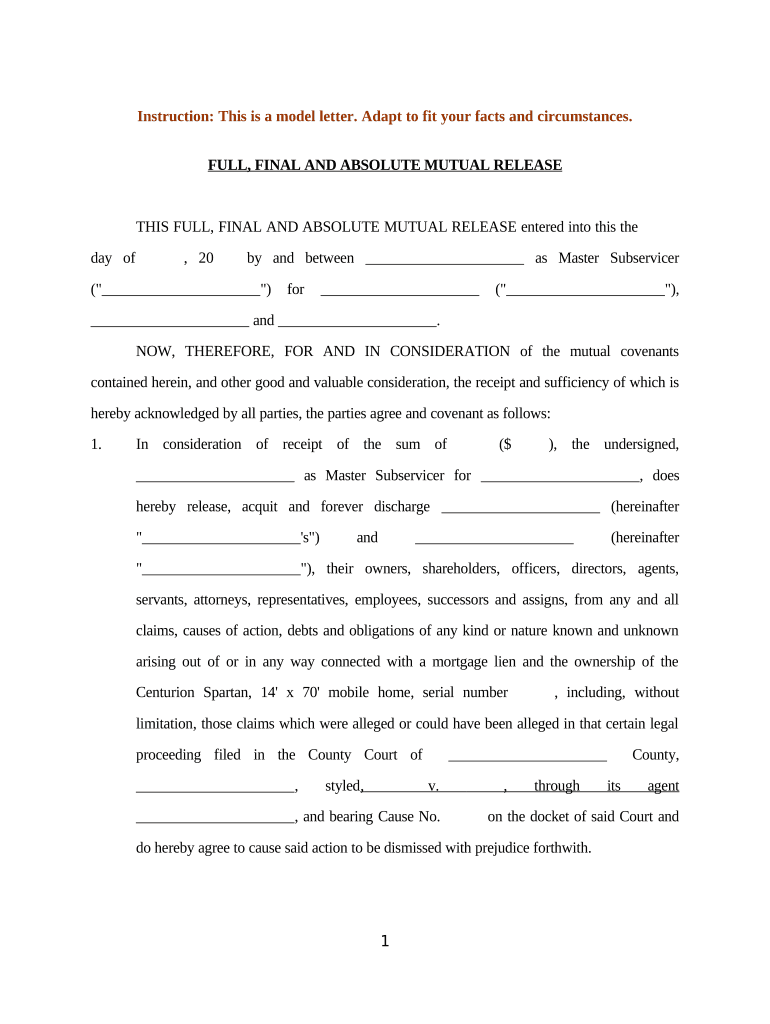
A Sample Letter Release is a written document in which one party formally relinquishes, discharges, or agrees not to pursue specified claims, liens, or obligations against another party. Commonly used after settlement, termination, loan payoff, or asset transfer, the release defines the parties, the scope of discharged claims, the effective date, and any consideration provided. Properly executed releases can prevent future disputes when they clearly identify the subject matter, list any retained rights or exceptions, and include signature and authentication details required by state law.

Why a Clear Release Letter Matters

A precise Sample Letter Release reduces future litigation risk, documents the parties’ intent, and records consideration and scope in a concise format that courts and third parties can review.

Why a Clear Release Letter Matters

Who Typically Prepares and Receives a Release Letter

The Sample Letter Release is used by parties who need an explicit, written discharge of claims or liabilities before or after a transaction.

  • Individual claimants and defendants resolving a dispute without filing further litigation; the release documents settlement terms and prevents re-litigation of released claims.
  • Businesses and lenders confirming loan payoff or lien release after payment; the form records satisfaction of debt and authorizes recording where applicable.
  • Employers and separated employees in severance or settlement situations; releases can include confidentiality, non-compete, or other limited waivers tied to consideration.

Core Elements to Include in a Professional Release Letter

A well-drafted Sample Letter Release organizes identity, scope, consideration, effective date, signatures, and authentication so the document is enforceable and easy to record or present to third parties.

Parties Identified

Full legal names and capacities (e.g., individual, LLC, trustee) for each releasing and released party, ensuring clear attribution and enforceability.
Scope of Release

A precise description of the claims, liabilities, property, or time period being released; list exceptions and retained rights to avoid ambiguity.

Consideration

The payment, performance, or other consideration supporting the release; quantify amounts or describe non-monetary consideration clearly.

Effective Date

An explicit date when the release becomes operative; this affects statute-of-limitations calculations and third-party recording options.

Execution Block

Signature lines for each party with printed name, title (if applicable), and date; include notary or witness blocks when required by law.

Recordation Clause

If the release must be recorded (liens, UCC), specify who will file, applicable jurisdiction, and any costs allocation.

Step-by-Step: Completing and Executing a Release Letter

Follow these sequential steps to prepare, validate, and execute a Sample Letter Release so it meets legal and practical requirements.

  • 01
    Draft the Text: Specify parties, scope, and consideration in plain, unambiguous language.
  • 02
    Confirm Authority: Verify signatory authority and corporate resolutions if an entity signs.
  • 03
    Authenticate Signatures: Decide if notarization, witnesses, or electronic authentication are required.
  • 04
    Distribute Copies: Provide executed originals or certified copies to all parties and record if needed.

Where to Send and File a Completed Release Letter

Routing depends on the release type — send executed originals to parties, file with public offices when required, and retain copies for records and audits.

  • Counterpart Exchange: Each party keeps an original fully signed copy for their records.
  • Recording Office: Record with county recorder or clerk when releasing a lien or deed, per local rules.
  • Lender or Secured Party: Deliver release to the secured creditor to update internal files and notify credit reporting if applicable.
  • Legal Counsel: Share an executed copy with attorneys for compliance and potential future disputes.

Configuring an Online Workflow for the Release Letter

Set up a digital workflow to collect signatures, authentication, and copies automatically; adjust fields and routing to match the execution steps above.

Field Configuration
Signature Field Require signature and date for each party; set signer order if sequential execution is needed.
Notary Block Include optional notary fields or RON session link if notarization will occur remotely or in person.
Authentication Choose email, SMS code, or knowledge-based authentication depending on required assurance level.
Delivery Send final PDF with audit trail to all signers automatically once complete.

Digital Signing and Platform Considerations

Decide whether electronic execution will meet legal and contractual requirements for your release before proceeding with e-signatures.

  • File Formats: PDF and DOCX supported.
  • Authentication Options: Email, SMS, or stronger methods.
  • Audit Trail: Timestamp and IP captured.

Essential Information to Capture on the Release

Signer Identity: Full legal name
Contact Details: Address and email
Document Dates: Execution and effective dates
Consideration: Amount or description
Scope Summary: Specific claims or accounts
Authentication: Notary/witness/eSign method

Risks and Potential Consequences of an Improper Release

Unenforceability: Vague scope can render the release legally unenforceable.
Fraud Allegations: Misrepresentation may expose signers to rescission or damages.
Tax Impact: Incorrectly reported consideration can trigger IRS penalties.
Notarization Failure: Missing or improper notarization may prevent recording.
Name Mismatch: Mismatched signer names can delay enforcement or recording.
Statute Limits: Failing to act within statute of limitations may bar claims.

Common Preparation Errors to Avoid

  • Using overly broad release language without defined exceptions, which can create ambiguity and lead to litigation over scope.
  • Failing to verify signatory authority for entities, allowing a corporate representative to sign without a board resolution or power of attorney.
  • Neglecting to include precise property or account identifiers when releasing liens or security interests, causing recording or indexing errors.
  • Omitting notarization or witnesses when local law or recording offices require them, resulting in rejected filings or unenforceability.

Timing Considerations and Practical Deadlines

Pay attention to effective dates, recording windows, and any statutory deadlines that could affect enforceability or third-party rights.

Execution Date:

The date entered controls when the release takes effect and should be accurate in MM/DD/YYYY format.

Notarization Window:

Notarize within the time limits required by the jurisdiction if recording is planned.

Recording Timeline:

Record a lien release promptly to update public records and clear title.

Tax Reporting:

Report any taxable consideration per IRS guidance during applicable tax year.

Statute of Limitations:

Confirm whether execution affects any running limitation periods for related claims.

Practical Tips for Accurate and Efficient Completion

Adopt standard drafting and execution practices to minimize ambiguity and speed acceptance by third parties.

Use Plain, Specific Language
Describe exactly what is released, with dates, account or lien numbers, and clear exceptions to prevent disputes over interpretation.
Confirm Authority Before Signing
For entity signers, document board or member authorization; attach corporate resolutions or power-of-attorney documentation as needed.
Choose Appropriate Authentication
Select notarization, witness, or eSignature authentication matching the required legal assurance and any recording office rules.
Keep Detailed Records
Retain executed originals, audit trails, delivery receipts, and correspondence to support enforcement or future audits.

Real-World Scenarios Where a Release Letter Is Used

Two concise scenarios illustrate how a Sample Letter Release resolves obligations and clears public records when properly executed.

Real Estate Lien Release

A borrower confirms full mortgage payoff and signs a release of lien

  • Lien is recorded with county clerk the same week
  • The recorded release clears title, enabling sale without encumbrance and preventing future claims against the paid account.

Employment Separation Release

An employee accepts severance in exchange for a mutual general release

  • The release lists the narrow types of claims waived and preserves unemployment rights
  • Both parties sign, counsel reviews, and executed copies are retained for HR and legal compliance.

Comparing eSignature Platforms for Executing Release Letters

Platforms vary on price, HIPAA support, bulk send, and envelope limits; signNow appears first to show commonly used plan and compliance options.

signNow DocuSign Adobe Sign PandaDoc HelloSign
Starting Price $8/user/mo $15/user/mo $14/user/mo $19/user/mo $15/user/mo
Free Trial 7-day free trial Varies by plan Varies by plan Varies by plan Varies by plan
Bulk Send Yes (Business Premium) Yes Yes Yes No
Audit Trail Yes Yes Yes Yes Yes
HIPAA Compliant Yes (BAA available) Yes (BAA available) Yes (BAA available) No No

Frequently Asked Questions About Sample Letter Releases

Answers to common legal and execution questions help avoid mistakes during drafting, signing, notarization, and recording of a release.


Need help? Contact support

be ready to get more
Join over 28 million airSlate SignNow users