Establishing secure connection…Loading editor…Preparing document…

Letter Regarding Cable Regulation

This template is fully customizable. Edit the text, fill out the fields, and send it for signature. Give it a try!
Letter Regarding Cable Regulation

What a Letter Regarding Cable Regulation Is

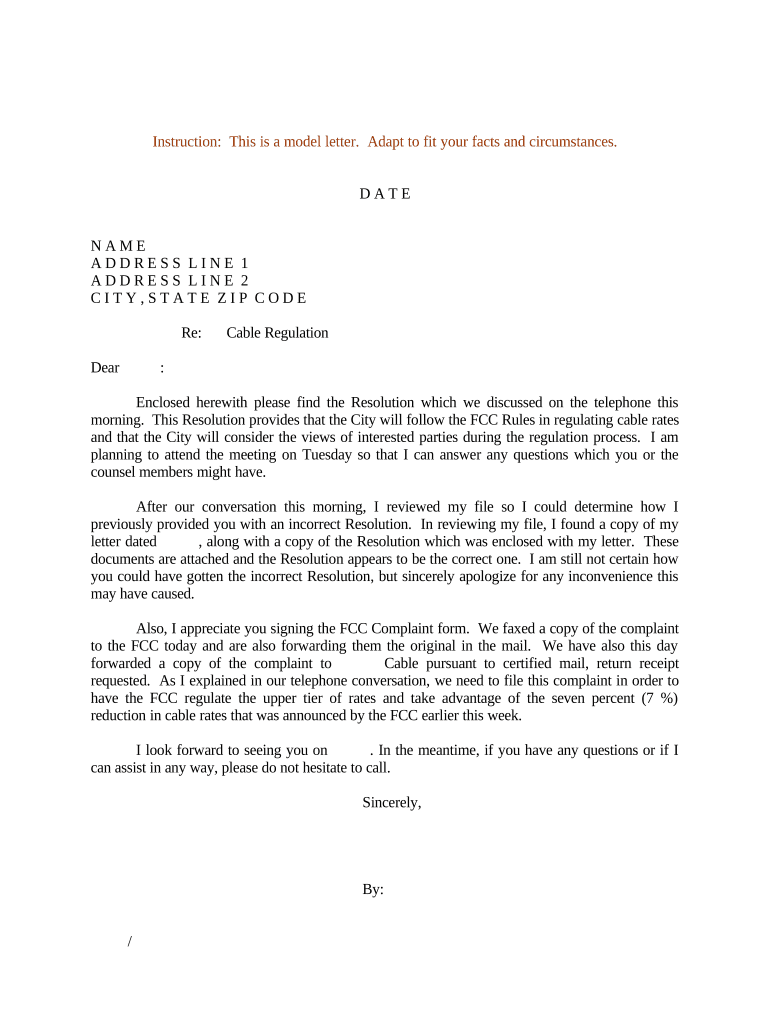
A Letter Regarding Cable Regulation is a formal written submission to a regulatory body, cable operator, or stakeholder that states a position, reports a compliance concern, requests clarification, or provides technical or policy input about cable services and rules. It typically references specific statutes, docket numbers, or contract terms, explains the issue clearly, and asks for a defined remedy, response, or regulatory action. These letters are used by consumer advocates, municipal governments, industry participants, and legal counsel to create a documented record in administrative or contractual processes and to trigger agency review or formal responses.

Why This Letter Matters and Its Legal Basis

A well-crafted letter creates an auditable record of notice or objection, supports administrative proceedings, and helps preserve rights under federal and state frameworks. Electronic versions can be admissible and enforceable when they meet ESIGN and UETA standards.

Why This Letter Matters and Its Legal Basis

Who Typically Prepares and Submits These Letters

The tone, required attachments, and routing differ by sender; tailor content to the recipient's procedural rules.

  • Municipal governments and public utility commissions filing local complaints or seeking clarification of franchise obligations.
  • Legal counsel and advocacy groups submitting formal comments or representing aggrieved parties.
  • Cable operators or service providers responding to enforcement notices or requesting regulatory relief.

Essential Parts to Include in the Letter

A complete letter combines a clear subject and request with supporting facts, legal citations, and contact information so the regulator or operator can evaluate and respond efficiently.

Header

Include sender name, organization, full mailing address, phone, and email so the recipient can acknowledge and respond without additional follow-up.
Recipient Details

Provide exact recipient name, department, mailing address, docket or case number, and preferred delivery method to ensure proper routing and docketing.

Subject Line

Use a concise subject that references the regulation, rulemaking docket, or contract clause being addressed to guide intake staff and preserve filing context.

Statement of Facts

Summarize the factual basis succinctly with dates, locations, and relevant service identifiers; attach logs, bills, or measurements as exhibits.

Legal Basis

Cite governing statutes or rules (e.g., ESIGN Act principles for e‑records or the specific regulatory code cited in the docket) and explain how facts map to the legal standard.

Requested Relief

State specific, measurable remedies or actions you want the agency or operator to take and the timeframe for a response or corrective action.

Required Contact and Identification Data

Sender Name: Full legal name
Organization: Entity name or affiliation
Date: MM/DD/YYYY format
Docket Number: Agency reference
Contact Info: Email and phone
Signature: Authorized signatory

Step-by-Step: Drafting and Submitting Your Letter

Follow this sequential checklist to prepare a clear, traceable, and procedurally compliant submission.

  • 01
    Identify Recipient: Confirm the correct agency or operator and docket number.
  • 02
    Gather Evidence: Compile bills, logs, and measurement files as numbered exhibits.
  • 03
    Draft Letter: State facts, cite rules, and request specific relief.
  • 04
    Sign and Submit: Apply an admissible signature and file per agency rules.

Configuring an Online Workflow to Complete and Send the Letter

Set up a digital workflow to produce a fillable letter, collect signatures, and route copies to stakeholders for auditability.

Document Upload PDF or DOCX
Field Placement Signature, date, docket fields
Authentication Email or SMS code
Routing Order Sequential or parallel signers
Retention Policy Encrypted storage duration

Where to File or Send a Letter Regarding Cable Regulation

Different recipients accept different delivery methods; choose the route most likely to reach the docket or responsible official.

  • Federal Regulator: File via agency electronic docket or mail per instructions.
  • Local Franchise Office: Send to the municipal cable/franchise administrator.
  • Cable Operator: Use certified mail or the operator's regulatory contact.
  • Public Comment Portals: Submit through the official online comment form when available.

Digital Submission and Signing Requirements

Ensure the chosen workflow records timestamps, signer attribution, and an immutable audit trail to support future administrative or legal review.

  • Document Formats: PDF, DOCX
  • Authentication: Email, SMS, or ID proofing
  • Integrations: CRM and cloud storage

Typical Timelines and Processing Expectations

Timing varies by recipient; the following guide shows common timeframes to set expectations when you file or comment.

Acknowledgment:

7–14 days for agency receipt confirmation

Public Comment Period:

Often 30 days, sometimes 60 days depending on rulemaking

Agency Review:

60–120 days for substantive review in many cases

Operator Response:

30–90 days depending on dispute procedures

Appeal or Refiling:

Deadlines vary; see the agency's rules for timelines

Common Mistakes to Avoid When Preparing the Letter

  • Failing to include the correct docket number or recipient, which can cause misfiling or administrative delay.
  • Submitting unsigned or improperly authenticated copies that the agency will not accept for formal records.
  • Relying on hearsay or unsupported claims instead of attaching verifiable exhibits or test data.
  • Using vague or open‑ended relief requests rather than clear, measurable remedies the agency can act upon.

Risks of an Incorrect or Improperly Executed Letter

Missing Deadlines: Loss of statutory rights
Incorrect Recipient: Misfiled or disregarded
Unauthorized Signer: Challenges to validity
Noncompliant Format: Rejection by agency
Incomplete Evidence: Weakened factual record
Data Exposure: Privacy or security violations

eSignature Vendor Comparison for Completing and Signing the Letter

This comparison highlights representative pricing and common capabilities among eSignature providers; signNow is listed first per platform-specific guidance.

signNow DocuSign Adobe Sign PandaDoc HelloSign
Starting Price $8/user/mo $15/user/mo $14/user/mo $19/user/mo $15/user/mo
Free Trial 7-day free trial Varies Varies Varies Varies
Bulk Send Yes Yes Yes Yes No
Audit Trail Yes Yes Yes Yes Yes
HIPAA Compliant Yes Yes Yes No No

Real-World Examples of Similar Submissions

These examples illustrate how organizations used secure digital workflows and clear drafting to document regulatory concerns and obtain responses.

Optica Ventures LLC

The interface is simple and easy-to-use for our team and customers.

  • The submission included annotated exhibits.
  • The clear format reduced follow-up requests and helped the regulator route the issue to the correct division faster, preserving the firm's evidentiary record for subsequent dispute resolution.

Fertility Centers of Illinois

The team prioritized compliance and secure delivery when reporting service disruptions.

  • They attached redacted patient-impact logs.
  • Using a documented, auditable workflow provided confidence to administrators and ensured the submission met privacy and retention expectations during the agency's review.

Supporting Documents and Export Options to Attach or Save

Attach exhibits that substantiate claims and export final submissions in durable formats for recordkeeping and production.

Supporting Exhibits

Include bills, outage logs, signal tests, screenshots, and correspondence. Number exhibits and reference them in the letter to streamline review.

Privacy Redaction

Redact personal or health data where possible; include a justification for any unredacted sensitive information and follow applicable privacy rules.

Export Formats

Save the final package as PDF/A for archiving and produce copies as PDF and DOCX for reviewers that require editable versions.

Audit Package

Retain the signed document, signing audit trail, delivery receipts, and any acceptance acknowledgments to prove delivery and timing.

Practical Tips for a Clear, Effective Letter

Small drafting and procedural choices improve the odds that your letter is actionable and properly processed.

Be concise and factual
Limit background to relevant facts; number allegations and tie each to an exhibit or record to reduce ambiguity during agency review.
Use precise requests
Specify the remedy you seek and a reasonable timeframe for action; vague demands can lead to nonresponsive outcomes.
Preserve authentication
Use a documented signing method that captures signer identity, timestamp, and IP address to support later challenges.
Follow filing rules
Read the recipient's submission guidelines and adhere to format, docketing, and service instructions to avoid procedural rejection.

Frequently Asked Questions About Letters Regarding Cable Regulation

Answers below address common procedural and technical questions about drafting, signing, and submitting these letters.


Need help? Contact support

be ready to get more
Join over 28 million airSlate SignNow users