Establishing secure connection…Loading editor…Preparing document…

Sample Motion

This template is fully customizable. Edit the text, fill out the fields, and send it for signature. Give it a try!
Sample Motion

What a Sample Motion Is and when it’s used

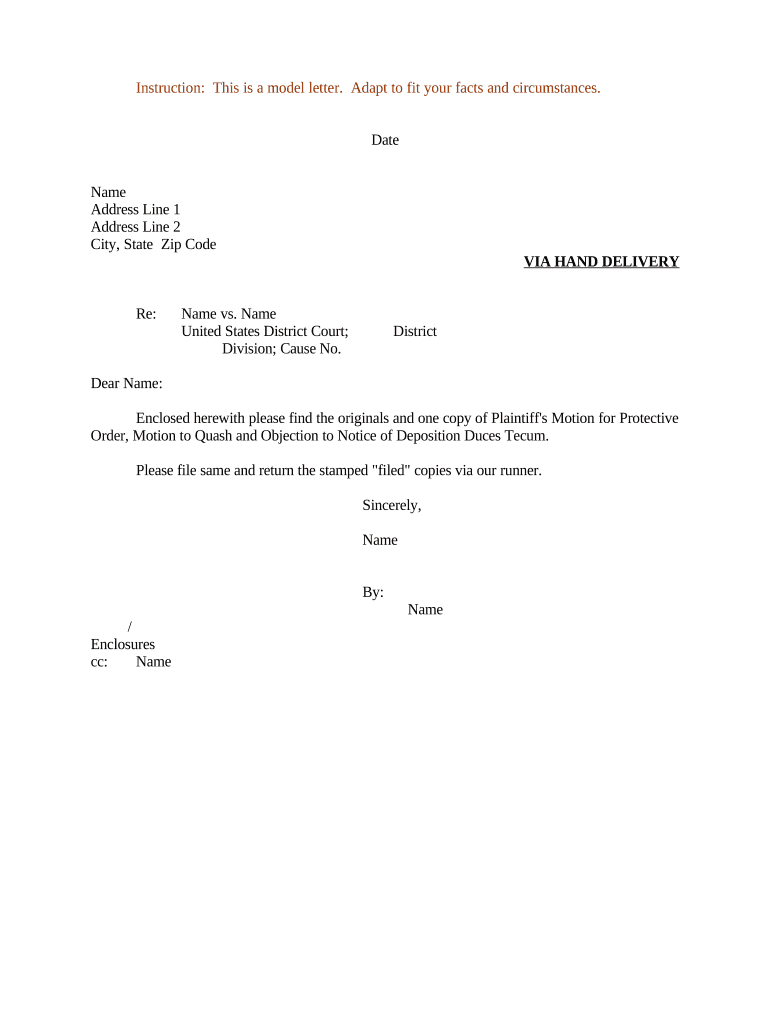
A Sample Motion is a draft court filing that outlines a party’s request for relief, supporting facts, and legal authority. It typically includes a caption, statement of jurisdiction, statement of facts, argument with citations to statutes or case law, and a proposed order for the judge to sign. Practitioners use sample motions to standardize language, speed drafting, and ensure required elements are included before filing. A well-prepared sample motion helps clerks and opposing parties understand the relief sought and the legal basis for it.

Why a clear Sample Motion matters for court outcomes

A clear, complete Sample Motion reduces procedural rejections, shortens review time, and preserves appellate arguments by documenting legal basis and requested relief.

Why a clear Sample Motion matters for court outcomes

Who typically prepares and files a Sample Motion

Sample motions are used by attorneys, paralegals, and self-represented litigants to present a formal request to the court in written form.

  • Civil litigators preparing dispositive or procedural motions on behalf of clients.
  • In-house counsel and compliance teams drafting motions in regulatory or administrative matters.
  • Pro se filers using templates to meet court formatting and content requirements.

Use the template as a starting point and adapt jurisdictional citations, local rules, and factual exhibits before filing.

Typical roles that sign or approve a Sample Motion

Lead Counsel

An attorney of record who signs the motion, certifies service, and certifies compliance with local rules; responsible for court-facing filings and any required verification statements.

Client / Party

The named party may need to review, approve factual sections, or sign affidavits attached to the motion; witness or declarant signatures must match identity documents.

Core components every professional Sample Motion should include

A professional Sample Motion follows a standard structure so judges, clerks, and opposing counsel can quickly identify relief requested and supporting authority.

Caption

Court name, case number, party names, and document title placed at the top; incorrect caption details can lead to misfiling or clerk rejection and must match the docket exactly.
Introduction

A concise statement of the relief requested and the legal ground for it; sets reader expectations and frames the factual and legal sections that follow.

Statement of Facts

Chronological, citation-free factual summary supporting the motion; avoid argument in this section and include dates, locations, and exhibits referenced in the legal analysis.

Argument

Legal analysis with statutory or case citations, standard of review, and point headings; connect facts to legal elements required for the specific relief.

Relief Requested

A numbered or bulleted list specifying precise orders sought (e.g., dismissal, summary judgment, stay), including any proposed deadlines or practical steps for enforcement.

Proposed Order

A ready-to-sign order the court can adopt that mirrors the relief requested, formatted per local rule and attached as a separate document to facilitate judicial action.

Key information fields commonly required in a Sample Motion

Case Caption: Party names, court, case number
Title: Clear motion title
Relief Sought: Precise requested order
Factual Dates: MM/DD/YYYY dates
Legal Authority: Statutes or case citations
Signature Block: Name, bar number, date

Step-by-step: Drafting and finalizing a Sample Motion

Follow this sequence to create a compliant, court-ready Sample Motion and reduce the chance of procedural rejection.

  • 01
    Confirm jurisdiction: Ensure the court and case number are accurate.
  • 02
    Draft facts: Write a concise, date-ordered factual statement.
  • 03
    Prepare argument: Cite statutes and controlling cases for each element.
  • 04
    Attach exhibits: Label and reference exhibits in the body of the motion.

How to configure an online workflow for Sample Motion review and signing

Set up roles, authentication, and routing to match court rules and internal review steps before e-submission.

Field Configuration
Signer Roles Lead counsel, co-counsel, client reviewer
Authentication Email link, SMS code, or higher assurance
Routing Order Sequential review then sign
Retention Store PDF + audit trail

Where to file or send a completed Sample Motion

Choose the official court filing channel required by the jurisdiction and include all required service copies and certificates.

  • E-Filing Portal: Upload PDF to the court's electronic filing system.
  • Chambers Copy: Send required courtesy copy to the judge if local rule demands it.
  • Opposing Counsel: Serve per local rule (email, e-file service, or mail).
  • Clerk's Office: Provide any filing fee and required forms.

Technology and document format requirements

Use PDF or court-accepted formats and verify file size, bookmarks, and searchable text before submission.

  • File Types: PDF/A preferred, searchable text
  • Authentication: Email or multi-factor
  • Audit Trail: Preserve full action log

Confirm the court's local rules for e-filing and ensure exported PDFs include the signature audit trail and embedded metadata required by the clerk.

Common deadlines and timing expectations for motions

Timelines depend on motion type and court rules; confirm local rules for service, briefing, and hearing scheduling.

Service Deadline:

Varies by rule; often several days before hearing

Opposition Brief:

Typically 14 or 21 days after service

Reply Brief:

Usually 7 to 10 days after opposition

Hearing Date:

Set by court docketing clerk

Filing Fees:

Court-specific; confirm clerk's fee schedule

Common mistakes when preparing a Sample Motion

  • Using an incorrect caption or case number, which can cause the clerk to reject or misplace the filing and delay proceedings.
  • Failing to attach or properly label exhibits referenced in the motion, leaving factual assertions unsupported at the initial review.
  • Omitting required local-rule certificates (e.g., proof of service, meet-and-confer statements), which frequently leads to administrative denial.
  • Relying on stale or inapplicable legal authority without checking for controlling precedent or statutory amendments affecting the motion's argument.

Penalties and risks for incorrect motions or procedural errors

Dismissal Risk: Case or claim dismissal
Fee Sanctions: Monetary sanctions possible
Missed Deadlines: Forfeiture of relief
Evidence Exclusion: Affidavits excluded
Ethics Complaints: Professional discipline risk
Appellate Limits: Waiver of issues on appeal

Real-world examples of Sample Motion use

These examples show how sample motions are used to streamline filings and preserve record clarity in different practice settings.

Optica Ventures

A corporate counsel used a standard motion template to seek expedited relief in a commercial dispute

  • The template ensured all required exhibits were included
  • The court accepted the filing without administrative deficiency, reducing docketing delays and clarifying remedies for the parties.

Martin Properties

A landlord's attorney prepared a possession motion using a sample to gather tenancy facts quickly

  • The consistent structure simplified evidence presentation
  • The judge adopted the proposed order with minimal edits, shortening the time to execution and occupancy remedy.

eSignature vendor pricing snapshot for motion preparation workflows

Compare common plan and capability markers that affect the cost of signing and routing Sample Motions. Confirm plan details with each vendor before purchasing.

signNow DocuSign Adobe Sign PandaDoc HelloSign
Starting Price $8/user/mo $15/user/mo $14/user/mo $19/user/mo $15/user/mo
Free Trial 7-day free trial Varies by plan Varies by plan Varies by plan Varies by plan
Bulk Send Yes Yes Yes Yes Varies by plan
Audit Trail Yes Yes Yes Yes Yes
HIPAA Compliant Yes Yes Yes No No
Envelope Cap No envelope cap 100 envelopes/user/year Varies by plan Varies by plan Varies by plan

Practical tips for accurate and efficient Sample Motion completion

Follow these best practices to reduce rework, comply with local rules, and make the motion easier for the court to process.

Use the correct caption
Verify court name and case number directly from the docket before filing. A single-digit error can cause misfiling and delay the case.
Keep facts concise
Limit the statement of facts to necessary events and dates. Overlong factual recitations distract from legal arguments and increase the chance of omission.
Cite primary authority
Rely on current statutes and controlling cases; verify that cited opinions remain good law to avoid weakening your persuasive authority.
Preserve audit trail
When e-signing, retain the signature certificate, IP addresses, and timestamps to prove attribution and consent if challenged.

Frequently asked questions about using and filing a Sample Motion

Answers to common procedural and technical questions when preparing, signing, and submitting a Sample Motion to the court.


Need help? Contact support

be ready to get more
Join over 28 million airSlate SignNow users