Establishing secure connection…Loading editor…Preparing document…

Charge Account Terms and Conditions Letter

This template is fully customizable. Edit the text, fill out the fields, and send it for signature. Give it a try!
Charge Account Terms and Conditions Letter

What a Charge Account Terms and Conditions Letter Is

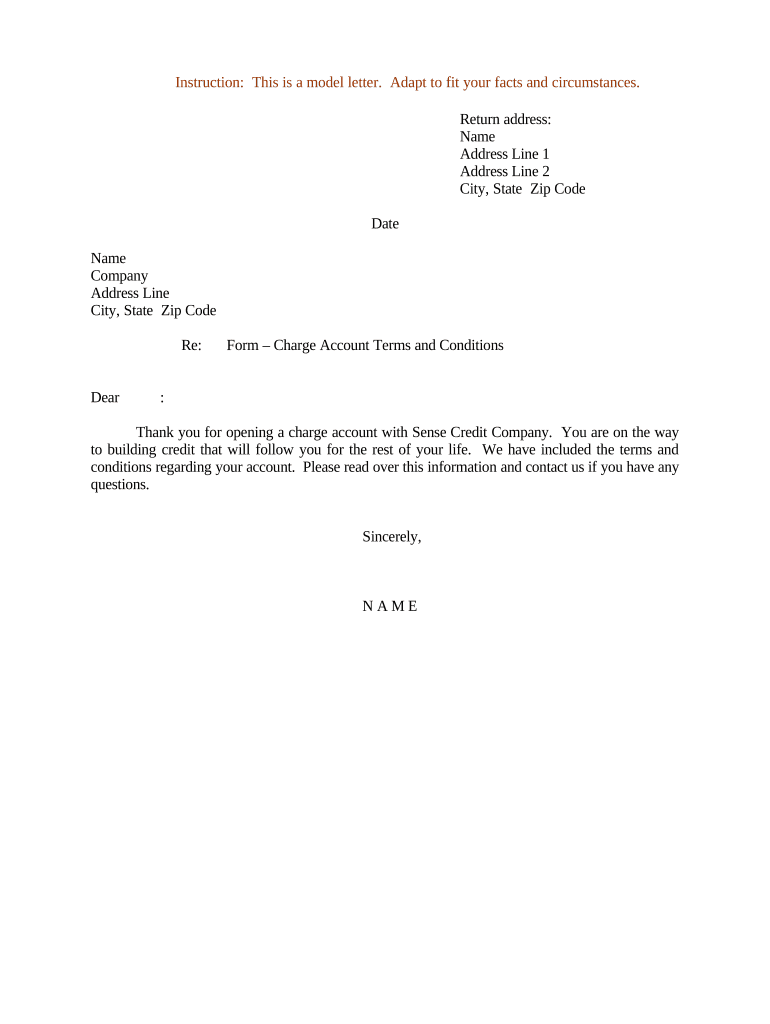
A Charge Account Terms and Conditions Letter is a written agreement that establishes payment, credit, and dispute procedures between a seller and a buyer for a charge account. It sets credit limits, billing cycles, late-payment fees, interest rates, returned-payment policies, default remedies, and procedures for account suspension or termination. The letter can accompany account applications, be incorporated into invoices, or stand alone as the formal terms governing ongoing purchases on credit. Clear terms reduce collection risk and clarify customer expectations.

Why a Clear Charge Account Letter Matters

A concise, legally clear letter reduces billing disputes, supports consistent collections, and documents consent to credit terms. It provides evidence of agreed rates, deadlines, and remedies if enforcement becomes necessary, and helps comply with consumer and commercial disclosure rules.

Why a Clear Charge Account Letter Matters

Who Typically Prepares and Receives This Letter

Businesses that extend trade credit, accounts receivable teams, and billing departments commonly prepare charge account terms letters for customers.

  • Small and medium businesses that need standard credit terms for repeat customers.
  • Vendors and suppliers extending net terms to business customers.
  • Collections or finance teams documenting payment expectations and remedies.

Customers, business partners, and internal compliance teams keep copies for reference; legal counsel reviews nonstandard or high-risk accounts.

Core Elements to Include in the Letter

A professional charge account letter balances legal clarity and operational detail to ensure enforceability and minimize disputes.

Parties

Identify the creditor and account holder by full legal name and business form, including contact and remit-to details for billing and notices.
Credit Terms

Specify credit limit, invoice due date (e.g., Net 30), discount terms, late fees, and interest calculation method with exact percentages or rates.

Payment Methods

List acceptable payment types (ACH, card, check), payment instructions, and any fees associated with specific payment methods.

Default Remedies

Describe events of default, acceleration clauses, collection costs, and rights to suspend further shipments or services.

Dispute Process

State how billing disputes are raised, documentation required, time limits for reporting disputes, and temporary payment obligations.

Governing Law

Name the governing state law and venue for disputes, and note whether arbitration or small claims procedures apply.

Required Data Fields at a Glance

Account Name: Full legal entity name
Tax ID: TIN or EIN
Billing Address: Street, city, state, ZIP
Remit To: Bank or payment details
Credit Limit: Dollar amount
Effective Date: MM/DD/YYYY

How to Complete the Letter, Step by Step

Follow these steps to prepare and issue a clear, enforceable charge account terms letter.

  • 01
    Gather details: Collect legal names, TINs, and billing addresses.
  • 02
    Draft terms: Set credit limit, due date, fees, and remedies.
  • 03
    Send for signature: Deliver the letter and obtain a dated signature.
  • 04
    Archive: Store the signed letter with customer records.

Digital Workflow Configuration for Online Completion

Configure an online document workflow to collect signers, automate fields, and generate audit records.

Field Configuration
Signer Order Single signer or sequential routing
Authentication Email link, SMS code, or KBA
Conditional Fields Show credit limit only after approval
Audit Trail Enable IP, timestamp, and certificate logging

Where to Send, File, and Route the Letter

Decide recipient channels and internal filing locations before issuing the letter to ensure consistent processing.

  • Customer Email: Primary delivery for signature and record
  • Accounts Payable: Store signed copy for billing reconciliation
  • Sales/Account Rep: Provide a copy to the responsible rep
  • Legal/Compliance: Retain final executed version for disputes

Digital Signing and Submission Considerations

Choose a platform that generates an audit trail, stores an immutable PDF, and supports required signer authentication.

  • Authentication Options: Email, SMS, KBA
  • Document Formats: PDF and DOCX supported
  • Retention Controls: Encrypted storage

Ensure the service complies with ESIGN (15 U.S.C. ch. 96) and UETA where applicable, and that consumer disclosures are provided when required.

Typical Deadlines and Processing Expectations

Common timing rules help set customer expectations for invoicing, dispute handling, and account changes.

Invoice Due Date:

Follow the stated Net terms (e.g., Net 30) from invoice date

Dispute Notice Period:

Require disputes in writing within 15–30 days

Late Fee Application:

Assess late fees after the grace period specified in the letter

Credit Limit Review:

Re-evaluate limits on scheduled intervals (quarterly or annually)

Account Suspension Notice:

Provide written notice before suspension, per internal policy

Common Preparation Mistakes to Avoid

  • Using vague language for fees or interest rates, which creates enforceability disputes and collection delays.
  • Failing to identify the governing law and venue, causing uncertainty during cross-jurisdictional disputes.
  • Not obtaining a dated signature or failing to record consent to electronic records, weakening proof of agreement.
  • Neglecting to retain the signed record and audit trail, which complicates defense in contested billing disputes.

Risks and Consequences of Inaccurate or Missing Terms

Dispute Costs: Higher legal expenses
Lost Collections: Delayed or reduced recovery
Regulatory Exposure: Consumer disclosure violations
Contract Voidance: Terms deemed unenforceable
Reputational Harm: Damaged customer relations
Interest Miscalculation: Refunds or penalties

eSignature Vendor Pricing and Feature Snapshot

Compare common vendor criteria for e-signing charge account letters. signNow appears first per page conventions; confirm plan details on vendor sites before purchase.

signNow DocuSign Adobe Sign PandaDoc HelloSign
Starting Price $8/user/mo $15/user/mo $14/user/mo $19/user/mo $15/user/mo
Free Trial 7-day trial Varies Varies Varies Varies
Bulk Send Yes Yes Yes Yes No
Audit Trail Yes Yes Yes Yes Yes
HIPAA Compliant Yes Yes Yes No No

Frequently Asked Questions About Charge Account Terms and Conditions Letters

Answers to common questions about drafting, electronic signatures, notarization, amendments, and recordkeeping for charge account letters.


Need help? Contact support

be ready to get more
Join over 28 million airSlate SignNow users