Establishing secure connection…Loading editor…Preparing document…

Amendment to Trust

This template is fully customizable. Edit the text, fill out the fields, and send it for signature. Give it a try!
Amendment to Trust

What an Amendment to Trust Is and When It’s Used

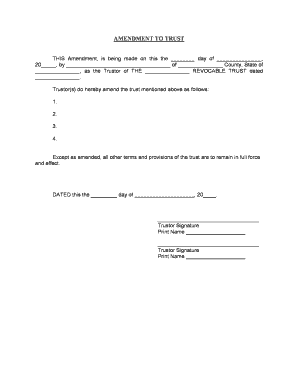
An Amendment to Trust is a written change to an existing trust instrument that alters terms, beneficiaries, trustees, trust powers, or distributions without creating a new trust. Amendments apply to inter vivos (living) trusts and are typically executed by the settlor or grantor while alive. The document should reference the original trust by name and date, state the precise modifications, and indicate the effective date. Proper execution, witness or notary steps, and retention of originals help preserve the amendment’s legal effect and reduce later disputes.

Why Use an Amendment Instead of a New Trust

An amendment lets you update a trust’s terms quickly and at lower cost than drafting a new trust, preserving continuity of trustee appointment and tax identification while avoiding reassigning assets.

Why Use an Amendment Instead of a New Trust

Who Commonly Prepares or Signs an Amendment to Trust

Typical parties who prepare or approve trust amendments and their roles.

  • Trust creator (settlor): prepares changes or authorizes counsel to draft the amendment and signs to effect changes.
  • Trustee(s): review and accept operational changes that affect fiduciary duties and administration.
  • Attorney or trust officer: drafts clear language, confirms tax and probate implications, and advises on execution formalities.

Parties should confirm state execution rules and whether notarization or witnesses are needed before signing.

Who Has Authority to Sign the Amendment

Settlor / Grantor

The settlor (trust maker) typically must sign a revocable trust amendment to change dispositive terms or powers. If a settlor is incapacitated, authority may require a successor decision-maker under durable power of attorney or a court-supervised procedure; always verify trust language and state law.

Trustee / Co-Trustee

Trustees sign to acknowledge administrative adjustments or accept appointment changes. Trustee signature does not replace the settlor’s required signature where the amendment changes beneficiary or dispositive provisions; check the trust instrument for required signatory combinations.

Step-by-Step: Prepare and Execute an Amendment to Trust

Follow these four steps to draft, review, sign, and store a valid amendment to a living trust.

  • 01
    Draft: Describe specific changes and reference original trust clauses.
  • 02
    Review: Have counsel or trustee review for tax and legal effects.
  • 03
    Execute: Sign with required notarization or witness procedures.
  • 04
    Distribute: Provide copies to trustees, beneficiaries, and custodian of records.

Customizing an Online Amendment Workflow

Set up a repeatable online workflow that places signature, date, and notary fields correctly and routes copies to trustees and counsel.

Field Configuration
Signature Field Require signer name, signature, and date fields for settlor/trustee.
Notary Block Add a notary acknowledgement and a space for seal or RON metadata.
Authentication Use email + SMS OTP or knowledge-based verification for signer identity.
Recipients Auto-send final PDF and audit trail to trustee, attorney, and custodian.

Digital Signing and eSubmission Considerations

Configure digital workflows that preserve legal validity and trust-specific execution steps.

  • File formats: PDF or DOCX preferred
  • Integrations: Supports NetSuite, Google Workspace, Salesforce integrations
  • Authentication: Email, SMS OTP, or advanced options

Ensure platform encryption, audit trails, and optional RON support meet your state’s execution and recordkeeping requirements.

Typical eSignature Workflow for Trust Amendments

A standard online execution flow reduces delays and creates an auditable record of consent and signing events.

  • Upload: Upload the amendment and attach supporting exhibits.
  • Place Fields: Insert signature, date, and notary fields in proper positions.
  • Authenticate: Verify signer identity with chosen method before signing.
  • Complete: Deliver signed PDF and audit trail to designated recipients.

Key Timing and Notification Considerations

Track effective dates, beneficiary notifications, and any recording or tax reporting steps after executing an amendment.

Effective Date:

As stated in amendment; governs administration timing.

Beneficiary Notice:

Notify affected beneficiaries per trust or state law.

Recording (if needed):

Record only if amendment alters recorded title interests.

Tax Reporting:

Update trustee records for distribution and 1099 reporting.

Retention Start:

Begin retention from amendment effective date.

Milestones from Draft to Finalized Amendment

Follow this milestone sequence to move the amendment from draft to enforceable document.

01

Draft Completed

Finalize language and identify replaced sections.

02

Legal Review

Attorney or trustee confirms validity and tax impact.

03

Execution

Signers execute with required notarization or witnesses.

04

Record & Distribute

Record deed if required and send copies to stakeholders.

eSignature Vendor Comparison for Trust Amendment Workflows

Compare common capability and pricing criteria across vendors to support secure signing and recordkeeping for trust amendments.

signNow DocuSign Adobe Sign PandaDoc HelloSign
Starting Price $8/user/mo $15/user/mo $14/user/mo $19/user/mo $15/user/mo
Free Trial 7-day free trial Varies Varies Varies Varies
Bulk Send Yes Yes Yes Yes No
Audit Trail Yes Yes Yes Yes Yes
HIPAA Compliant Yes Yes Yes No No

Security and Compliance Features Relevant to Trust Documents

In-transit Encryption: TLS 1.2/1.3 encrypted
At-rest Encryption: AES-256 encrypted storage
Audit Trails: Detailed signer logs retained
Legal Compliance: ESIGN and UETA compliant
Regulatory Support: 21 CFR Part 11 options
HIPAA Support: BAA available on request

Real-World Examples: Digital Execution for Trust-Related Documents

Examples show how organizations use secure electronic workflows to execute amendments and related estate documents.

Optica Ventures LLC

Company standardized document execution across locations to reduce turnaround.

  • The interface simplified signer experience across devices.
  • Resulted in consistent acceptance by counterparties and faster confirmation of trustee and beneficiary acknowledgements without extra in-person steps.

Martin Properties

A real estate manager completed trust amendment documentation online while handling closings remotely.

  • Mobile signing and offline options supported field work.
  • The team reported fewer delays at closings and improved administrative compliance when transferring property into updated trust structures.

Common Preparation Pitfalls to Avoid

  • Using vague language that does not reference the specific section of the original trust increases the chance of later disputes.
  • Failing to follow the trust’s execution clause or state formalities can render an amendment invalid when contested.
  • Sending unsigned copies or relying on unverified signatures without notarization where required can cause financial institutions to reject the amendment.
  • Not notifying beneficiaries or trustees per the trust terms may breach fiduciary duties and lead to claims.

Legal and Practical Risks of an Improper Amendment

Invalid Amendment: Document declared unenforceable
Beneficiary Litigation: Increased dispute and litigation risk
Tax Consequences: Unintended reporting or liability
Title Issues: Real property interests contested
Regulatory Rejection: Banks refuse to accept uncertified changes
Evidence Loss: Missing audit trail weakens defense

Frequently Asked Questions About Amendments to Trusts

Answers to common questions about execution, e-signing, notarization, and recordkeeping for trust amendments.


Need help? Contact support

be ready to get more
Join over 28 million airSlate SignNow users