Establishing secure connection…Loading editor…Preparing document…

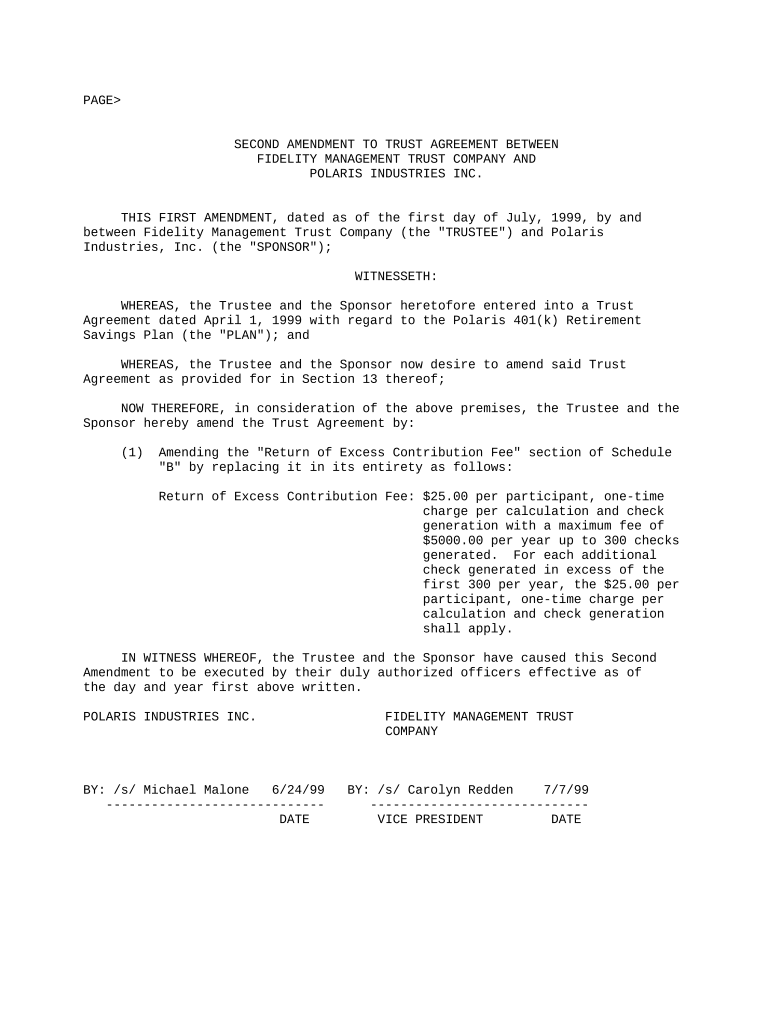
Second Amendment to Trust Agreement

This template is fully customizable. Edit the text, fill out the fields, and send it for signature. Give it a try!
Second Amendment to Trust Agreement

What the Second Amendment to Trust Agreement Is

A Second Amendment to Trust Agreement is a written modification to an existing trust instrument that changes one or more terms without creating a new trust. Typical amendments adjust beneficiaries, trustee powers, distribution timing, or administrative provisions. The amendment should reference the original trust by name and date, clearly state the modified sections, and include execution language showing the grantor's intent. Properly prepared amendments preserve the original trust's continuity while documenting the grantor's updated wishes and avoiding ambiguity during administration or probate.

Why a Second Amendment Matters

A Second Amendment provides a targeted, legally recognized way to update trust terms without re-executing a full trust. It preserves continuity of asset management and clarifies intent for trustees and beneficiaries.

Why a Second Amendment Matters

Who Typically Prepares and Signs an Amendment

In practice, attorneys draft or review amendments; trustees execute administrative steps and beneficiaries receive notice when required by the trust document or state law.

  • Grantors and settlors who retain amendment authority to update beneficiaries or powers.
  • Trustees responsible for acknowledging and implementing amended terms.
  • Estate attorneys or fiduciary advisors drafting language and ensuring compliance.

Step-by-Step: Executing a Second Amendment

Follow these sequential steps to prepare, execute, and distribute the amendment correctly.

  • 01
    Draft: Prepare precise amendment text referencing original trust sections.
  • 02
    Review: Have an attorney or fiduciary review language for clarity and legal effect.
  • 03
    Sign: All required parties sign in presence of a notary or witnesses, if required.
  • 04
    Distribute: Provide copies to trustees, successor trustees, and relevant institutions.

How an Amendment Changes Trust Administration

This overview shows how a properly executed amendment moves from drafting to administration.

  • Reference: Cites the original trust and identifies the clauses being amended.
  • Modification: Replaces or supplements specific provisions with new text.
  • Execution: Signed, dated, and notarized as required to show intent and enforceability.
  • Implementation: Trustee applies changes to asset management and distributions going forward.

Essential Elements of a Professional Second Amendment

A high-quality amendment is clear, reference-based, and contains formal execution elements that support enforceability and administrative clarity.

Citation

Full reference to the trust instrument name and original execution date, ensuring the amendment attaches unmistakably to the correct trust document and avoiding later disputes.
Specific Changes

Clear before-and-after text for each amended clause so trustees and courts can easily identify replaced language and apply the updated provisions without interpretation gaps.

Execution Clause

A statement that the grantor intends this instrument to serve as an amendment, including effective date and any limits to retroactivity or conditional effect.

Signature and Attestation

Grantor and any required trustees sign with printed names and dates; include witness attestations where state law or the trust requires additional authentication.

Notary Acknowledgment

When required or recommended, include a notary block with jurat or acknowledgment to strengthen evidentiary weight during probate or disputes.

Distribution Notice

A provision or administrative instruction describing who receives copies and how trustees should record the amendment in trust records or institutional accounts.

Security and Compliance Considerations

In-transit Encryption: TLS 1.2/1.3
At-rest Encryption: AES-256
Federal eSign Law: ESIGN / UETA
Healthcare BAA: HIPAA (BAA required)
Audit Trail: Signed record logs
Certifications: SOC 2 Type II

Risks of an Incorrect or Incomplete Amendment

Ambiguity: May invite litigation
Invalid Execution: May be unenforceable
Wrong Beneficiary: Could trigger reformation
Recording Error: Title issues if real estate affected
Tax Consequences: Unintended gift or estate tax effects
I-9/HR Impact: Employee trust changes require review

Common Preparation Errors to Avoid

  • Failing to quote the exact language being amended, which causes uncertainty about the scope and intent of the change and may require judicial interpretation.
  • Using inconsistent names or dates, especially abbreviations, that prevent institutions from matching the amendment to trust accounts.
  • Skipping a legal review for tax or creditor implications, which can create unintended liabilities or trigger adverse tax treatment.
  • Neglecting to notify trustees or custodians, delaying implementation of distributions, account title changes, or administrative tasks.

Configuring an Electronic Amendment Workflow

Set up document fields and authentication to preserve legal validity and create an auditable signing path.

Field Configuration
Trust Name Field Auto-fill from template metadata
Amendment Text Box Large multiline field, required
Signature Field Signer-specified, required, date-stamped
Authentication Email + SMS code or stronger

Digital Execution: Platform and Format Requirements

Ensure the provider supports ESIGN/UETA compliance, optional notarization workflows, and record export in ISO-compliant PDF formats for long-term retention.

  • File Formats: PDF, DOCX supported
  • Integrations: CRM and cloud storage access
  • Auth Options: Email, SMS, or KBA

Timing and Key Dates to Track

Track execution, effective dates, and any recording or distribution deadlines to ensure the amendment takes intended effect.

Execution Date:

Date parties sign the amendment; start counting obligations from this date

Effective Date:

If different, the date the amendment will govern actions and distributions

Notarization Date:

Date of notarized acknowledgment when applicable

Recording Deadline:

If real property affected, record promptly with county recorder

Notice to Parties:

Deliver copies to trustees and beneficiaries within a reasonable time

Example Scenarios Where a Second Amendment Is Used

These anonymized examples illustrate typical reasons and administrative steps for amendments.

Beneficiary Update

A grantor changes a beneficiary due to family changes

  • Amendment replaces outdated beneficiary clause
  • Trustees receive notarized amendment, update account titles, and notify financial institutions to reflect the change.

Trustee Replacement

A successor trustee becomes unable to serve

  • Amendment names a new successor trustee and defines interim powers
  • The new trustee signs acceptance, notary verifies signatures, and institutions receive certified copies for account access.

eSignature Vendor Pricing and Capabilities for Trust Amendments

Compare entry-level pricing and key capabilities relevant to executing amendments electronically. signNow appears first for parity in comparison.

signNow DocuSign Adobe Sign PandaDoc HelloSign
Starting Price $8/user/mo $15/user/mo $14/user/mo $19/user/mo $15/user/mo
Free Trial 7-day free trial, no credit card required Varies by vendor Varies by vendor Varies by vendor Varies by vendor
Bulk Send Yes Yes Yes Yes No
Audit Trail Yes Yes Yes Yes Yes
HIPAA Compliant Yes Yes Yes No No

Frequently Asked Questions About Second Amendments

Answers to common practical and legal questions when preparing or executing a Second Amendment to a trust.


Need help? Contact support

be ready to get more
Join over 28 million airSlate SignNow users