Establishing secure connection…Loading editor…Preparing document…

Security Agreement

This template is fully customizable. Edit the text, fill out the fields, and send it for signature. Give it a try!
Security Agreement

What a Security Agreement Is and when it’s used

A Security Agreement is a contract in which a borrower (the debtor) grants a lender or creditor (the secured party) a security interest in specific collateral to secure repayment of an obligation. The agreement identifies parties, describes collateral, sets defaults and remedies, and explains perfection steps such as filing a UCC-1 financing statement with the appropriate state filing office.

Why a clear Security Agreement matters

A precise Security Agreement protects creditor priority, reduces litigation risk, and clarifies remedies on default. Electronically executed agreements are generally enforceable under the ESIGN Act (15 U.S.C. ch. 96, 2000) and state UETA rules when signature intent, consent, attribution, and record retention are satisfied.

Why a clear Security Agreement matters

Who commonly prepares and signs Security Agreements

Organizations and individuals that depend on secured lending and asset-based transactions frequently use Security Agreements.

  • Commercial lenders and banks providing term loans or revolving credit secured by receivables or inventory.
  • Private creditors, factoring companies, and equipment lessors who need a perfected security interest.
  • Businesses and individual borrowers granting collateral to secure financing or vendor credit.

Parties should ensure authorized signatories execute the agreement and promptly perfect the interest by filing required public notices where applicable.

Typical signer roles and responsibilities

Secured Party

A bank, lender, or creditor that takes the security interest. Responsible for verifying debtor identity, ensuring collateral description is adequate, and filing financing statements to perfect priority.

Debtor

The borrower or asset owner who grants the security interest. Must provide accurate legal name, sign the agreement, and disclose liens or encumbrances affecting the collateral.

Essential data elements in a Security Agreement

Debtor Name: Exact legal name
Secured Party: Lender legal entity
Collateral: Specific description
Obligation: Loan amount or note
Effective Date: MM/DD/YYYY
Governing Law: State name

Step-by-step: completing a Security Agreement

Follow these sequential steps to prepare, sign, and perfect a Security Agreement so the secured party obtains intended priority.

  • 01
    Identify Parties: Enter debtor and secured party exact legal names
  • 02
    Describe Collateral: Be specific: include serial numbers, accounts, and fixtures
  • 03
    Sign and Date: Authorized signer executes and dates the signature block
  • 04
    Perfect Interest: File UCC-1 or record deed/mortgage as required

How to set up an online Security Agreement workflow

Configure a simple signing workflow to collect signatures, store executed copies, and trigger perfection steps automatically.

Field Configuration
Signature Type Electronic signature field; date required
Signer Order Debtor signs before secured party
Authentication Email + SMS code recommended
Post-Sign Action Auto-send executed copy and UCC-1 data export

Digital signing and platform considerations

Choose a platform that supports secure e-signatures, audit trails, and required integrations for filing and storage.

  • File formats: PDF and DOCX supported
  • Integrations: CRM, cloud storage, and accounting
  • Security: TLS in transit; AES-256 at rest

Ensure the service complies with ESIGN and UETA and supports required export formats and authentication methods for your jurisdiction and industry.

Where to file, send, or submit a Security Agreement

Filing and distribution depend on collateral type: personal property typically uses a UCC-1 filing; real property requires recording at the county level.

  • Personal Property: File a UCC-1 financing statement at the state Secretary of State
  • Fixtures / Real Property: Record mortgage or deed of trust at the county recorder
  • Borrower Copy: Provide signed copy to the debtor and retained lender file
  • Public Notice: Ensure financing statement data matches the security agreement

Key timelines and filing expectations

Timely filing and renewal keep a security interest perfected; know effective dates, lapse periods, and continuation windows for financing statements.

Effective Date:

Security interest attaches on agreement and value exchange

UCC Filing:

File UCC-1 promptly to establish priority

Financing Term:

Most UCC-1s lapse after five years unless continued

Continuation Window:

File continuation within six months before lapse

Recording for Real Property:

Record immediately where local practice requires to preserve priority

Penalties, risks, and legal consequences

Loss of Priority: Creditor becomes unsecured
Lien Avoidance: Trustee may avoid lien in bankruptcy
Fraud Allegations: Risk of fraudulent transfer claims
Tax Consequences: Possible adverse tax treatment
Enforceability Issues: Defects can void security interest
Filing Rejection: Clerical errors can cause rejection

Common preparation errors to avoid

  • Using an incorrect debtor name or failing to include the debtor’s exact legal identity, which can invalidate a financing statement.
  • Providing a vague collateral description such as 'all assets' without specificity required for certain priority claims.
  • Delaying UCC-1 filing until after advance is made, which risks other creditors perfecting first and obtaining priority.
  • Omitting authorized signatory capacity lines or failing to obtain required witness or notary acknowledgements when state law requires them.

Core clauses to include in a professional Security Agreement

A complete Security Agreement clearly states the parties, collateral, scope of the security interest, default triggers, remedies, and perfection steps to minimize disputes and protect priority.

Parties

Identify debtor and secured party with legal names, addresses, and entity jurisdiction; include officer signatory capacity and contact details for notices.
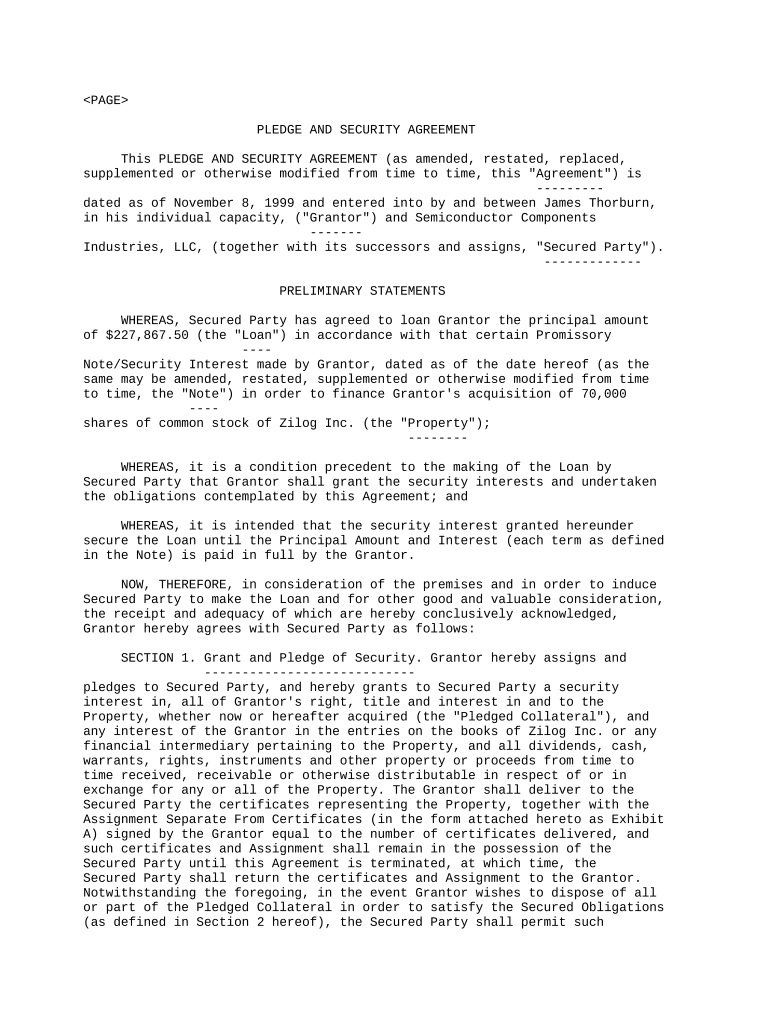
Recitals

Summarize the underlying obligation and context for the security interest, referencing related loan documents or promissory notes by date and amount.

Grant Clause

Explicitly grant a security interest in the listed collateral and define whether the grant is fixed, floating, or after-acquired property.

Collateral Description

Describe collateral precisely, listing serial numbers, account types, and categories; include fixture or real-property carve-outs when relevant.

Representations

Debtor warranties about ownership, authority, no prior liens, and compliance with laws to support enforceability and remedies.

Remedies

Default definitions, notice periods, repossession powers, sale procedures, and choice-of-law and venue provisions for disputes.

eSignature provider comparison relevant to Security Agreement workflows

Compare platform features and pricing to ensure secure signing, audit trails, and compliance; signNow is listed first for parity with available plan data and compliance details.

signNow DocuSign Adobe Sign PandaDoc HelloSign
Starting Price $8/user/mo $15/user/mo $14/user/mo $19/user/mo $15/user/mo
Free Trial 7-day free trial Varies by vendor Varies by vendor Varies by vendor Varies by vendor
Bulk Send Yes (Premium) Yes Yes Yes Yes
Audit Trail Yes Yes Yes Yes Yes
HIPAA Compliant Yes Yes Yes No No

Frequently asked questions about Security Agreements

Answers to common questions about enforceability, perfection, signing authority, notarization, revocation, and storage for Security Agreements.


Need help? Contact support

be ready to get more
Join over 28 million airSlate SignNow users