Establishing secure connection…Loading editor…Preparing document…

Stay Execution Application

This template is fully customizable. Edit the text, fill out the fields, and send it for signature. Give it a try!
Stay Execution Application

What a Stay Execution Application Is

A Stay Execution Application is a court filing that asks a judge to delay enforcement of a judgment, lien, or order while the requester pursues an appeal, seeks post-judgment relief, or otherwise resolves a substantive issue. The filing typically explains the legal basis for the stay, presents supporting facts and evidence, and proposes conditions (bond, security, or other assurances) to protect the judgment creditor. Courts apply local rules and equitable standards when deciding stays; the document must be tailored to the forum, clearly cite authority, and include any required affidavits or supporting exhibits before submission.

Why a Stay Execution Application Matters

A properly prepared application preserves the status quo, prevents immediate enforcement actions, and protects an appellant’s rights while legal issues are resolved. The request frames the equities for the court and outlines protections for the opposing party, increasing the likelihood the court will grant a temporary halt to execution pending further proceedings.

Why a Stay Execution Application Matters

Who Prepares and Files a Stay Execution Application

Typical filers include litigants appealing a judgment, defense counsel seeking interlocutory relief, and trustees or debtors asking for temporary protection from enforcement.

  • Appellants and appellees' counsel seeking to delay enforcement while legal challenges proceed.
  • Debtors or corporate officers requesting time to post bond, restructure, or negotiate alternatives.
  • Government entities or receivers asking for administrative stays to coordinate enforcement and public interest concerns.

The filing party usually engages counsel to ensure compliance with local court rules, to calculate security or bond amounts, and to prepare supporting affidavits or declarations.

Who May Sign the Application

Filing Attorney

An attorney of record signs pleadings and verifies factual assertions under oath. The attorney certifies compliance with local civil rules and may be required to include contact and bar identification information in the signature block.

Authorized Representative

A corporate officer or party representative may sign factual affidavits or declarations supporting the application; attorney signature is typically required on the motion itself when filed in court.

Core Components to Include

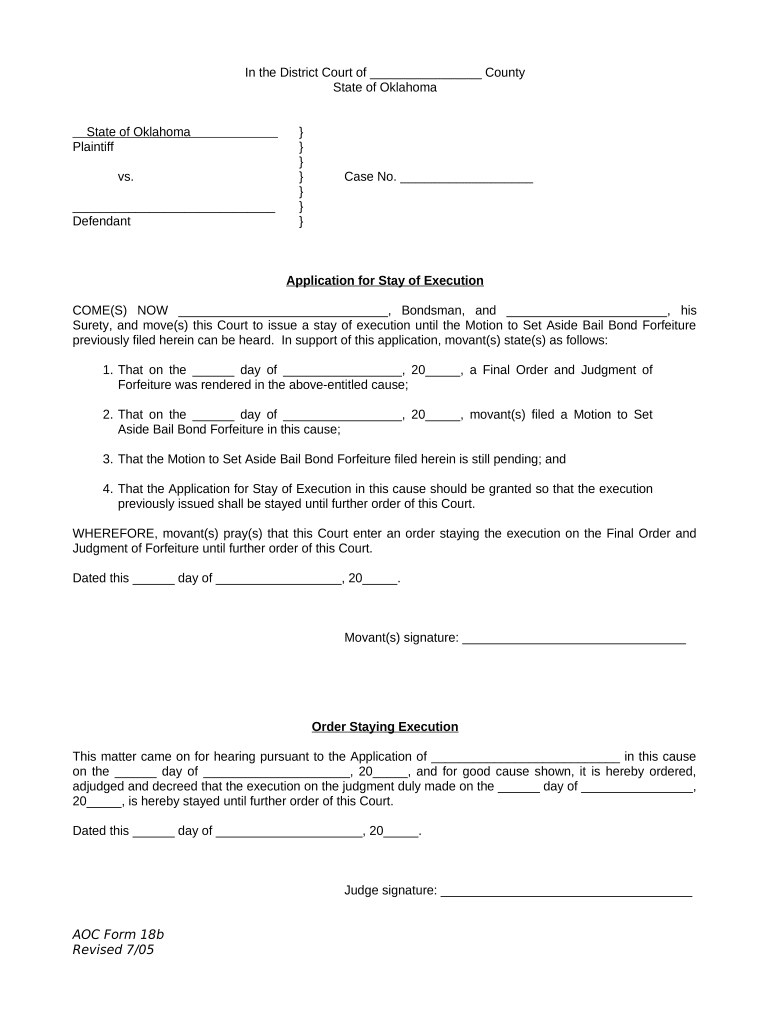
A professional Stay Execution Application combines legal argument, factual support, and proposed protective measures. Below are six elements judges expect to see; adapt them to local practice and attach exhibits or affidavits as required.

Cover Caption

Court caption with case number, parties, judge, and title identifying the filing as a Stay Execution Application.
Statement of Facts

Concise factual recitation establishing the basis for the stay and the events leading to the judgment or order.

Legal Argument

Cite controlling statutes, rules, and case law showing entitlement to a stay and standard applied by the forum.

Security Proposal

Proposed bond amount, escrow, or other assurance to protect the judgment creditor while the stay is in effect.

Affidavits / Declarations

Sworn statements from knowledgeable witnesses verifying facts, damages estimates, and urgency for relief.

Proposed Order

Draft order the judge can sign that sets stay duration, conditions, and administrative directions for enforcement.

Required Information and Supporting Data

Case Details: Case number, court, and judge
Parties: Full legal names with roles (plaintiff/defendant)
Judgment Date: Date and nature of the order
Relief Requested: Exact stay scope and duration
Security Proposed: Bond, escrow, or other protection
Supporting Evidence: Affidavits, exhibits, or financial statements

Step-by-Step: Preparing and Submitting the Application

Follow these sequential steps to assemble a clear, compliant Stay Execution Application tailored to the court’s local rules and filing system.

  • 01
    Gather Documents: Collect judgment, docket entries, and underlying orders for exhibits.
  • 02
    Draft Motion: Prepare legal argument, facts, and proposed protective measures.
  • 03
    Prepare Affidavits: Obtain sworn declarations supporting urgent facts and bond calculations.
  • 04
    File and Serve: Submit per court e-filing system and serve opposing counsel.

How to Configure an Online Workflow for Filing

Set up a digital workflow to assemble, sign, and submit the application while tracking service and evidence attachments.

Field Configuration
Document Template Upload PDF with fillable fields
Signer Roles Assign attorney and client signer roles
Authentication Enable email or SMS code verification
Filing Output Export assembled PDF with audit trail

Where to File and How the Submission Flows

Filing procedures vary by jurisdiction; use the court’s e-filing portal or clerk’s office and serve opposing parties according to local civil rules.

  • Prepare Packet: Assemble motion, affidavits, exhibits, and proposed order
  • Court E‑File: Upload documents through the court’s electronic filing system
  • Service: Serve opposing counsel per rule (email, e-service, or personal service)
  • Return & Notice: File proof of service and monitor docket for hearing date

Digital Signing and eSubmission Considerations

Confirm the court accepts electronically signed filings and attachments before relying on e-submission for an urgent stay request.

  • Accepted Formats: PDF/A, PDF, DOCX
  • Integrations: Supported with common systems
  • Authentication: Email, SMS, or advanced methods

Where remote notarization or signature authentication is required, select a compliant provider and retain full audit trails and any recorded RON session per local rules.

Key Risks and Consequences of Errors

Dismissal Risk: Missing filings can lead to denial
Fee Forfeiture: Improper service may void relief
Bond Exposure: Insufficient security can prompt denial
Sanctions: False statements risk sanctions
Late Appeal: Untimely requests can be barred
Evidence Gaps: Missing affidavits weaken entitlement

Common Mistakes to Avoid

  • Failing to attach the underlying judgment or order
  • Omitting a required sworn declaration or exhibit
  • Relying on informal email service instead of rule-compliant service
  • Neglecting to propose security or bond where the court expects it

Timing Considerations and Typical Deadlines

Stays are time-sensitive; observe appellate deadlines, local motion cutoffs, and emergency procedures to avoid forfeiting relief.

Immediate Filing:

File as soon as grounds arise to preserve relief options

Bond Deadlines:

Courts may set short deadlines to post security

Service Deadlines:

Serve opponents per local rules before hearing

Hearing Scheduling:

Emergency hearings may be set within days

Appeal Cutoffs:

File notices of appeal within statutory timeframes

eSignature Vendor Comparison for Filing Support

Platform choice affects signature authentication, audit trails, and cost. The table below compares starting price and key capabilities across vendors; signNow is listed first as the baseline.

signNow DocuSign Adobe Sign PandaDoc HelloSign
Starting Price $8/user/mo $15/user/mo $14/user/mo $19/user/mo $15/user/mo
Free Trial 7-day free trial Varies Varies Varies Varies
Bulk Send Yes Yes Yes Yes Yes
Audit Trail Yes Yes Yes Yes Yes
HIPAA Compliant Yes Yes Yes No No

Frequently Asked Questions

Answers to common questions about preparing, signing, and filing a Stay Execution Application, including digital and notarization considerations.


Need help? Contact support

be ready to get more
Join over 28 million airSlate SignNow users