Establishing secure connection…Loading editor…Preparing document…

Supply Agreement

This template is fully customizable. Edit the text, fill out the fields, and send it for signature. Give it a try!
Supply Agreement

What a Supply Agreement Covers

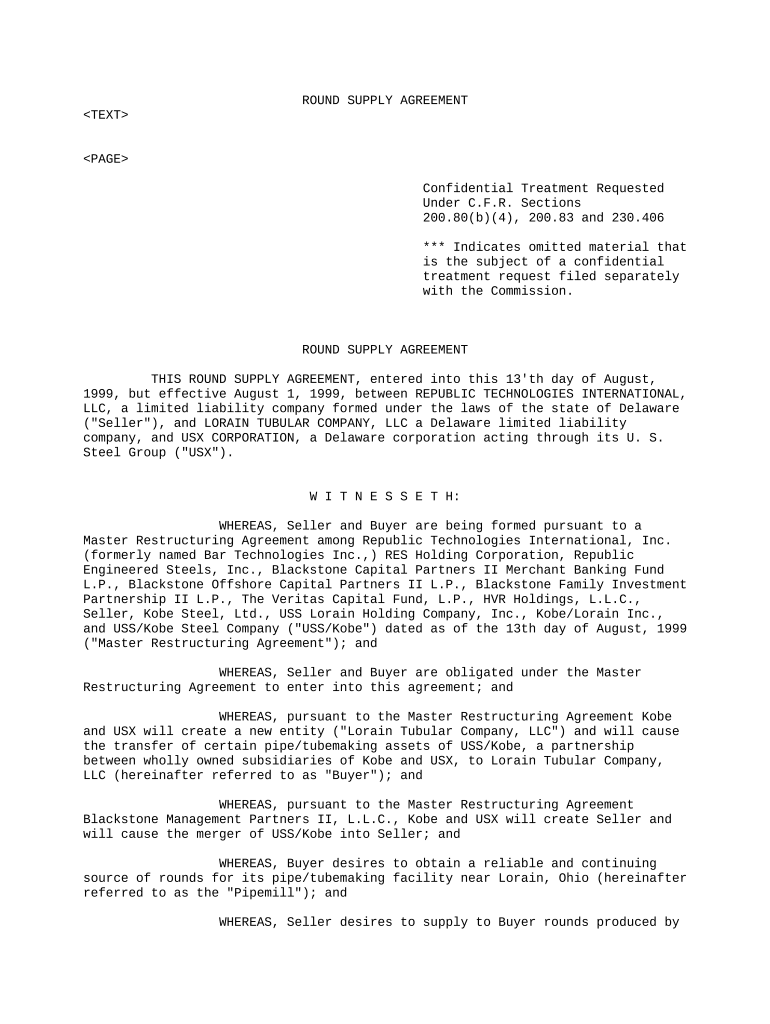
A Supply Agreement is a contract between a supplier and a purchaser that sets the terms for the sale, delivery, and payment of goods or materials. It defines product specifications, quantities, pricing, delivery schedules, inspection and acceptance procedures, warranties, and remedies for breach. The agreement also clarifies allocation of risk, title transfer, insurance requirements, confidentiality, and intellectual property allocations where applicable. Well-drafted Supply Agreements reduce disputes, enable predictable procurement operations, and provide a basis for regulatory compliance and audit-ready recordkeeping.

Why Use a Supply Agreement

Use a Supply Agreement to assign responsibilities, set measurable delivery and quality standards, and limit liability. It protects both parties by documenting pricing, payment terms, and dispute resolution procedures, helping operations remain consistent and auditable for regulatory and commercial review.

Why Use a Supply Agreement

Who Typically Prepares and Signs a Supply Agreement

Common users include procurement managers, supply chain teams, contract administrators, and external vendors who manage goods and materials.

  • Procurement managers — define quantities, delivery windows, and acceptance criteria to control inventory risk.
  • Suppliers — commit to pricing, lead times, quality standards, and corrective action procedures.
  • Legal and contract teams — negotiate liability, indemnities, and termination rights for commercial protection.

Core Sections to Include in a Supply Agreement

Essential sections define scope, pricing, delivery, inspection, warranties, insurance, confidentiality, remedies, and change control to ensure clear obligations and measurable performance.

Scope of Supply

Describe goods, part numbers, quantities, specifications, and packaging. Include acceptable substitutions, lead times, and any required certifications or standards, such as ISO or material traceability requirements.
Pricing & Payment

Specify unit prices, currency, taxes, payment schedule, invoicing requirements, early payment discounts, and late-payment interest. State which party bears customs, duties, and freight when applicable.

Delivery Terms

Set Incoterms or equivalent delivery rules, agreed delivery dates or windows, lead-time calculations, packaging standards, and remedies for late or failed deliveries including liquidated damages or termination rights.

Inspection & Acceptance

Define inspection procedures, sampling plans, acceptance criteria, and timeframes for rejection. Include return handling, repair obligations, and buyer remedies for nonconforming goods, including cost recovery and replacement timelines.

Warranties & Liability

Detail warranty duration, scope, exclusions, and remedies. Limit consequential damages where appropriate, specify indemnities, and state monetary caps or insurance requirements across contract term.

Change Control

Establish a formal change process: written change orders, approval authorities, price adjustments, schedule impacts, and dispute resolution. Reference who may authorize scope changes and how costs are documented.

Security, Privacy, and Compliance Considerations

Confidentiality: Protect proprietary specs and pricing details.
PHI Handling: HIPAA compliance requires BAA when PHI included.
Data Encryption: TLS 1.2/1.3 in transit; AES-256 at rest.
Access Controls: Role-based access and SSO where available.
Audit Trail: Comprehensive logs of signatures and actions.
BAA Availability: Business Associate Agreement offered upon request.

Step-by-Step: How to Complete a Supply Agreement

Follow these steps to complete and execute a Supply Agreement accurately, whether using paper or an electronic signing platform.

  • 01
    Prepare Document: Gather specifications, pricing, and supporting exhibits.
  • 02
    Populate Fields: Enter legal names, dates, and addresses precisely.
  • 03
    Obtain Approvals: Route for internal sign-off per approval matrix.
  • 04
    Execute & Distribute: Sign, timestamp, and circulate final copies to all parties.

How to Configure an Online Signing Workflow

Configure online workflows to mirror contractual approval order, attach exhibits, and enforce field validation for consistent data capture.

Field Configuration
Signing Order Sequential signer routing by role or department.
Authentication Email link or SMS code; KBA for high risk.
Attachments Attach invoices, specs, and certificates as PDFs.
Notifications Automatic reminders and status updates to stakeholders.

Technical Capabilities to Check Before eSigning

Most organizations use eSignature platforms to reduce cycle time; confirm integration, authentication, and audit capabilities before adopting.

  • Integrations: Salesforce, NetSuite, Google Workspace supported.
  • Authentication: Email, SMS, SSO, and optional KBA.
  • Compliance: ESIGN, UETA, HIPAA options available.

Typical eSigning Flow for a Supply Agreement

Typical routing for a Supply Agreement moves from drafter to procurement, legal review, supplier acknowledgement, and final execution with recorded audit trail.

  • Upload Document: Upload final PDF or DOCX and attach exhibits.
  • Assign Fields: Place signature, initials, date, and conditional fields.
  • Send to Signers: Choose signing order and authentication methods.
  • Complete Audit: System timestamps, records IP, and generates certificate.

Key Dates and Deadlines to Track

Key deadlines include effective date, delivery windows, inspection periods, invoicing dates, and warranty claim deadlines tied to the agreement timeline.

Effective Date:

Determines rights start date; enter MM/DD/YYYY.

Delivery Window:

Specified delivery windows trigger inspection and acceptance timelines.

Inspection Period:

Buyer has defined days to inspect upon delivery and notify defects.

Invoice Due Date:

Payment terms (Net 30, Net 60) set supplier cashflow and penalties.

Warranty Claim Window:

Claims must be submitted within warranty period or risk denial.

Penalties and Common Contract Risks

Late Delivery: May trigger liquidated damages.
Incorrect Goods: Risk of rejection and return costs.
Tax Reporting: Missing vendor TIN triggers backup withholding.
Noncompliance: Regulatory fines and contract termination.
Intellectual Property: Unclear ownership causes litigation risk.
Breach Remedies: Damages, specific performance, or termination.

eSignature Vendor Pricing and Feature Comparison

Compare typical eSignature vendor pricing and features relevant to Supply Agreements, placing signNow first per platform rules.

signNow DocuSign Adobe Sign PandaDoc HelloSign
Starting Price $8/user/mo $15/user/mo $14/user/mo $19/user/mo $15/user/mo
Free Trial 7-day free trial Varies Varies Varies Varies
Bulk Send Yes Yes Yes Yes No
Audit Trail Yes Yes Yes Yes Yes
HIPAA Compliant Yes Yes Yes No No
Envelope Cap No envelope cap 100 envelopes/user/year Varies by plan Varies by plan Varies by plan

Practical Tips to Improve Accuracy and Speed

Apply consistent drafting templates, use defined exhibits, and require version control to reduce ambiguity and streamline approvals across procurement and legal teams.

Use standard templates
Adopt a company-standard Supply Agreement template reviewed by legal to ensure consistent clauses for risk allocation, payment terms, and warranty language. Central templates reduce negotiation time and prevent conflicting versions across departments.
Document change history
Track all redlines and approvals in a single version-controlled repository. Maintain clear change orders for amendments that include cost impact assessments, schedule changes, and authorized signatory approvals to avoid later disputes.
Require proof of authority
Obtain evidence of signatory authority: board resolution, power of attorney, or corporate certificate. For purchases above internal thresholds, require documented delegation of authority to prevent unenforceable agreements and reduce post-execution challenges.
Validate supplier compliance
Verify supplier insurance certificates, licenses, and safety records before execution. Include contractual audit rights and require remediation plans for noncompliance to preserve indemnity and insurance coverage effectiveness during contract term.

Common Preparation Pitfalls to Avoid

  • Ambiguous scope leads to disputes over quantities, acceptance criteria, and extra work claims; attach clear specifications and reference documents to reduce interpretation gaps.
  • Incorrect party names or missing signing authority can render agreements unenforceable or delay invoicing; verify legal entity names and attach authority documentation before execution.
  • Failure to specify delivery terms (Incoterms, carrier, risk transfer) creates liability for loss or damage in transit; define responsibilities and insurance clearly.
  • Relying on verbal changes or email-only approvals risks enforceability; require signed change orders and maintain audit trails for contract modifications.

Frequently Asked Questions About Supply Agreements

Answers to frequent questions about filling, signing, and enforcing Supply Agreements, including electronic and notarization concerns.


Need help? Contact support

be ready to get more
Join over 28 million airSlate SignNow users