Corporate Identity
Name, principal office, and statement linking the bylaws to the organization’s articles of incorporation; explains where governance authority is derived and how bylaws relate to the charter.
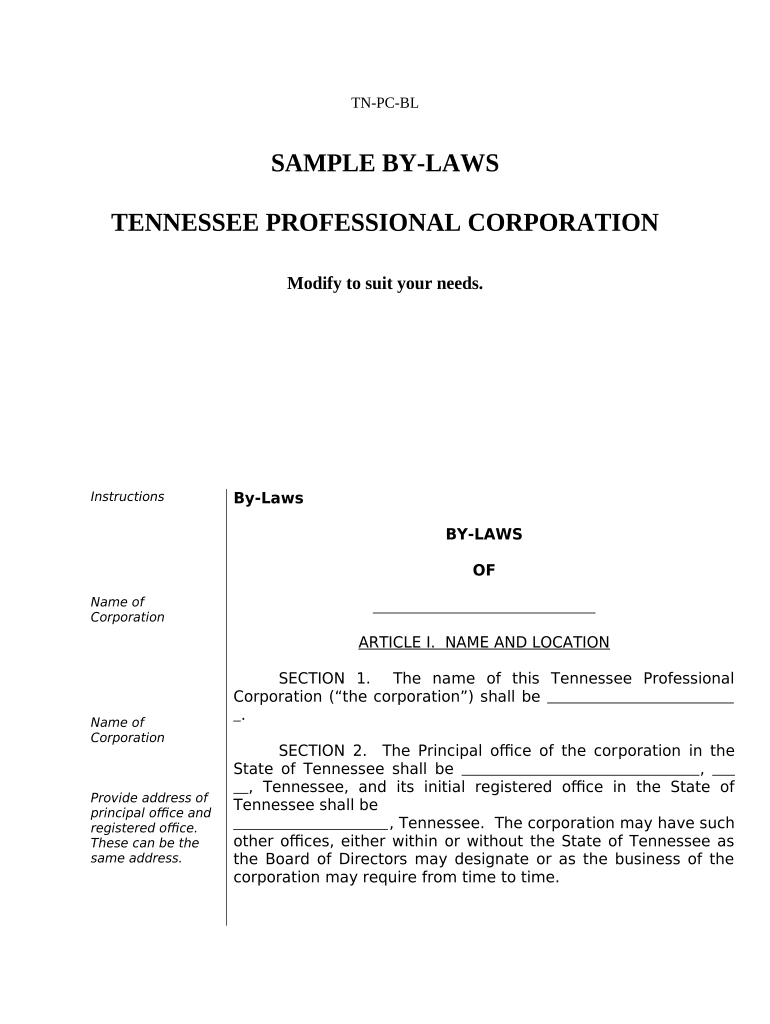
Well-drafted bylaws reduce governance disputes, ensure consistent board procedures, and document authority for officers and committees. They support fiduciary clarity for directors and protect limited liability by showing corporate formalities were observed.

Bylaws are used across organizational types and by several internal stakeholders; the examples below show typical users and roles.
Each stakeholder relies on accurate bylaws for legal clarity, audit readiness, and consistent operational practice.
Name, principal office, and statement linking the bylaws to the organization’s articles of incorporation; explains where governance authority is derived and how bylaws relate to the charter.
Number of directors, terms, staggered or at-large election rules, vacancy appointment process, and removal procedures that govern board continuity and succession.
Quorum definitions, notice periods, meeting formats (in-person, electronic), remote participation rules, and minutes requirements to validate actions taken.
Titles, appointment processes, authority outlines, and delegation rules for CEO, president, secretary, treasurer, and any delegated agents.
Voting thresholds, proxy or absentee voting rules (if allowed), written consents, and recordation procedures for binding corporate action without a meeting.
Procedure for proposing and approving bylaw changes, notice requirements for amendments, and records of amendment adoption for auditor or regulator review.
| Field | Configuration |
|---|---|
| Signer Order | Define sequence: board chair, corporate secretary, witnesses |
| Authentication | Use email link or SMS code for signer verification |
| Signature Type | Allow typed or drawn signature; require handwritten if needed |
| Audit Trail | Enable full audit with IP, timestamp, and certificate |
Secure e-signature platforms can streamline adoption while preserving evidentiary records and compliance.
Choose a platform that provides tamper-evident PDFs, an audit trail, and integrations with your records systems; these features support compliance and later proof of execution.
Adopt bylaws at the initial organizational meeting or by written board consent shortly after incorporation.
Record the adoption resolution in the minutes immediately and attach the executed bylaws.
Specify the effective date; if none is listed, the adoption date controls.
Provide the notice period required before amendments become effective, as set in the bylaws.
Begin retention steps upon execution; preserve originals as the authoritative record.
When we updated the corporate bylaws for our property management business, we needed quick approval across multiple locations.
Our board required a rapid amendment to officer appointment authority to close a strategic transaction.
| signNow | DocuSign | Adobe Sign | PandaDoc | HelloSign | |
|---|---|---|---|---|---|
| Starting Price | $8/user/mo | $15/user/mo | $14/user/mo | $19/user/mo | $15/user/mo |
| Free Trial | 7-day free trial | Varies | Varies | Varies | Varies |
| Bulk Send | Yes | Yes | Yes | Yes | Varies |
| HIPAA Compliant | Yes | Yes | Yes | No | No |
| Envelope Cap | No cap | 100 envelopes/user/year | Varies by plan | Varies by plan | Varies by plan |