Establishing secure connection…Loading editor…Preparing document…

Termination Agreement

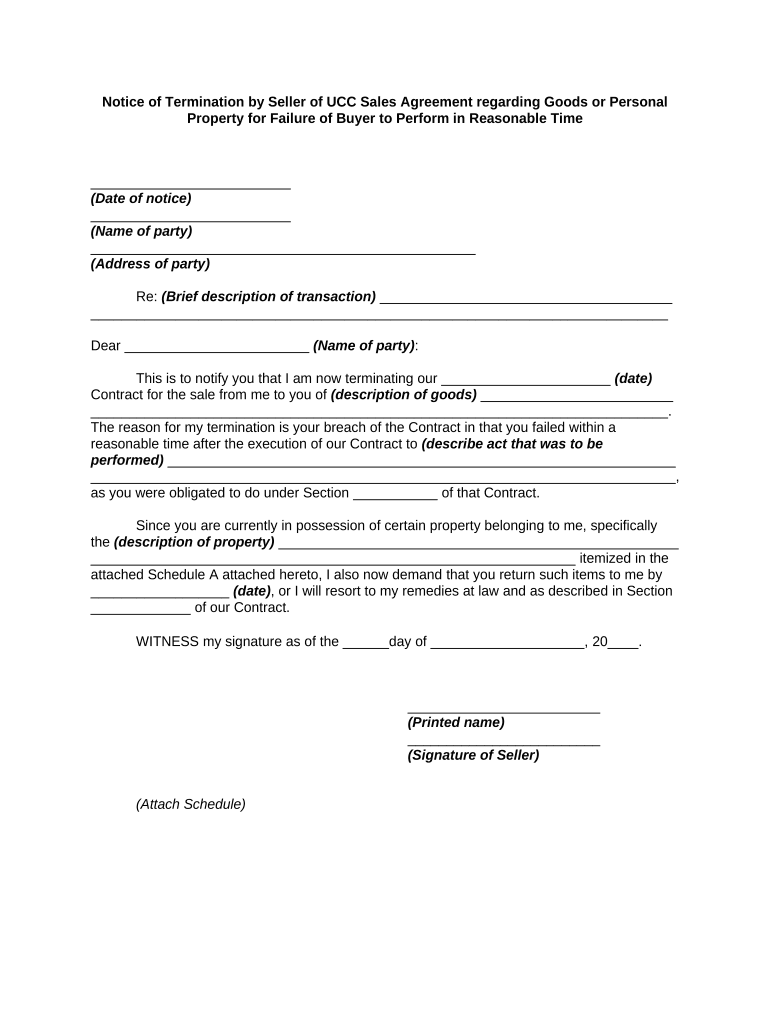
This template is fully customizable. Edit the text, fill out the fields, and send it for signature. Give it a try!
Termination Agreement

What a Termination Agreement Is and when it applies

A Termination Agreement is a written contract that formally ends or modifies an existing contractual relationship between two or more parties. It records mutual consent to terminate obligations, establishes any post-termination duties (such as confidentiality, return of property, or final payments), and allocates liabilities and remedies. For employment, vendor, lease, and commercial contracts, a clear Termination Agreement reduces uncertainty and documents the transition steps, effective dates, and any consideration exchanged to settle outstanding claims.

Why using a written Termination Agreement matters

A signed Termination Agreement creates clear evidence of mutual intent, limits future disputes, clarifies post-termination obligations, and often triggers release or payment provisions that resolve outstanding claims promptly.

Why using a written Termination Agreement matters

Who commonly prepares and signs Termination Agreements

Organizations and individuals use Termination Agreements when contracts end early, when parties agree to a clean break, or when settlement of claims and obligations is required.

  • Employers and departing employees — final wages, benefits continuation, and release language for separation.
  • Businesses and vendors — settlement of outstanding invoices, return of goods, and transition clauses.
  • Landlords and tenants — lease termination terms, security deposit disposition, and possession schedules.

Choose signatories with authority to bind their organization and include counsel when releases or significant consideration are involved.

Who can sign and typical signatory roles

Authorized Officer

A corporate officer or authorized agent with delegation from the board typically signs for companies; confirm corporate authorization through board minutes or a corporate resolution when needed.

Individual Party

A natural person signs in their individual capacity; for employees, include HR or company witness as appropriate and ensure that executed releases reference the correct legal name.

Core elements to include in a professional Termination Agreement

A complete Termination Agreement addresses the scope of termination, effective date, consideration, mutual releases, confidentiality, return of property, and dispute resolution, along with signature blocks and any witness or notarization language required by applicable law.

Effective Date

Specify the termination effective date clearly using MM/DD/YYYY and state whether obligations survive beyond that date, such as confidentiality or noncompete clauses.
Consideration

Describe any payment, stock, or other consideration precisely, including payment schedule, tax treatment, and whether amounts are gross or net of withholding.

Mutual Release

If parties exchange releases, state the scope (known and unknown claims), carve-outs (e.g., wrongful acts, statutory rights), and whether the release is mutual or one-sided.

Return of Property

Include specific instructions for returning devices, documents, access credentials, and proprietary materials, with deadlines and acceptance criteria.

Post-Termination Duties

Address confidentiality, non-solicitation, transitional assistance, references, and data deletion or retention obligations after termination.

Dispute Resolution

Identify governing law, venue, and whether disputes go to arbitration or court, plus prevailing party fee-shifting and interim injunctive relief rules.

Step-by-step: completing and executing a Termination Agreement

Follow this sequence to prepare, review, and finalize a legally sound Termination Agreement that minimizes downstream disputes.

  • 01
    Drafting: Prepare a precise draft reflecting agreed terms, effective date, and any releases.
  • 02
    Internal Approval: Obtain necessary internal approvals and confirm signatory authority before circulating.
  • 03
    Review by Counsel: Have legal counsel review release language and tax implications for consideration.
  • 04
    Execute and Distribute: Collect signatures, notarize if required, and provide executed copies to all parties and recordkeepers.

Where to send and how to route a signed Termination Agreement

A signed agreement should be routed to stakeholders who require notice or retention: legal, HR or operations, finance for payment processing, and any third parties named in the document.

  • Legal Department: Retain a fully executed copy and update contract registers.
  • Finance: Process final payments and adjust accounting entries.
  • HR / Operations: Implement return-of-property and access-revocation tasks.
  • External Parties: Send countersigned copies to counterparties and relevant vendors.

Configuring an online completion workflow

Set up a digital workflow that assigns fields, enforces signing order, and captures an audit trail to support enforceability.

Field Configuration
Signers and Order Specify signer emails and sequential or parallel signing.
Authentication Choose email-only, SMS code, or stronger KBA where needed.
Required Fields Mark signature, date, and key data fields as mandatory.
Retention and Audit Enable PDF certificate, time-stamps, and download retention.

Digital signing and eSubmission: technical checklist

Confirm the platform supports required authentication, audit trails, and export formats before e-signing sensitive Termination Agreements.

  • Authentication Options: Email, SMS, KBA, or SSO per risk profile.
  • Audit Trail: Time-stamped IP, action log, and completion certificate.
  • Document Formats: PDF/A, DOCX support and downloadable signed copies.

Integrations with systems like Salesforce, NetSuite, Microsoft 365, and cloud storage simplify distribution and long-term storage of executed agreements.

Key timing and deadlines to track during termination

Track deadlines for payment triggers, return-of-property, benefits continuation, and any statutory notice periods to ensure compliance and avoid penalties.

Effective Termination Date:

Date when rights and obligations end; use MM/DD/YYYY format.

Final Payment Due:

Specify payment due date and late payment consequences.

Return of Property Deadline:

Set a clear calendar date for equipment and document return.

Benefit Continuation:

List COBRA or insurance continuation dates if applicable.

Statutory Notices:

Comply with any required state or federal notice periods.

Major processing milestones after signing

A clear milestone sequence keeps all parties aligned from execution to close-out and compliance verification.

01

Execution

All parties sign and date the agreement; capture final copies.

02

Payment Processing

Finance issues final consideration per the payment schedule.

03

Property Return

Parties complete equipment and access handover.

04

Record Retention

Ensure documents are stored in compliance with retention policy.

Common preparation mistakes to avoid

  • Using ambiguous consideration language that creates disputes about whether payments are settlement or severance.
  • Failing to identify signatory authority, which can render the agreement voidable or unenforceable.
  • Skipping explicit survival clauses for confidentiality or noncompete obligations that should remain effective post-termination.
  • Neglecting to coordinate tax and benefit implications when calculating final payments or severance amounts.

Risks and legal consequences of incorrect Termination Agreements

Contract Liability: May trigger breach claims
Tax Exposure: Incorrect withholding risk
Enforceability: Improper signatory authority invalidates terms
Regulatory Risk: Violations of employment or privacy laws
Delay Costs: Late payments increase interest and dispute expense
Confidentiality Breach: Unprotected data may breach HIPAA or trade secret rules

Example scenarios where Termination Agreements resolve disputes

These real-world examples illustrate common uses of Termination Agreements across business contexts.

Vendor Contract Settlement

A vendor and hospital agreed to an early exit due to delivery delays, settling outstanding invoices for a fixed payment

  • Payment equal to two months' invoices was accepted
  • The signed Termination Agreement released both parties from further claims and specified a 90-day assistance period for transition.

Employment Separation

An employer offered a separation package in exchange for a release of claims after a restructuring

  • The package included final pay and continued health benefits for 60 days
  • The executed agreement avoided litigation and set precise dates for payout and benefit cessation.

How a Termination Agreement differs from related documents

Compare Termination Agreements with releases, rescission instruments, and amendment letters to choose the right formality and legal effect.

Document Type Termination Agreement Release Rescission Amendment
Primary Purpose end contract remove claims undo contract modify terms
Consideration Needed often yes often yes usually yes not always
Effect on Past Claims may release releases claims treats as never existed preserves past claims
Typical Use Case commercial exits settlements contract errors changes in scope

Typical eSignature pricing and capability comparison

Basic pricing and capability indicators help select an eSignature platform for executing Termination Agreements. Confirm plan details with each vendor before purchase.

signNow DocuSign Adobe Sign PandaDoc HelloSign
Starting Price $8/user/mo $15/user/mo $14/user/mo $19/user/mo $15/user/mo
Free Trial 7-day free trial Varies by plan Varies by plan Varies by plan Varies by plan
Bulk Send Yes Yes Yes Yes Varies
Audit Trail Yes Yes Yes Yes Yes
HIPAA Compliant Yes Yes Yes No No
Envelope Cap No cap 100 envelopes/user/year Varies Varies Varies

Frequently asked questions about Termination Agreements

Answers to common practical and legal questions about executing, storing, and enforcing Termination Agreements.


Need help? Contact support

be ready to get more
Join over 28 million airSlate SignNow users