Establishing secure connection…Loading editor…Preparing document…

Mississippi Answer to Complaint

This template is fully customizable. Edit the text, fill out the fields, and send it for signature. Give it a try!
Mississippi Answer to Complaint

What the Mississippi Answer to Complaint Is

A Mississippi Answer to Complaint is the defendant's formal written response filed with the court after being served with a civil complaint. It admits or denies factual allegations, raises affirmative defenses, and may assert counterclaims or motions. The Answer preserves defenses, starts the case record for the defendant, and triggers further case scheduling and discovery. Preparing and filing a correct Answer follows Mississippi procedural rules and local court practices; missing the response deadline can result in default judgment, so timely, accurate filing is critical for protecting rights.

Why a Proper Answer Matters

Filing a correct Answer protects legal rights, preserves defenses, and prevents a default judgment; it also establishes the defendant's position for discovery and future motions.

Why a Proper Answer Matters

Who Typically Prepares and Files an Answer

Parties should confirm signatory authority and local filing rules before submitting the Answer to the clerk or e-filing system.

  • Individual defendants and small business owners who are named in the complaint and need to respond.
  • In-house or outside attorneys tasked with drafting admissions, denials, and affirmative defenses.
  • Registered agents or corporate counsel filing on behalf of corporations or LLCs.

Step-by-Step: Completing the Answer

Follow these core steps to prepare and file a Mississippi Answer to Complaint accurately.

  • 01
    Read the Complaint: Identify all claims, parties, and deadlines stated in the summons.
  • 02
    Draft Responses: Respond to each numbered allegation with admission, denial, or lack of knowledge.
  • 03
    Add Defenses: List affirmative defenses and any counterclaims or setoffs.
  • 04
    File and Serve: File with the clerk and serve all parties; include certificate of service.

Configuring an Online Answer Workflow

Set up your digital workflow to draft, review, sign, and file the Answer efficiently while preserving an audit trail.

Field Configuration
Document Template Use a template with numbered paragraph responses for consistency.
Signer Role Assign Defendant or Authorized Counsel role with contact email.
Authentication Require email plus SMS or ID verification for higher assurance.
Audit Trail Record timestamps, IP addresses, and signer consent for admissibility.

Technical Requirements for eFiling and eSigning

Where allowed, combine eSignature platforms with court e-filing to maintain a single secure record and reliable audit trail.

  • File Formats: PDF and DOCX are commonly accepted by courts and e-filing portals.
  • Authentication: Courts may require account-based filings or identity proofing for attorneys.
  • Integrations: Connectors to document storage and case management streamline filing.

How Filing and Service Usually Flow

The typical process moves from drafting to filing to serving opposing parties and preserving proof of service.

  • Draft: Prepare the Answer with numbered paragraph responses and defenses.
  • File: Submit to the court clerk or e-filing portal and obtain a filing receipt.
  • Serve: Deliver the filed Answer to all parties per service rules and record proof.
  • Record: Retain the stamped filing, certificate of service, and audit trail for records.

Core Parts of a Professional Answer

A professional Answer follows court formatting and includes key sections that clarify the defendant's position and preserve procedural rights.

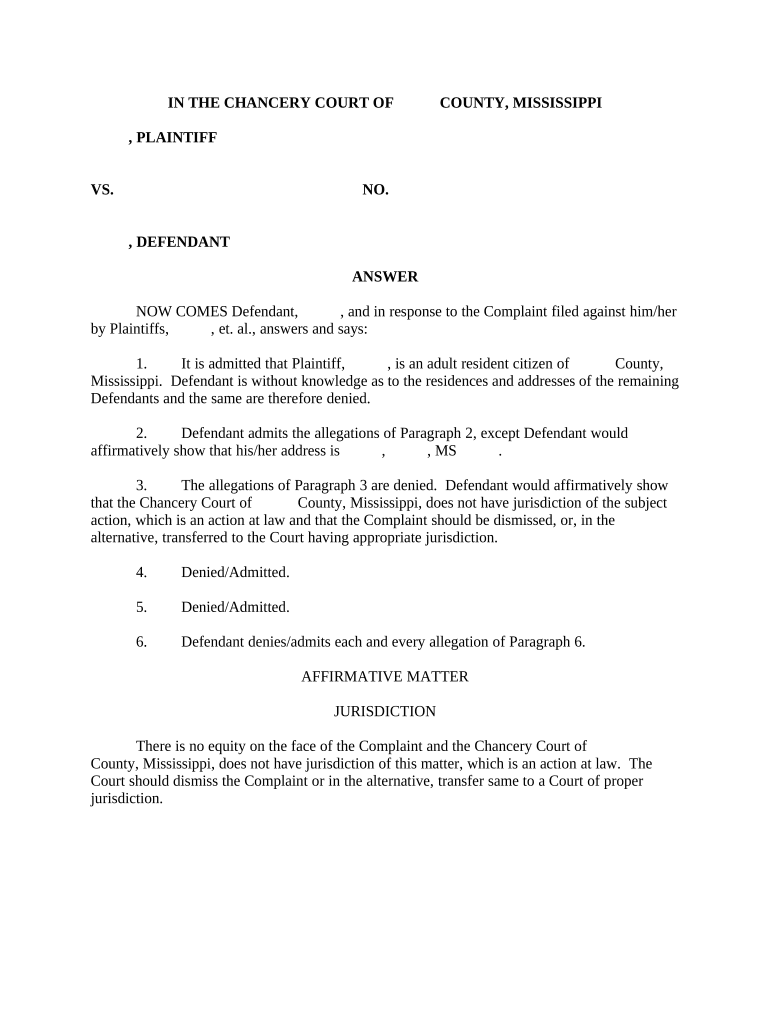
Caption

Court name, case number, and party designations must match the complaint exactly and appear at the top of the pleading.
Admissions/Denials

Address each numbered allegation with a concise admission or denial; avoid vague or evasive language that could be interpreted against you.

Lack of Knowledge

State lack of sufficient information when appropriate; this functionally operates as a denial without admitting facts.

Affirmative Defenses

Enumerate specific defenses such as statute of limitations, failure to state a claim, or lack of jurisdiction with brief factual grounding.

Counterclaims

Include any counterclaims with supporting factual allegations and specify the relief sought, venue, and jurisdictional basis.

Certificate of Service

State how and when opposing counsel was served and include signature, printed name, and contact details for the filer.

Security and Compliance Considerations

Encryption: TLS 1.2/1.3; AES-256 at rest
Audit Trail: Time-stamped signer events and IP logging
Regulatory Certs: SOC 2 Type II; ISO 27001
Privacy Laws: GDPR and CCPA compliance available
Health Data: HIPAA-compliant with BAA
Legal E-Sign: ESIGN and UETA adherence

Common Preparation Mistakes to Avoid

  • Missing the response deadline or misreading the summons timeline, which can lead to default judgments and loss of defenses.
  • Failing to address each numbered allegation specifically, creating ambiguity that courts may construe adversely.
  • Using incorrect case caption, party names, or docket number, which can delay acceptance or require re-filing.
  • Neglecting to include a certificate of service or proof of service method, causing procedural noncompliance.

Consequences of an Incorrect or Late Answer

Default Judgment: Court may enter judgment against an unresponsive defendant
Waived Defenses: Certain procedural defenses can be forfeited by late filing
Sanctions: Court may impose costs or penalties for improper filings
Dismissal Risk: Improper counterclaims may be dismissed for lack of form or jurisdiction
Increased Costs: Late or incorrect Answers increase attorney fees and court costs
Evidentiary Harm: Failure to preserve defenses can affect later discovery or trial

Typical Timing and Deadlines to Watch

Deadlines vary by state and service method; check the summons and local rules and calendar the response due date immediately.

Standard Response Period:

Often 30 days after service; confirm the summons and local rule deadlines

Shorter Periods:

Certain service methods or expedited proceedings may shorten the deadline

Motions to Extend:

File a stipulation or motion to extend before deadline when possible

Default Judgment Timeline:

Clerk may seek entry of default shortly after failure to respond within the deadline

Filing vs Service:

Filing the Answer does not substitute for proper service on opposing parties

Example Scenarios Where an Answer Is Used

These examples illustrate common practical approaches to preparing and filing an Answer in civil litigation.

Contested Consumer Claim

A small business disputes alleged breach of contract and files an Answer admitting limited facts

  • Includes three affirmative defenses for statute and mitigation
  • The firm files electronically, serves opposing counsel, and preserves an audit trail and certificate of service for the record.

Property Dispute Response

A homeowner denies nuisance allegations and raises lack of standing

  • Adds counterclaim for trespass and supporting facts
  • The homeowner uses a template, secures attorney review, and files the Answer with the county clerk before the deadline.

eSignature Pricing Snapshot for Filing and Signing Pleadings

Comparison of common eSignature vendors and core plan markers to consider when signing and storing court pleadings electronically.

signNow DocuSign Adobe Sign PandaDoc HelloSign
Starting Price $8/user/mo $15/user/mo $14/user/mo $19/user/mo $15/user/mo
Free Trial 7-day free trial Varies Varies Varies Varies
Bulk Send Yes (Premium) Yes Yes Yes No
Audit Trail Yes Yes Yes Yes Yes
HIPAA Compliant Yes Yes Yes No No

FAQs: Common Questions About an Answer in Mississippi

Answers to frequent procedural and practical questions about preparing, signing, and filing a Mississippi Answer to Complaint.


Need help? Contact support

be ready to get more
Join over 28 million airSlate SignNow users