Establishing secure connection… Loading editor… Preparing document…
Navigation

Fill and Sign the Trust Benefit Child Form
Fill and Sign the Trust Benefit Child Form

How it works

Open the document and fill out all its fields.
Apply your legally-binding eSignature.
Save and invite other recipients to sign it.

Rate template

4.8
43 votes
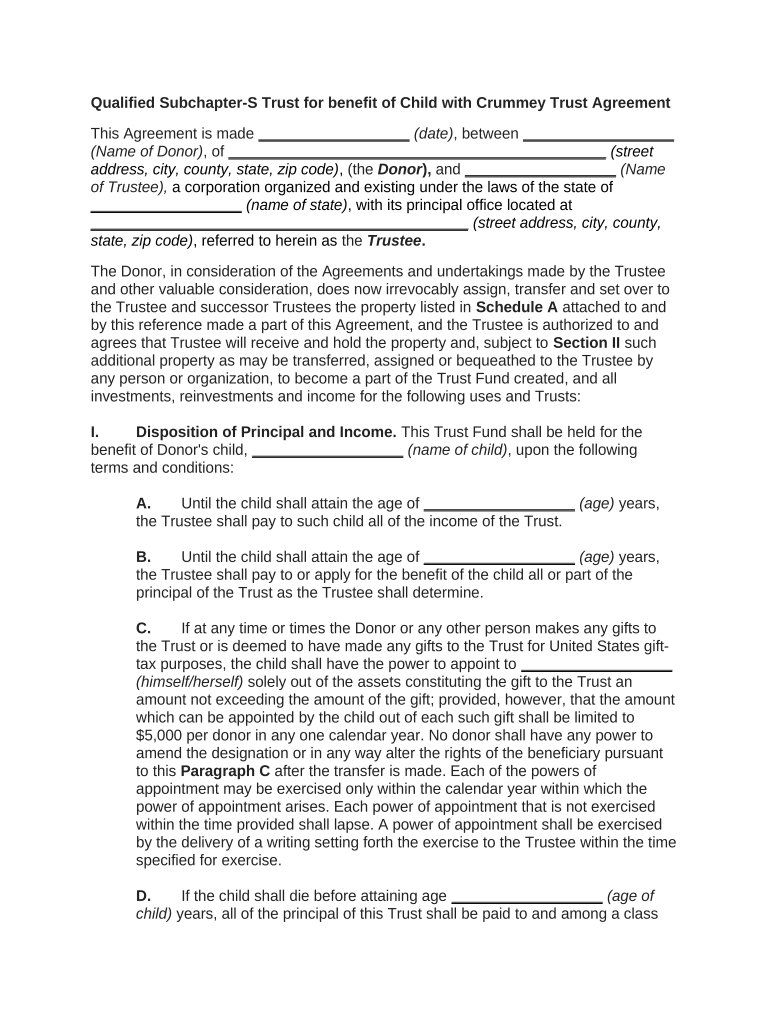
Qualified Subchapter-S Trust for benefit of Child with Crummey Trust Agreement This Agreement is made __________________ (date) , between __________________ (Name of Donor) , of _____________________________________________ (street address, city, county, state, zip code) , (the Donor ), and __________________ (Name of Trustee), a corporation organized and existing under the laws of the state of __________________ (name of state) , with its principal office located at _____________________________________________ (street address, city, county, state, zip code) , referred to herein as the Trustee . The Donor, in consideration of the Agreements and undertakings made by the Trustee and other valuable consideration, does now irrevocably assign, transfer and set over to the Trustee and successor Trustees the property listed in Schedule A attached to and by this reference made a part of this Agreement, and the Trustee is authorized to and agrees that Trustee will receive and hold the property and, subject to Section II such additional property as may be transferred, assigned or bequeathed to the Trustee by any person or organization, to become a part of the Trust Fund created, and all investments, reinvestments and income for the following uses and Trusts: I. Disposition of Principal and Income. This Trust Fund shall be held for the benefit of Donor's child, __________________ (name of child) , upon the following terms and conditions: A. Until the child shall attain the age of __________________ (age) years, the Trustee shall pay to such child all of the income of the Trust. B. Until the child shall attain the age of __________________ (age) years, the Trustee shall pay to or apply for the benefit of the child all or part of the principal of the Trust as the Trustee shall determine. C. If at any time or times the Donor or any other person makes any gifts to the Trust or is deemed to have made any gifts to the Trust for United States gift- tax purposes, the child shall have the power to appoint to __________________ (himself/herself) solely out of the assets constituting the gift to the Trust an amount not exceeding the amount of the gift; provided, however, that the amount which can be appointed by the child out of each such gift shall be limited to $5,000 per donor in any one calendar year. No donor shall have any power to amend the designation or in any way alter the rights of the beneficiary pursuant to this Paragraph C after the transfer is made. Each of the powers of appointment may be exercised only within the calendar year within which the power of appointment arises. Each power of appointment that is not exercised within the time provided shall lapse. A power of appointment shall be exercised by the delivery of a writing setting forth the exercise to the Trustee within the time specified for exercise. D. If the child shall die before attaining age __________________ (age of child) years, all of the principal of this Trust shall be paid to and among a class limited to the child's issue in amounts and proportions as may be appointed by the child's last will and testament specifically referring to this special power of appointment. E. To the extent that the child fails to exercise the special power of appointment effectively, the principal and income remaining shall be set aside in separate and distinct trusts for the child's then living issue, per stirpes, or, if there be none, for the child's brothers and sisters then living and the then-living issue of the child's brothers and sisters then deceased , per stirpes, or, if there be none, for the persons then living, excluding the Donor and any other Donor, who would have inherited the estate of the child if the child had then died intestate under the laws of __________________ (name of state) existing on the date of the execution of this instrument in the proportions prescribed by such laws. Each Trust will be designated with the name of the person for whom it is set aside. Each Trust created under the terms of this paragraph will be held, administered, divided and distributed in the same manner as the Trust for the initial beneficiary, and in applying the terms of this instrument the person with whose name such subsequent Trust is designated shall be considered the child. F. When the child of the Donor shall attain the age of __________________ (age of child at distribution 1) years, the Trustee shall pay over to the child __________________ (fraction of principal distributed at distribution 1) of the principal of the Trust. When the child shall attain the age of __________________ (age of child at distribution 2) years, the Trustee shall pay over to the child __________________ (fraction of principal distributed at distribution 2) of the then-remaining balance of the principal of the Trust, and when the child shall attain the age of __________________ (age) years, the Trustee shall pay over to the child the entire remaining principal of the Trust, together with all of the accrued, accumulated and undistributed income, and the Trust shall terminate with respect to the child. G. This Trust may be terminated, in whole or in part, at any time if such action is deemed advisable and for the best interests of such Trust, or the beneficiary, in the sole discretion of the Trustee whose judgment shall be conclusive and free from question by anyone or in any court. In the event of termination, the principal of the Trust terminated, together with all of the accrued, accumulated and undistributed income, shall be paid over and distributed to the Donor's child. II. Additions to Trust. The Donor or any other person or organization may, at any time, give, transfer or bequeath to the Trust created by this instrument, either by inter vivos transfer or testamentary disposition, additional money or property of any kind acceptable to the Trustee, and in that event the additional property shall become a part of the Trust created by this instrument and shall be divided, allocated, administered and distributed as if it originally had been a part of the Trust. The Trustee may assume any obligation associated with any such property. III. Irrevocability. It is the intention of the Donor that this instrument shall constitute an irrevocable gift in Trust of all property at any time held under the Trust, and any right, title or reversionary interest in it, of any kind or description, which the Donor now has or may subsequently acquire, either by operation of law or otherwise, is renounced and relinquished forever. Any future gift of property to this Trust, whether by the Donor or any other person, shall likewise be irrevocable, and any right, title or reversionary interest in it, of any kind and description, which the Donor may have or subsequently acquire, by operation of law or otherwise, shall, by the making of such gift to this Trust, be renounced and relinquished forever. IV. Discretion of Trustee. In allotting or making any division of or payment or distribution from the Trust Fund or any portion of it for any purpose, the Trustee shall not be required to convert any property, real or personal, tangible or intangible, into money or to divide or apportion each or any item of property, but may, in the sole discretion of the Trustee, allot all or any part (including an undivided interest) of any item of property, real or personal, tangible or intangible, to any fund or to any beneficiary provided for by this instrument; or the Trustee may convert any property into any other form, it being the Donor's intent and purpose to leave all such divisions and apportionments entirely to the discretion of the Trustee with the direction merely that each fund, share, portion or part at any time created or provided for shall be constituted so that the same shall have the value, relative or absolute, designated by this instrument. V. Powers of Trustee. Subject only to the provisions and limitations set forth in this Section V and elsewhere in this instrument, the Trustee, in extension and not in limitation of the powers given Trustee by law or other provisions of this instrument, shall have the following powers with respect to the Trust created here and its property, in each case to be exercised from time to time in the Trustee's discretion and without order or license of any court: A. To change the situs of the Trust and of any property which is part of the Trust to any place in the United States of America or any other country. B. Not to file an inventory of the property which is part of the Trust nor annual accounts of administration with and not to have any of the property examined by any court where filing or examination is not required by applicable law. C. To retain for any period of time any property which may be received or acquired, even though its retention by reason of its character or otherwise would not be appropriate apart from this provision. D. To collect, receive and receipt for rents, profits or other income from any property which may be held. E. To expend money or other property in order to collect, sell, manage, conserve or administer any property which may be held, or in order to improve, repair, equip, develop, furnish, maintain, alter, extend or add to any property. F. To sell at public or private sale (including, specifically, the power to initiate or participate in any public offering or underwriting), partition, exchange for like or unlike property, lease for any period of time even though it may be longer than the duration of the Trust, modify, renew or extend any lease, grant options on, release, demolish, abandon, dedicate and otherwise dispose of any property which may be held, upon terms and conditions, including credit, and for consideration, even though it may be less than the value at which the property was received or acquired, or for such other benefit, even though it may be intangible, as may be deemed appropriate. G. To transfer title to, grant rights in and convey in fee simple or otherwise any property which may be held, free of all Trusts. H. To invest and reinvest in any and all kinds of securities, domestic or foreign, including common and preferred stocks, bonds, debentures, notes, commodity contracts, mortgages and options on property; in investment trusts and in common trust funds; in any real property; in any personal or mixed property; in any business, mining or farming operation or other venture; or in any other interest or investment medium, even though the investment would not be of a character authorized by applicable law but for this provision. I. Not to diversify the property which may be held, whether the property was originally received or subsequently acquired by exchange, investment or otherwise. J. To retain cash for reasonable periods of time in amounts sufficient to meet anticipated needs, including payments of expenses and to beneficiaries. K. With respect to property subject to depreciation or depletion, to withhold an amount from Trust income in the discretion of the Trustee to provide for a reasonable allowance for depreciation or depletion on such property under generally accepted accounting principles. L. To do all things necessary, customary or desirable to conduct the affairs of an unincorporated business, mining or farming operation, real-estate operation or other venture. M. To do all things necessary, customary or desirable to conduct the affairs of any corporation; to act as officer, director, attorney or employee of any corporation; and to place stock in the name of the Trustee or any beneficiary of the Trust in order to qualify him or her as a director of the corporation. N. Alone or with others to organize, reorganize, merge, consolidate, recapitalize, dissolve, liquidate or otherwise create or change the form of any corporation, partnership, joint venture or other entity. O. To exercise all voting, sale, purchase, exchange or other rights or options with respect to any security or other property which may be held. P. To refuse, reject or not to exercise any offer to purchase, option to purchase, voting or other right or option with respect to any security or other property which may be held. Q. To participate in any plan or proceeding for protecting or enforcing any right, obligation or interest arising from any property which may be held; to serve as a member of a security-holder protective committee; and to deposit securities in accordance with any plan agreed upon. R. To expend money or other property, whether by bidding in at foreclosure, by making a contribution to capital, by paying an assessment or otherwise, in order to protect any property which may be held. S. To pay, contest, compromise, abandon, release, adjust, submit to arbitration, sue on, defend and otherwise deal with and settle any claim in favor of or against the Trust or the Trustee. T. To receive, acquire and retain policies of fire, motor vehicle, business- interruption, title, liability, fidelity, indemnity, or other casualty insurance, either in stock or in mutual companies, in any amount, against any risk in which the Trust has an insurable interest. U. To borrow money or other property for such periods of time, upon such terms and conditions, and for such purposes as may be deemed appropriate; to mortgage, pledge or otherwise encumber any property which may be held as security for any such loan; and to renew, extend or refund any existing loan either as maker or endorser. V. With respect to any obligation held, whether secured or unsecured, to reduce the interest rate on it, to continue it on and after maturity with or without renewal or extension and without regard to the then-value of any security, to foreclose on the security or to acquire the security without foreclosure. W. To keep books of account and to make reports upon a reasonable basis and with detail as may be deemed appropriate. X. To execute any instrument under seal or otherwise. Y. To bind absolutely, by any action taken or not taken, all beneficiaries, born or unborn, ascertained or unascertained, of the Trust as against any other party; and no party dealing with the Trustee shall have any duty to follow any property transferred by him to the Trustee. Z. To sell any property to, to exchange any property with, to purchase any property from or otherwise to deal with any beneficiary of the Trust or with any Trust or estate of which either the Donor, the Donor's spouse or any issue of the Donor is or was a Donor or beneficiary, whether created by this instrument or not, even though the Trustee is also a fiduciary of such other trust or estate; and when dealing with any fiduciaries, the Trustee shall have no duty to follow any property transferred by such Trustee. AA. To act notwithstanding the self-interest of the Trustee, including the powers to lease, mortgage or sell any property to or lease or purchase any property from the Trustee, to determine the amount of and to receive compensation for services as Trustee or in any other capacity; in the case of a corporate Trustee, to borrow from, deposit money or otherwise deal with its own banking department, to invest in its own stock or stock of any of its affiliates, or to invest in its own common trust fund, and to be interested in any investment, corporation, unincorporated business, farming or mining operation, real-estate operation or other venture in which the Trust is interested. BB. To obtain the advice of accountants, attorneys at law, brokers, investment counsel, realtors, appraisers and other experts, and to compensate such experts by salary, commission, fee or otherwise, and to act pursuant to the advice of such experts without independent investigation. CC. To delegate to agents: (i) the authority to execute contracts, checks, documents of title and other instruments, to keep books of account, to prepare reports and tax returns, to hold possession and record ownership of securities, bank accounts and other property or to perform any other ministerial function; (ii) the authority to perform the following discretionary functions: (a) the management of any investment, unincorporated business, farming or mining operation, real-estate operation or other venture (whether by employing agents, giving proxies, entering into voting trusts or otherwise); and (b) the selection of the time to acquire or to dispose of any property which may be held; (iii) any power, including this power, possessed by the Trustee which is necessary, customary or desirable so that the agent may perform any function delegated pursuant to this paragraph; and (iv) to compensate such agents by salary, commission, fee or otherwise. DD. To enter into binding agreements not to exercise any power which the Trustee possesses upon such terms and conditions and for such reasons as may be deemed appropriate. EE. To enter into any pooling or unitization agreement. FF. To advance money on behalf of the Trust for which advances, with any interest, the Trustee shall have a lien on the assets of the Trust as against any beneficiary. GG. To permit any beneficiary to have the use, possession and enjoyment of any property then distributable pending actual distribution. HH. To loan money or other property, with or without formal evidence of indebtedness, with or without collateral security, for periods of time and on terms and conditions as may be deemed appropriate to the beneficiary of the Trust created by this instrument, out of the Trust created by this instrument from which the beneficiary is eligible to receive income; to make any such loan a lien upon any property payable or distributable to the beneficiary; and to guarantee any loans of the beneficiary. II. To retain for any period of time cash or other unproductive property. JJ. To receive, acquire and retain policies and proceeds of policies of life insurance and of immediate and deferred annuities, either in stock or in mutual companies, in any amount, on the life of the beneficiary of the Trust created by this instrument, or on the life of any person in whom the beneficiary or the Trust has an insurable interest; to pay the premiums out of either the income or principal or both of such Trust which is the beneficiary of such policy or out of which the beneficiary of such policy is eligible to receive income; and to exercise all rights, privileges and options available under such policy. XI. Limitations on Trustee’s Powers. Notwithstanding any powers conferred upon the Trustee elsewhere in this Agreement, no Trustee or successor Trustee or any other person shall have at any time, or in any manner or capacity, either directly or indirectly, the power to do any of the following in respect of the Trust and Trust Fund created: A. To revest title to any part of the principal of the Trust Fund in the Donor (including without further mention in this article any other Donor of property) or the Donor's spouse; to hold or accumulate any part of the income of the Trust or Trust Fund for future distribution to the Donor or the Donor's spouse; to distribute any part of the income of the Trust to the Donor or the Donor's spouse; or to apply any part of the income or principal to the payment of premiums upon policies of insurance on the life of the Donor or the Donor's spouse. B. To enable any person to purchase, exchange or otherwise deal with or dispose of any part or all of the principal or income of the Trust for less than adequate and full consideration in money or money's worth. C. To enable the Donor or the Donor's spouse directly or indirectly to borrow any part or all of the principal or income of the Trust. D. To exercise any power of administration over the Trust other than in a fiduciary capacity for the benefit of the beneficiaries. VII. Governing Law; Counterparts. A. This Agreement and Trust are specifically created as a __________________ (name of state) agreement and trust and the construction, validity and effect of this Agreement and the rights and duties of the beneficiaries and Trustee shall at all times be governed exclusively by the laws of __________________ (name of state) . B. This Agreement may be executed in any number of counterparts, any one of which shall constitute the Agreement between the parties. VIII. Construction. A. Unless the context requires otherwise, all words used in this instrument in the singular number shall extend to and include the plural, and all words used in the plural number shall extend to and include the singular. B. As used in this instrument, the terms brother and sister shall include persons who have acquired the designated relationship by the half as well as the whole blood, but shall be limited to persons related to the Donor by blood or adoption. C. As used in this instrument, the term Trustee shall include all those holding that office under this instrument from time to time without regard to whether they were initially appointed, successor or additional Trustees. IX. Trustees. A. __________________ (Name of Trustee) is appointed initial Trustee. If it shall resign or cease to act as Trustee, then it may appoint a successor, and if it fails to appoint a successor then the successor shall be __________________ (name of successor Trustee) . B. Any Trustee may resign as Trustee of the Trust by delivering a written instrument to that effect signed by or on behalf of Trustee to the individual or corporation who is to serve as successor Trustee. Any resignation shall be effective as of the date of completion of delivery of the instrument or as of such later date as shall be specified in the instrument. In no event, however, shall the Donor, the Donor's spouse, or any child of the Donor serve as a Trustee under this instrument. C. No bond or other security shall ever be required to be given or be filed by any Trustee for the faithful execution of Trustee's duty under this instrument. If, notwithstanding the preceding provision, a bond shall nevertheless be required, no sureties shall be required. D. No Trustee shall be liable for any cause or in any event except for willful malfeasance or bad faith. X. Subchapter-S Trust. It is the Donor's intention that this Trust shall be a Qualified Subchapter-S Trust, as defined in Section 1361(d)(3) of the Internal Revenue Code of 1986, as amended. Accordingly, no Trustee shall have any power the possession of which would cause this Trust not to be a Qualified Subchapter-S Trust; no power shall be exercisable in a manner that any Trust will not be a Qualified Subchapter-S Trust; and any ambiguity in this Trust Agreement shall be resolved in a manner that this Trust shall be a Qualified Subchapter-S Trust. Specifically, but not by way of limiting the general application of the foregoing, during all periods in which this Trust owns stock in any small business corporation, within the meaning of Section 1361(b) of the Internal Revenue Service, that has an election under Section 1362(a) in effect, notwithstanding any other provision in this Trust Agreement: A. Until the death of the beneficiary of the Trust, the Trustee shall pay and distribute to the beneficiary and to no other person all of the net income of the Trust annually or at more frequent intervals. Any and all income accrued but not paid to the beneficiary prior to the death of the beneficiary shall be paid to the estate of the beneficiary. B. Any distributions of principal from the Trust may be made only to the beneficiary then entitled to receive income from the Trust. C. Any power provided in Section V of this Trust Agreement may be exercised with respect to the Trust if and only if, or to the extent that, the exercise of any such power shall not violate the provisions of this article and shall not impair or disqualify the Qualified Subchapter-S Trust status of the Trust. The Donor and the Trustee have executed this Agreement at _____________________________________________ (place of execution) the day and year first above-written. _________________________ (Signature of Donor) ________________________ (Printed Name of Donor) ________________________ (Name of Trustee) _________________________ (Signature of Officer of Trust) ________________________ (Printed Name of Officer) (Acknowledgments) (Attachment of schedule)

Valuable assistance on preparing your ‘Trust Benefit Child’ digitally

Are you frustrated with the burden of handling paperwork? Look no further than airSlate SignNow, the optimal electronic signature solution for individuals and businesses. Bid farewell to the lengthy procedure of printing and scanning documents. With airSlate SignNow, you can easily complete and sign papers online. Leverage the robust features incorporated into this user-friendly and budget-friendly platform and transform your method of paperwork management. Whether you need to sign forms or collect electronic signatures, airSlate SignNow manages it all with ease, requiring just a few clicks.

Follow this detailed guide:

  1. Log into your account or sign up for a free trial with our service.
  2. Click +Create to upload a file from your device, cloud, or our form library.
  3. Open your ‘Trust Benefit Child’ in the editor.
  4. Click Me (Fill Out Now) to prepare the document on your end.
  5. Add and designate fillable fields for others (if necessary).
  6. Proceed with the Send Invite options to solicit eSignatures from others.
  7. Download, print your copy, or convert it into a reusable template.

No need to worry if you need to collaborate with others on your Trust Benefit Child or send it for notarization—our platform has everything you need to complete such tasks. Register with airSlate SignNow today and enhance your document management to a higher level!

Here is a list of the most common customer questions. If you can’t find an answer to your question, please don’t hesitate to reach out to us.

Need help? Contact Support

The best way to complete and sign your trust benefit child form
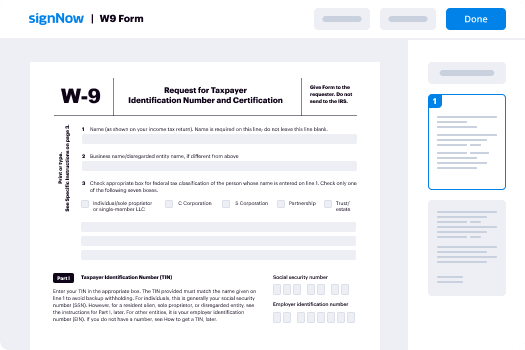
Save time on document management with airSlate SignNow and get your trust benefit child form eSigned quickly from anywhere with our fully compliant eSignature tool.

How to Sign a PDF Online How to Sign a PDF Online

How to complete and sign paperwork online

Previously, dealing with paperwork required pretty much time and effort. But with airSlate SignNow, document management is fast and easy. Our powerful and easy-to-use eSignature solution lets you effortlessly fill out and electronically sign your trust benefit child form online from any internet-connected device.

Follow the step-by-step guidelines to eSign your trust benefit child form template online:

  • 1.Register for a free trial with airSlate SignNow or log in to your account with password credentials or SSO authentication.
  • 2.Click Upload or Create and import a file for eSigning from your device, the cloud, or our form library.
  • 3.Click on the file name to open it in the editor and utilize the left-side toolbar to fill out all the empty fields accordingly.
  • 4.Put the My Signature field where you need to eSign your sample. Type your name, draw, or import a photo of your regular signature.
  • 5.Click Save and Close to accomplish modifying your completed document.

Once your trust benefit child form template is ready, download it to your device, export it to the cloud, or invite other parties to eSign it. With airSlate SignNow, the eSigning process only takes a few clicks. Use our robust eSignature solution wherever you are to deal with your paperwork successfully!

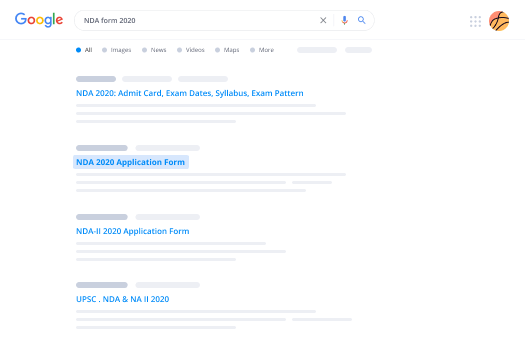
How to Sign a PDF Using Google Chrome How to Sign a PDF Using Google Chrome

How to complete and sign documents in Google Chrome

Completing and signing paperwork is simple with the airSlate SignNow extension for Google Chrome. Adding it to your browser is a fast and productive way to manage your paperwork online. Sign your trust benefit child form sample with a legally-binding eSignature in a couple of clicks without switching between programs and tabs.

Follow the step-by-step guide to eSign your trust benefit child form in Google Chrome:

  • 1.Go to the Chrome Web Store, find the airSlate SignNow extension for Chrome, and install it to your browser.
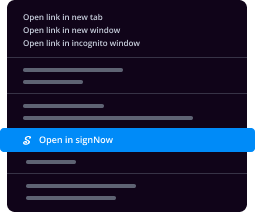
  • 2.Right-click on the link to a document you need to approve and choose Open in airSlate SignNow.
  • 3.Log in to your account with your credentials or Google/Facebook sign-in option. If you don’t have one, you can start a free trial.
  • 4.Use the Edit & Sign menu on the left to fill out your sample, then drag and drop the My Signature option.
  • 5.Upload a picture of your handwritten signature, draw it, or simply type in your full name to eSign.
  • 6.Verify all the details are correct and click Save and Close to finish editing your paperwork.

Now, you can save your trust benefit child form sample to your device or cloud storage, email the copy to other individuals, or invite them to eSign your form via an email request or a secure Signing Link. The airSlate SignNow extension for Google Chrome improves your document processes with minimum time and effort. Start using airSlate SignNow today!

How to Sign a PDF in Gmail How to Sign a PDF in Gmail How to Sign a PDF in Gmail

How to fill out and sign documents in Gmail

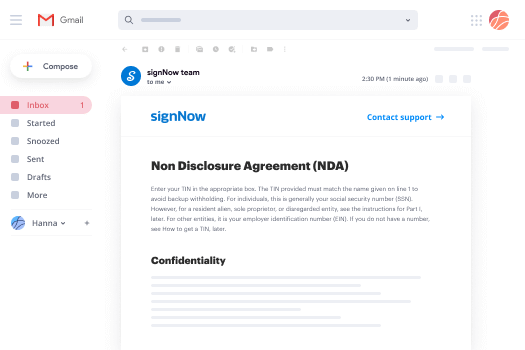
When you get an email with the trust benefit child form for signing, there’s no need to print and scan a file or save and re-upload it to another tool. There’s a much better solution if you use Gmail. Try the airSlate SignNow add-on to rapidly eSign any paperwork right from your inbox.

Follow the step-by-step guidelines to eSign your trust benefit child form in Gmail:

  • 1.Visit the Google Workplace Marketplace and find a airSlate SignNow add-on for Gmail.
  • 2.Install the tool with a related button and grant the tool access to your Google account.
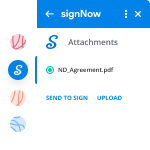
  • 3.Open an email with an attachment that needs signing and utilize the S sign on the right sidebar to launch the add-on.
  • 4.Log in to your airSlate SignNow account. Select Send to Sign to forward the file to other parties for approval or click Upload to open it in the editor.
  • 5.Drop the My Signature option where you need to eSign: type, draw, or import your signature.

This eSigning process saves efforts and only takes a few clicks. Utilize the airSlate SignNow add-on for Gmail to adjust your trust benefit child form with fillable fields, sign forms legally, and invite other people to eSign them al without leaving your mailbox. Boost your signature workflows now!

How to Sign a PDF on a Mobile Device How to Sign a PDF on a Mobile Device How to Sign a PDF on a Mobile Device

How to complete and sign documents in a mobile browser

Need to quickly fill out and sign your trust benefit child form on a mobile phone while doing your work on the go? airSlate SignNow can help without needing to set up extra software programs. Open our airSlate SignNow solution from any browser on your mobile device and create legally-binding eSignatures on the go, 24/7.
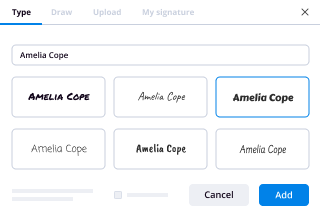
Follow the step-by-step guidelines to eSign your trust benefit child form in a browser:

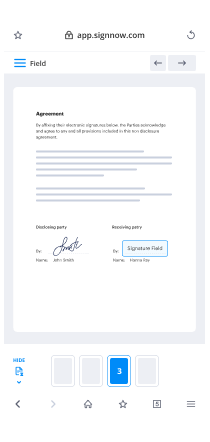
  • 1.Open any browser on your device and follow the link www.signnow.com
  • 2.Register for an account with a free trial or log in with your password credentials or SSO authentication.
  • 3.Click Upload or Create and add a file that needs to be completed from a cloud, your device, or our form catalogue with ready-to go templates.
  • 4.Open the form and complete the empty fields with tools from Edit & Sign menu on the left.
  • 5.Add the My Signature field to the form, then enter your name, draw, or upload your signature.

In a few easy clicks, your trust benefit child form is completed from wherever you are. When you're done with editing, you can save the file on your device, build a reusable template for it, email it to other individuals, or ask them to eSign it. Make your paperwork on the go speedy and effective with airSlate SignNow!
How to Sign a PDF on iPhone How to Sign a PDF on iPhone

How to fill out and sign paperwork on iOS

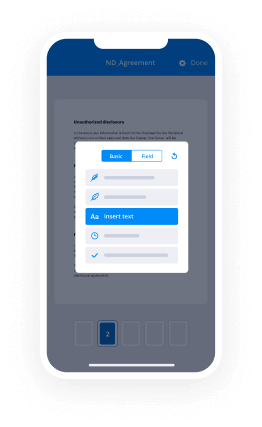
In today’s corporate environment, tasks must be done rapidly even when you’re away from your computer. Using the airSlate SignNow application, you can organize your paperwork and approve your trust benefit child form with a legally-binding eSignature right on your iPhone or iPad. Install it on your device to conclude agreements and manage documents from anyplace 24/7.

Follow the step-by-step guidelines to eSign your trust benefit child form on iOS devices:

  • 1.Go to the App Store, search for the airSlate SignNow app by airSlate, and install it on your device.
  • 2.Open the application, tap Create to upload a template, and choose Myself.
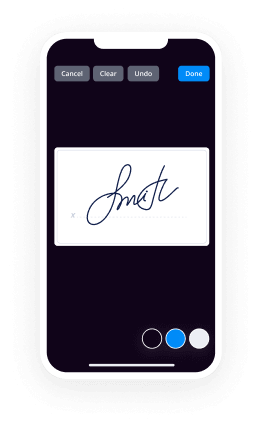
  • 3.Select Signature at the bottom toolbar and simply draw your autograph with a finger or stylus to eSign the form.
  • 4.Tap Done -> Save after signing the sample.
  • 5.Tap Save or take advantage of the Make Template option to re-use this paperwork later on.

This process is so easy your trust benefit child form is completed and signed in a few taps. The airSlate SignNow application works in the cloud so all the forms on your mobile device are kept in your account and are available any time you need them. Use airSlate SignNow for iOS to improve your document management and eSignature workflows!
How to Sign a PDF on Android How to Sign a PDF on Android

How to fill out and sign documents on Android

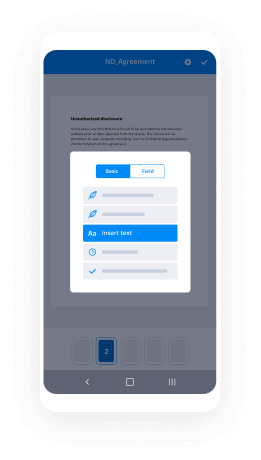
With airSlate SignNow, it’s simple to sign your trust benefit child form on the go. Set up its mobile app for Android OS on your device and start improving eSignature workflows right on your smartphone or tablet.

Follow the step-by-step guidelines to eSign your trust benefit child form on Android:

  • 1.Open Google Play, search for the airSlate SignNow app from airSlate, and install it on your device.
  • 2.Sign in to your account or register it with a free trial, then add a file with a ➕ button on the bottom of you screen.
  • 3.Tap on the uploaded file and choose Open in Editor from the dropdown menu.
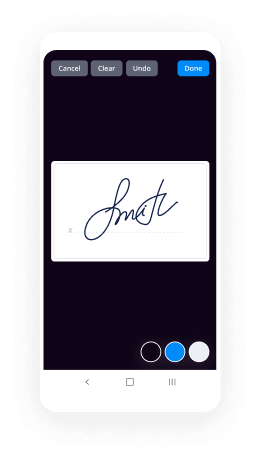
  • 4.Tap on Tools tab -> Signature, then draw or type your name to electronically sign the sample. Complete empty fields with other tools on the bottom if needed.
  • 5.Utilize the ✔ button, then tap on the Save option to finish editing.

With an intuitive interface and total compliance with major eSignature laws and regulations, the airSlate SignNow app is the best tool for signing your trust benefit child form. It even works offline and updates all document adjustments once your internet connection is restored and the tool is synced. Fill out and eSign forms, send them for approval, and make multi-usable templates whenever you need and from anywhere with airSlate SignNow.

Sign up and try Trust benefit child form
  • Close deals faster
  • Improve productivity
  • Delight customers
  • Increase revenue
  • Save time & money
  • Reduce payment cycles