Establishing secure connection…Loading editor…Preparing document…

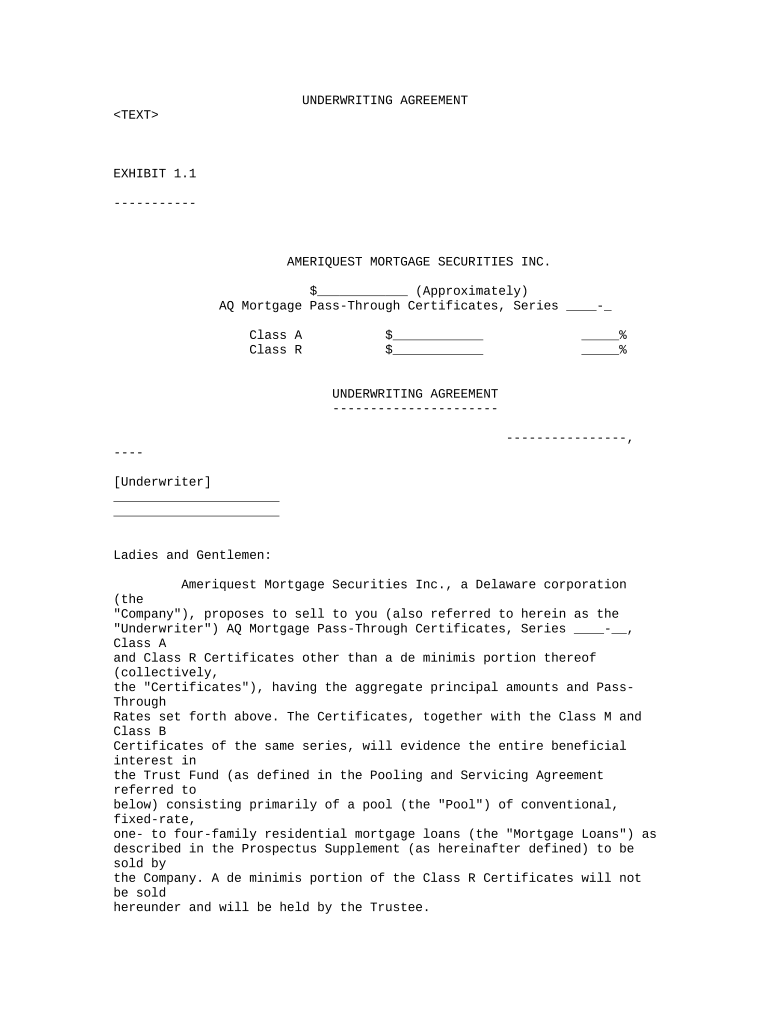
Underwriting Agreement

This template is fully customizable. Edit the text, fill out the fields, and send it for signature. Give it a try!
Underwriting Agreement

What an Underwriting Agreement Is and When It’s Used

An Underwriting Agreement is a binding contract that sets the terms by which an underwriter or syndicate agrees to purchase, distribute, or guarantee an offering of securities or to underwrite an insurance or credit product. It allocates purchase price, fees, allocations, closing mechanics, representations and warranties, indemnities, and conditions precedent. The document also identifies authorized signatories, confirms required corporate approvals, and schedules regulatory filings and reporting steps. Accurate execution is critical to closing, regulatory compliance, and downstream accounting and tax treatment; electronic execution is generally acceptable under U.S. e‑signature laws when requirements are met.

Why a Clear Underwriting Agreement Matters

A well-drafted Underwriting Agreement clarifies economic terms, reduces execution risk, allocates liability, and documents closing conditions — supporting compliance, auditability, and enforceability.

Why a Clear Underwriting Agreement Matters

Typical Parties Who Prepare or Sign Underwriting Agreements

Common preparers and signers include corporate issuers, lead underwriters, counsel, and compliance or finance teams.

  • Issuers and management: Executives and board-approved officers who authorize issuances and confirm corporate representations before execution.
  • Underwriting syndicate: Lead underwriter and syndicate members responsible for allocations, fees, and purchase commitments under the agreement.
  • Legal and compliance counsel: External and in-house lawyers who draft, negotiate, and confirm regulatory disclosures and closing conditions.

Final signature authority typically rests with delegated officers or underwriter representatives — confirm signing authority and corporate resolutions before execution.

Sequential Steps to Prepare and Execute the Agreement

Follow an ordered process to draft, review, approve, and execute the Underwriting Agreement to ensure completeness and compliance.

  • 01
    Drafting: Assemble deal terms, representations, and closing conditions for initial review.
  • 02
    Review: Legal, finance, and compliance review for regulatory and tax impacts.
  • 03
    Signatory Verification: Confirm delegated authority and attach corporate resolutions when required.
  • 04
    Execution & Distribution: Obtain signatures, generate certificate of completion, and circulate executed copies.

Core Sections to Include in a Professional Underwriting Agreement

A complete Underwriting Agreement organizes commercial terms, legal protections, and operational steps so parties share a clear roadmap from signing through settlement.

Parties and Roles

Identify issuer, underwriters, and any placement agents. Define roles, contact points, and delegated authority to bind each party during negotiation and at closing.
Purchase Terms

Spell out offering size, price, timetables, overallotment options, and allocation procedures so economic obligations and potential adjustments are unambiguous.

Representations & Warranties

List issuer and underwriter representations covering authority, financial statements, disclosures, and absence of material adverse changes; define survival periods.

Indemnities & Liability

Allocate responsibility for misstatements or breaches, specify indemnity caps or exceptions, and state procedures for handling claims and defense.

Closing Conditions

Define conditions precedent to funding and delivery, including required regulatory clearances, third-party consents, and fundraising thresholds.

Allocation & Compensation

Describe underwriting discounts, commissions, expense reimbursements, and priority of allocations; include payment timing and reconciliation procedures.

Essential Data Elements to Include

Issuer Name: Full registered name
Underwriter Details: Lead and syndicate names
Offering Details: Size, type, and price
Consideration: Fees and commissions
Effective Date: MM/DD/YYYY
Authorized Signers: Names and titles

How Execution and Distribution Typically Flow

Standard operational flow from document preparation to completed distribution ensures auditability and traceability for all parties.

  • Prepare Document: Assemble draft, exhibits, and corporate approvals.
  • Place Fields: Add signature, initial, and date fields for each signer.
  • Send to Signers: Route to underwriters, counsel, and issuer in the correct order.
  • Finalize & Archive: Capture audit trail, distribute executed copies, and store securely.

Typical Digital Workflow Settings for Underwriting Agreements

Configure workflow rules to match legal signing order, authentication, and archival requirements before sending.

Field Configuration
Signing Order Sequential or parallel as deal requires
Authentication Email link, SMS code, or KBA
Conditional Fields Show/hide sections based on selections
Bulk Send Use for repeated offer distribution

Platform and File Requirements for eSigning

Verify file formats, integrations, and authentication methods match your legal, IT, and compliance requirements before eSigning.

  • File Formats: PDF or DOCX preferred
  • Integrations: Salesforce, NetSuite, Google Workspace
  • Authentication: Email, SMS, or advanced methods

Ensure the chosen platform supports audit trails, secure storage (AES-256), TLS in transit, and any required BAAs or industry attestations for compliance.

Key Dates and Deadlines to Track

Identify and track contractual and regulatory deadlines to avoid missed closings, filing penalties, or settlement delays.

Execution Deadline:

Date by which all parties must sign to preserve terms

Closing Date:

Settlement and funding occur on this scheduled date

SEC Filing Windows:

Coordinate registration and effective dates for public offerings

Payment Settlements:

Timing for transfer of funds and certificates

Allotment Notices:

Issue allocation confirmations per agreement schedule

Common Preparation Errors to Avoid

  • Using abbreviated or inconsistent legal names that cause title or tax mismatches and delay closing.
  • Failing to attach required corporate resolutions or authorizing documents that verify signing authority.
  • Leaving conditional clauses unspecified, leading to disputes about whether closing conditions are satisfied.
  • Sending the document to incorrect signers or in the wrong signing order, causing repudiation or invalid execution.

Primary Risks and Consequences of an Incorrect Agreement

Breach Exposure: Contract damages or indemnity claims
Regulatory Risk: SEC or state enforcement actions
Tax Consequences: Incorrect reporting and withholding
Failed Closing: Deal termination or renegotiation
Authority Issues: Signatures lacking corporate power
Data Security: Unauthorized disclosures and liability

Typical eSignature Vendor Pricing and Feature Comparison for Underwriting Workflows

Compare starting price, trial availability, bulk send, audit trail presence, HIPAA compliance, and envelope limits when selecting an eSignature platform.

signNow DocuSign Adobe Sign PandaDoc HelloSign
Starting Price $8/user/mo $15/user/mo $14/user/mo $19/user/mo $15/user/mo
Free Trial 7-day free trial Varies by vendor Varies by vendor Varies by vendor Varies by vendor
Bulk Send Yes (plan-dependent) Yes Yes Yes No
Audit Trail Yes Yes Yes Yes Yes
HIPAA Compliant Yes Yes Yes No No
Envelope Cap No cap 100 envelopes/user/year Varies by plan Varies by plan Varies by plan

Frequently Asked Questions About Underwriting Agreements

Answers to typical questions on eSigning, authority, notarization, corrections, retention, and disputed execution for Underwriting Agreements.


Need help? Contact support

be ready to get more
Join over 28 million airSlate SignNow users