Establishing secure connection…Loading editor…Preparing document…

Utah Divorce

This template is fully customizable. Edit the text, fill out the fields, and send it for signature. Give it a try!
Utah Divorce

What a Utah Divorce Filing Includes and Why It Matters

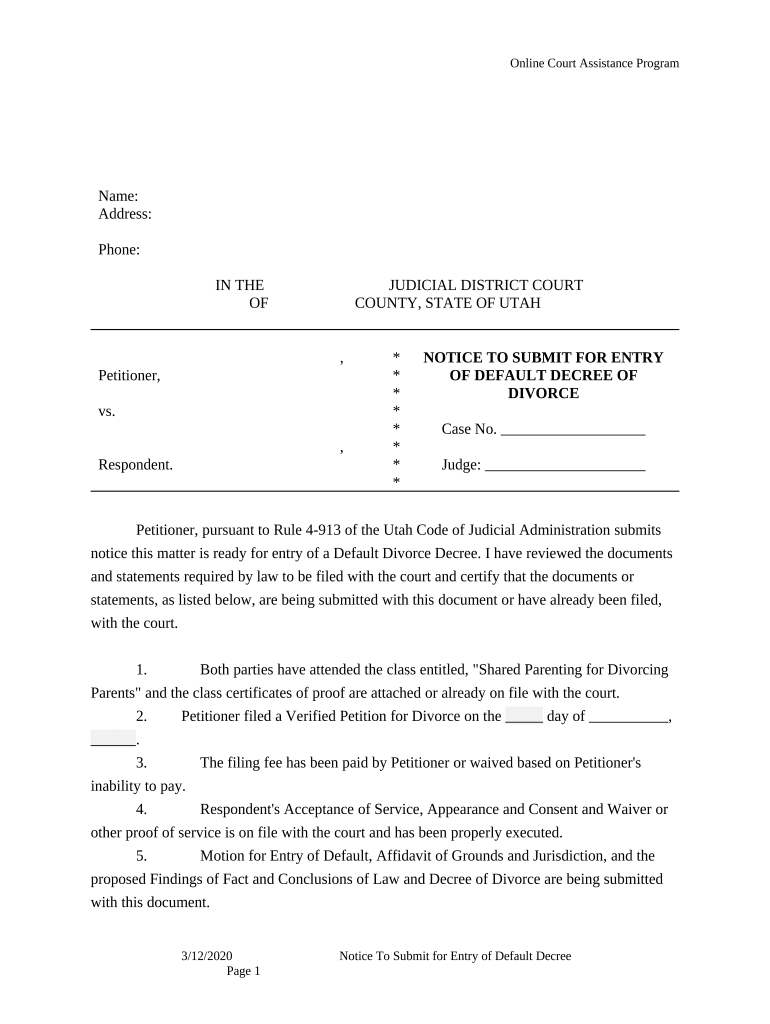
A Utah divorce begins when one spouse files a Petition for Divorce with the appropriate Utah district or county court and serves the other spouse. The overall case file can include the petition, summons, financial disclosures, parenting plans if children are involved, temporary orders, and a final decree. Procedures vary by county, but the process resolves legal status, property division, support, and parenting rights. Some pleadings and settlement documents may require notarization, court approval, or attendance at hearings before the judge signs the final decree.

Why Understanding the Utah Divorce Process Helps Protect Your Rights

Clarity about required forms, deadlines, and evidentiary disclosures reduces delays and legal risk. Accurate filings protect property and parental rights, ensure enforceable support orders, and streamline hearings. Taking care with signatures, notarization, and witness steps preserves enforceability of settlement agreements and court decrees under Utah rules.

Why Understanding the Utah Divorce Process Helps Protect Your Rights

Who Typically Prepares or Signs Utah Divorce Papers

Parties to the case and their legal representatives prepare and file divorce pleadings; a mix of self-represented filers and attorneys is common.

  • Self-represented filers: Individuals who file without an attorney, often in uncontested or straightforward cases.
  • Family law attorneys: Counsel who draft pleadings, negotiate settlements, and represent clients at hearings.
  • Mediators and paralegals: Professionals who prepare agreements or assist with document assembly under attorney supervision.

Courts expect complete, correctly signed documents; missing signatures or incorrect service can delay hearings or lead to default judgments.

Step-by-Step: Filing a Typical Utah Divorce Petition

A straightforward filing follows a sequence from document preparation through service, temporary orders, and final hearing. Steps below cover the core actions most filers take.

  • 01
    Gather Documents: Collect IDs, marriage certificate, financial records, and any parenting information.
  • 02
    Prepare Petition: Complete Petition for Divorce and required local attachments accurately.
  • 03
    File With Court: Submit petition to the county clerk or electronic filing portal and pay fees.
  • 04
    Serve the Other Party: Arrange service per Utah rules and file proof of service with the court.

Essential Components of a Complete Utah Divorce Case File

A complete file groups pleadings, evidence, financial disclosures, and any proposed order so the court can review and rule. Missing elements commonly cause continuances or rejection.

Petition / Complaint

The initiating document that states jurisdictional facts, parties, marriage details, and the relief requested, including custody, support, and property division.
Summons

A court-issued notification to the respondent that begins response deadlines and describes how to appear or contest the petition.

Financial Declaration

Detailed income, assets, debts, and expense statements used for support calculations and equitable property division.

Parenting Plan

A custody and parenting-time proposal specifying decision-making, schedules, and dispute-resolution methods for cases with children.

Marital Settlement Agreement

A written contract resolving property, support, and custody issues; when signed and approved it becomes part of the final decree.

Final Decree

The judge’s signed order that legally ends the marriage and sets enforceable terms for assets, support, and custody.

Personal and Case Data Typically Required

Full Legal Names: Petitioner and respondent names
Date of Marriage: MM/DD/YYYY format
Children Information: Names and birthdates
Financial Details: Income, assets, debts
Service Address: Physical address for service
Signature and Date: Signed by filer with date

Configuring an Online Filing and Signing Workflow

When using electronic tools, set fields and authentication to match court and evidentiary requirements. Below are common workflow settings for divorce paperwork.

e-Filing Portal Utah Courts electronic filing portal or county clerk system
Signer Authentication Email verification plus optional SMS code
Notarization Support in-person notarization or RON where accepted
Document Format PDF/A for long-term retention
Attachments Attach financial affidavits and exhibits as separate files

Where to File and How Documents Move Through the Court

Court systems route filings from the filer to the clerk, judicial officers, and opposing parties. Electronic workflows substitute portals and certified service processes for in-person delivery.

  • County Clerk: Files are stamped and assigned a case number
  • e-Filing System: Uploads and transmits pleadings to court electronically
  • Service Methods: Personal service, certified mail, or approved electronic service
  • Judicial Review: Judge reviews motions, orders hearings, signs decree

Digital Signing and Integration Considerations

Use an eSignature platform that supports PDF, audit trails, and court-compliant export formats for records.

  • File Formats: PDF/A, DOCX for drafts
  • Audit Trail: Timestamps, IP, signer info
  • Integrations: Connects to case management and cloud storage

Confirm the chosen platform meets court rules, supports any required notarization method, and preserves an exportable audit trail for the official record.

Typical Deadlines and Timing to Expect

Timing varies by case, service method, and whether temporary orders are requested. Observe all court-stated deadlines and local rules to avoid default.

Response Deadline:

Respond within 21–30 days after service, depending on method and jurisdiction

Request Temporary Orders:

Hearings often scheduled within weeks for urgent custody or support

Discovery Timeframes:

Document production and depositions follow court scheduling orders

Final Hearing:

Set after settlement or completion of discovery and motions

Entry of Decree:

Judge signs final decree after hearings or when settlement is approved

Key Case Milestones from Filing to Final Decree

A typical sequential flow highlights filing, temporary decisions, evidence gathering, and the final judicial order.

01

File Petition

Submit initiating papers and pay filing fees to open the case

02

Temporary Orders Hearing

Short-term custody, support, or residence orders may be issued

03

Discovery and Negotiation

Exchange financials, mediate settlements, or litigate disputed issues

04

Final Hearing and Decree

Judge issues final orders resolving the marriage and related matters

Common Pitfalls to Avoid When Preparing Divorce Papers

  • Incomplete financial disclosures that force continuances or post-decree modifications and litigation.
  • Service errors: using incorrect methods or failing to file proof of service promptly with the court.
  • Missing signatures or improper notarizations that make settlement agreements harder to enforce.
  • Failure to follow local court forms and instructions leading to rejected filings or scheduling delays.

Consequences of Errors or Missing Requirements in Divorce Filings

Default Judgment: Court may grant relief without respondent's input
Contempt or Fines: Failure to obey orders risks enforcement penalties
Enforcement Costs: Additional legal fees and collection expenses
Support Liability: Incorrect disclosures can misstate support obligations
Property Disputes: Undisclosed assets may be re-litigated later
Delayed Resolution: Case continuances prolong uncertainty and cost

Realistic Case Scenarios That Show How Documents Are Used

Two concise scenarios illustrate common document flows and signing patterns for Utah divorces.

Contested Divorce — County Court

A petitioner files a contested petition and serves the respondent through a process server.

  • Parties exchange financial declarations and undergo discovery.
  • The court schedules temporary orders, holds evidentiary hearings, and issues a final decree after trial; settlement efforts continue throughout to narrow issues before judgment.

Uncontested Divorce — Remote Signing

Both spouses agree on property division and child custody and sign a Marital Settlement Agreement.

  • Documents are notarized remotely where permitted and e-filed with the clerk.
  • The court reviews the agreement and signs a final decree, avoiding protracted hearings and reducing attorney time.

How Divorce Differs From Legal Separation or Annulment

Compare outcomes and process to choose the right path based on goals, eligibility, and long-term consequences.

Criteria Divorce Legal Separation
Finality ends marriage does not end marriage
Court Involvement same same
Property Division yes, court divides often yes, court divides
Typical Timeline months to year months to year

eSignature Platform Pricing and Feature Snapshot for Divorce Documents

Common vendor pricing and key features relevant to executing and managing divorce documents electronically. Consult vendor pages for plan details and legal compliance options.

signNow DocuSign Adobe Sign PandaDoc HelloSign
Starting Price $8/user/mo $15/user/mo $14/user/mo $19/user/mo $15/user/mo
Free Trial 7-day free trial, no credit card required Varies by vendor Varies by vendor Varies by vendor Varies by vendor
Bulk Send Yes Yes Yes Yes No
Audit Trail Yes Yes Yes Yes Yes
HIPAA Compliant Yes Yes Yes No No

Frequently Asked Questions About Utah Divorce Paperwork and eSigning

Answers to common questions about signatures, notarization, filing, and how electronic tools interact with court requirements in divorce cases.


Need help? Contact support

be ready to get more
Join over 28 million airSlate SignNow users