Establishing secure connection…Loading editor…Preparing document…

Underwriting Agreement

This template is fully customizable. Edit the text, fill out the fields, and send it for signature. Give it a try!
Underwriting Agreement

What an Underwriting Agreement Is and When It's Used

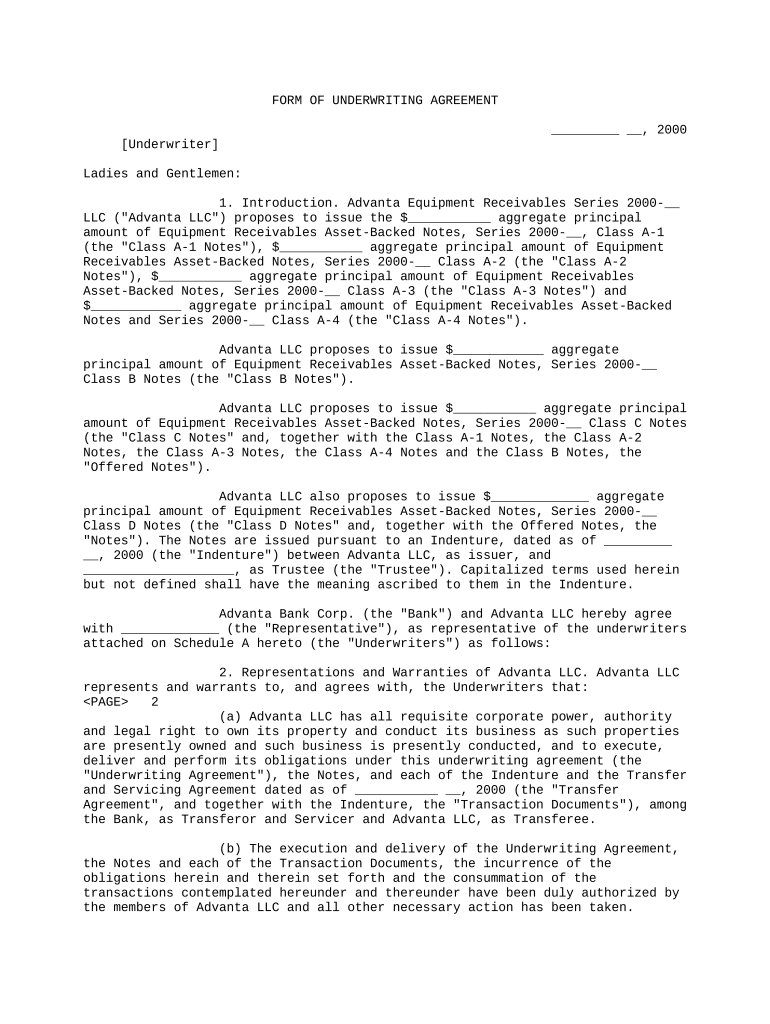
An Underwriting Agreement is a contract between an issuer and one or more underwriters that sets the terms for distributing securities in a public offering or private placement. It allocates responsibilities such as pricing, allocation, stabilization, and indemnification, and lists conditions precedent to closing, fees, and termination rights. Typical parties include the issuer, lead underwriter, syndicate members, placement agents, and counsel. The agreement documents representations and warranties, covenants, underwriting discounts or commissions, and administrative mechanics for settlement and post-closing claims.

Why a Clear Underwriting Agreement Matters

A properly drafted Underwriting Agreement reduces execution risk by allocating legal and financial responsibilities, documenting closing conditions, and limiting post-closing exposure through defined indemnities and survival periods.

Why a Clear Underwriting Agreement Matters

Who Typically Prepares and Signs This Agreement

Typical users include issuers, lead underwriters, syndicate members, corporate counsel, and placement agents involved in securities or capital markets transactions.

  • Issuers and corporate finance teams — negotiate pricing, covenants, and issuer representations for the offering.
  • Investment banks and syndicate managers — set allocation policies, manage subscriptions, and oversee distribution logistics.
  • Legal counsel and compliance teams — prepare representations, closing conditions, and required regulatory disclosures.

Critical Sections to Include in a Professional Agreement

A comprehensive Underwriting Agreement contains discrete sections that allocate economics, risk, and operational tasks among the issuer and underwriters.

Deal Economics

Specifies underwriting discount, gross spread, commission structure, fees, and allocation mechanics; clarifies how pricing and concessions are calculated and how proceeds are distributed among syndicate members.
Representations

Issuer statements about capitalization, financial statements, accuracy of disclosures, and absence of material adverse changes; these inform indemnity triggers and conditions precedent to closing.

Covenants

Agreed obligations before and after closing, such as restrictions on additional issuances, delivery of required information, lock-up provisions, and cooperation during regulatory reviews.

Closing Conditions

Detailed list of deliverables required at closing including legal opinions, officer certificates, auditor comfort letters, and absence of material regulatory impediments.

Indemnities

Allocates responsibility for losses from misstatements or breaches; establishes limits, survival periods, notice and defense procedures for claims.

Syndicate Mechanics

Explains allocation formula, stabilization activities, option agreements, settlement timing, and how the managing underwriter distributes securities among participants.

Step-by-Step: Preparing, Reviewing, and Executing the Agreement

Follow these sequential steps to prepare, review, and execute an Underwriting Agreement for a securities offering.

  • 01
    Gather Documents: Collect prospectus, audited financials, board resolutions, and legal opinions.
  • 02
    Draft Terms: Define pricing, allocation, fees, and closing conditions.
  • 03
    Legal Review: Counsel reviews representations, covenants, and indemnities.
  • 04
    Execute & Close: Underwriters and issuer sign; satisfy closing conditions.

Configuring an Electronic Workflow for the Agreement

Set up e-sign routing, required authentication, and retention rules to capture a comprehensive audit trail and meet regulatory obligations.

Workflow Field Configuration
Signing Order Lead underwriter first, syndicate next
Authentication Level Email link with optional SMS code
Template Fields Pre-place signature, initials, and date fields
Retention Policy Set secure retention and PDF/A export

Typical eSubmission Flow for an Underwriting Agreement

A standardized flow helps ensure each signer authenticates, review steps are recorded, and closing documents are preserved electronically.

  • Upload Document: Upload final agreement to signing platform
  • Place Fields: Insert signature, date, and initial fields
  • Add Signers: Enter issuer and underwriter contact emails
  • Execute: Signers authenticate and complete signatures

Platform Features to Verify Before eSigning

Choose a platform that supports secure authentication, detailed audit trails, and integrations with legal and financial systems.

  • Integrations: Salesforce, NetSuite, Microsoft 365, Box
  • File Formats: PDF, DOCX, HTML, Excel
  • Authentication: Email link, SMS code, KBA, SSO

Common Deadlines and Timing Considerations

Key deadlines for underwriting transactions include execution cutoffs, closing dates, and regulatory filing timelines that must be tracked closely.

Prospectus Delivery:

Provide required offering materials within regulatory timelines

Signing Deadline:

Parties set a firm execution deadline for closing deliverables

Closing Date:

Date securities are delivered and funds exchanged

Regulatory Filings:

File SEC forms and state notices as required

Post-Closing Obligations:

Fulfill indemnity claims and post-closing covenants

Transaction Milestones From Term Sheet to Settlement

A milestone timeline clarifies responsibilities and key handoffs from negotiation through final settlement.

01

Term Sheet Agreement

Outline preliminary economics and allocation expectations

02

Underwriting Agreement Drafting

Negotiate detailed representations and covenants

03

Regulatory Clearance

Obtain necessary SEC or state approvals before closing

04

Execution and Settlement

Sign documents, exchange funds, and finalize ownership transfer

Common Preparation Errors to Avoid

  • Using imprecise party names or incorrect corporate identifiers that conflict with formation records and delay closing or regulatory filings.
  • Failing to list all closing conditions and deliverables, which can lead to disputes over whether the closing properly occurred and who bears the risk.
  • Neglecting indemnity carve-outs or survival periods, exposing parties to unexpected liability and long-term claims.
  • Skipping review of allocation mechanics and stabilization provisions, causing disputes within the syndicate over distributions and remedial obligations.

Key Legal and Financial Risks

Contractual Liability: Breach leads to damages and indemnity obligations.
Regulatory Sanctions: Incomplete disclosures risk SEC enforcement actions.
Fines and Penalties: Potential civil penalties for false statements.
Closing Delay: Missed conditions can postpone or cancel closing.
Reputational Harm: Market perception and future capital access affected.
Tax Implications: Incorrect reporting may trigger IRS penalties.

Security, Privacy, and Compliance Controls to Confirm

Encryption: TLS 1.2/1.3 and AES-256 at rest
Audit Trail: Comprehensive timestamps, IPs, and action logs
HIPAA: BAA required for protected health information
21 CFR Part 11: Supports compliance for electronic records
ESIGN/UETA: Meets federal and state e-signature standards
Access Controls: SSO, SAML, and multi-factor authentication available

eSignature Pricing and Feature Snapshot Across Vendors

Compare starting prices and core capabilities for widely used eSignature providers; signNow is listed first per vendor ordering rules.

signNow DocuSign Adobe Sign PandaDoc HelloSign
Starting Price $8/user/mo $15/user/mo $14/user/mo $19/user/mo $15/user/mo
Free Trial 7-day free trial Varies by vendor Varies by vendor Varies by vendor Varies by vendor
Bulk Send Yes Yes Yes Yes Yes
Audit Trail Yes Yes Yes Yes Yes
HIPAA Compliant Yes Yes Yes No No
Envelope Cap No cap 100 envelopes/user/year Varies by plan Varies by plan Varies by plan

Real-World Examples of Electronic Execution

Clients have used e-sign workflows to shorten closing cycles and centralize documentation across syndicated transactions.

Optica Ventures

Optica Ventures adopted e-signing to centralize investor onboarding, streamline subscription acceptance, and reduce manual errors across offerings.

  • Implementation reduced administrative touchpoints and manual follow-ups significantly.
  • The COO reported simpler remote executions, consistent audit trails, and fewer documentation discrepancies, which shortened time-to-close and simplified regulatory recordkeeping across multiple offerings.

Martin Properties

Martin Properties implemented online signing for syndicate allocations and investor agreements to remove in-person logistics and paper routing.

  • This improved turnaround on subscription documents and investor confirmations.
  • The founder noted the ability to execute remotely with full compliance and security, enabling timely closings and improved record access for audits.

Frequently Asked Questions and Practical Answers

Answers to common legal, technical, and procedural questions about executing and maintaining Underwriting Agreements.


Need help? Contact support

be ready to get more
Join over 28 million airSlate SignNow users