Establishing secure connection…Loading editor…Preparing document…

Virginia Memorandum Lien

This template is fully customizable. Edit the text, fill out the fields, and send it for signature. Give it a try!
Virginia Memorandum Lien

What the Virginia Memorandum Lien Is and When It Applies

A Virginia Memorandum Lien is a concise public record filed to notify third parties that a person or business claims a lien interest related to real property or work performed on property in Virginia. The memorandum summarizes the lien claimant, the debtor, a description of the property or project, and the claimed amount, without attaching the full underlying contract. It preserves the claimant’s priority in many cases and creates public notice that may affect title searches, financing, and closing processes in affected counties.

Why a Memorandum of Lien Matters

Recording a memorandum provides public notice and can preserve lien priority while a full lien claim or suit is prepared.

Why a Memorandum of Lien Matters

Who Typically Prepares or Reviews This Memorandum

The Virginia Memorandum Lien is used by parties who need to preserve lien rights or place public notice of an encumbrance.

  • Contractors and subcontractors asserting mechanic’s liens or payment claims related to construction projects, ensuring notice during project closeouts.
  • Property owners and title professionals who receive or review liens during due diligence and closing processes to assess title risk.
  • Attorneys and lien agents preparing, verifying, or contesting lien claims and advising on priority and foreclosure timing.

Use qualified counsel or a state-licensed filing agent when recording to ensure statutory compliance and correct county recording practice.

Essential Parts of a Professional Memorandum

A professional memorandum is concise, accurate, and formatted for county land records. Key elements reduce rejection risk and make subsequent enforcement clearer.

Claimant

Full legal name and business entity type of the party asserting the lien, matching government or registration records.
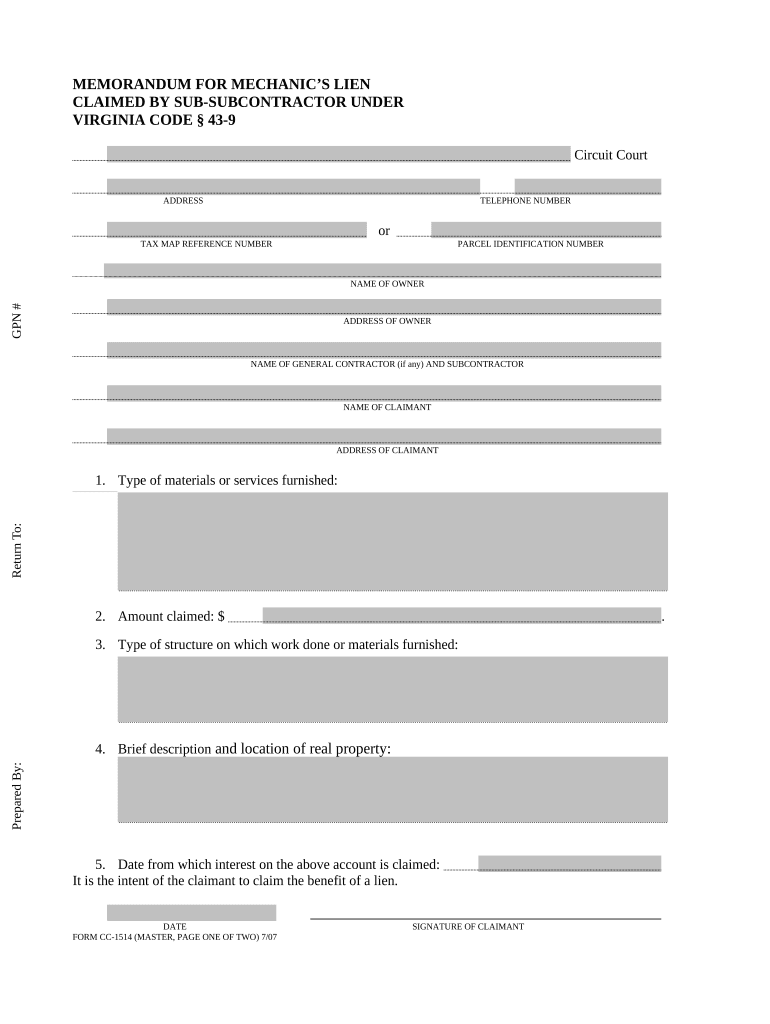
Debtor

Name of the property owner or contracting party against whom the lien is asserted; use exact legal names to avoid ambiguity.

Property Description

Clear street address and sufficient legal description or parcel identifier so the county clerk can associate the memorandum with the correct record.

Basis of Claim

A short statement of work performed, goods provided, or contractual basis for the claim; avoid extraneous narrative.

Claim Amount

Dollar amount claimed (or estimated range) and the date through which amounts were calculated.

Filing Details

Date of execution, signature block, and any notarization or witness statements required by local practice.

Step-by-Step: Preparing and Filing the Memorandum

Follow this sequence to prepare a defensible memorandum and reduce processing delays at the county recorder.

  • 01
    Gather Documents: Collect contracts, invoices, change orders, and proof of delivery.
  • 02
    Draft Memorandum: Complete fields precisely and limit narrative to required facts.
  • 03
    Verify Names: Confirm legal names and parcel identifiers against county records.
  • 04
    Record with Clerk: Submit to the county land records office following local formatting rules.

Where to File and Who Receives the Record

A memorandum is typically recorded in the county where the real property is located and distributed to involved parties.

  • County Recorder: Primary filing destination for land records.
  • Clerk’s Office: Clerk indexes the memorandum against the property record.
  • Lenders / Title: Lenders and title companies receive notice via recorded public record.
  • Contracting Parties: Send certified copies to owner and contracting parties.

Configure an Online Workflow for the Memorandum

Set up an e-filing workflow that captures signer identity, required fields, and provides an audit trail for the recorded memorandum.

Field Configuration
Claimant Details Required; auto-fill from contact record
Property Identifier Required; validate against county parcel data
Signature Block Require signer name, title, and date
Authentication Use email plus SMS or advanced options

Digital Signing and eSubmission Considerations

Ensure the digital platform you choose supports secure signatures, audit trails, and file formats acceptable to the county recorder.

  • Accepted Formats: PDF or PDF/A preferred
  • Authentication: Email + SMS or stronger options
  • Audit Trail: Timestamp, IP, and event log

Confirm the county recorder’s electronic filing rules and whether they accept e-recorded documents or require physical submission after electronic notarization.

Common Preparation and Filing Errors to Avoid

  • Using trade or project names instead of exact legal entity names leads to misindexing and failed searches.
  • Incomplete property descriptions or missing parcel IDs cause clerk rejections and record ambiguity during title searches.
  • Failing to verify signatory authority results in clerks or courts treating the filing as defective or unauthorized.
  • Submitting incorrect fees or wrong county submissions delays recording and can affect lien priority dates.

Risks and Consequences of Incorrect Filings

Invalid Filing: May be rejected or deemed ineffective
Priority Loss: Incorrect dates can forfeit lien priority
Statute Issues: Missing statutory steps can bar enforcement
Title Delays: Closings may be postponed
Cost Exposure: Additional fees and legal costs
Reputational Risk: Disputes may harm business relationships

Practical Tips for Accurate and Efficient Filing

Adopt systematic checks and standard templates to minimize common errors and speed up acceptance by recording offices.

Standardize Names
Use a single, verified legal name format for the claimant across all documents and filings. Cross-check against state registration and county record entries to prevent indexing mismatches and ensure the claim appears in searches.
Validate Property Data
Confirm street addresses and parcel identifiers with the county assessor or tax website before filing. Including the correct tax map or parcel number reduces clerical rejections and accelerates title clearance.
Document Support
Attach or retain contracts, invoices, change orders, and delivery confirmations. Clear supporting documentation expedites dispute resolution and reduces the risk of a successful challenge to the lien.
Confirm Filing Rules
Check the recording office’s formatting, margin, and signature requirements, and whether it accepts electronically notarized or e-recorded documents to avoid rejections.

eSignature Vendor Comparison for Filing and Managing Memoranda

The table compares core price and capability datapoints useful when choosing an eSignature provider for preparing and tracking memoranda.

signNow DocuSign Adobe Sign PandaDoc HelloSign
Starting Price $8/user/mo $15/user/mo $14/user/mo $19/user/mo $15/user/mo
Free Trial 7-day free trial, no credit card Varies by vendor Varies by vendor Varies by vendor Varies by vendor
Bulk Send Yes Yes Yes Yes No
Audit Trail Yes Yes Yes Yes Yes
HIPAA Compliant Yes Yes Yes No No
Envelope Cap No cap 100 envelopes/user/year limit Varies Varies Varies

Frequently Asked Questions About Virginia Memoranda

Answers to common practical and legal questions when preparing, filing, or challenging a Virginia Memorandum Lien.


Need help? Contact support

be ready to get more
Join over 28 million airSlate SignNow users