Establishing secure connection…Loading editor…Preparing document…

Waiver Notice Consent

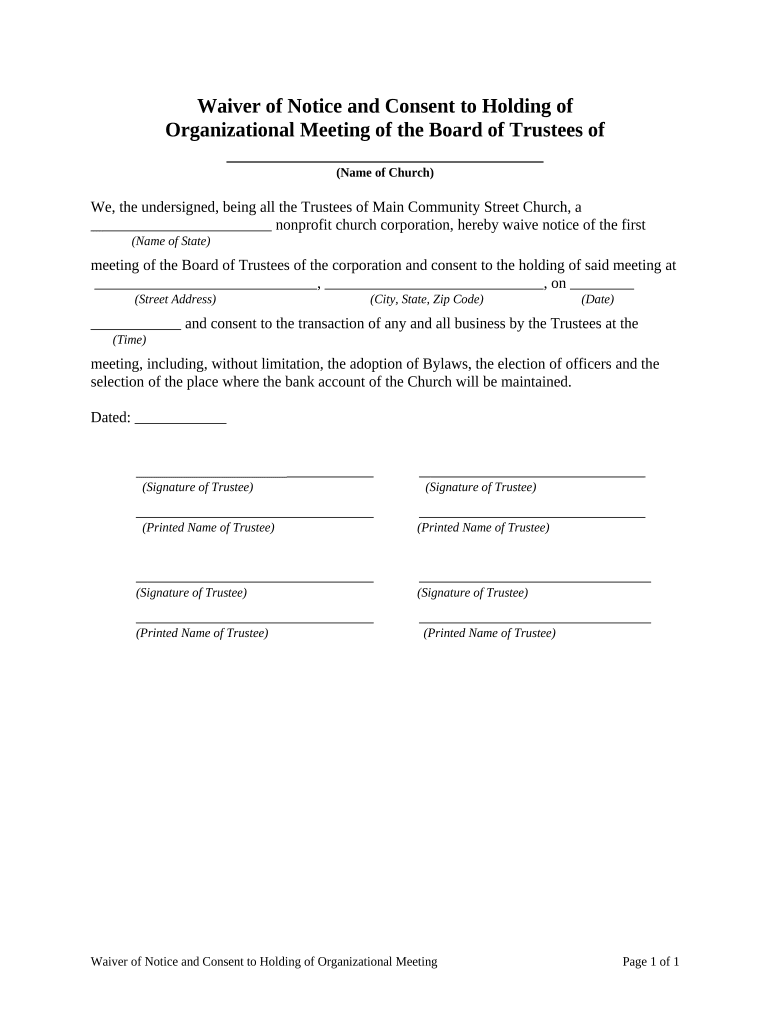
This template is fully customizable. Edit the text, fill out the fields, and send it for signature. Give it a try!
Waiver Notice Consent

What a Waiver Notice Consent Is and when it's used

A Waiver Notice Consent is a written statement where a person or organization voluntarily gives up, limits, or acknowledges certain legal rights or claims related to a transaction or obligation. Typical uses include waiver of liability, consent to limited remedies, or agreement to procedural concessions in administrative, commercial, or healthcare contexts. The document records the parties, scope of the waiver, effective date, and signature blocks. Properly executed waivers clarify risk allocation and can be incorporated into contracts, releases, or standalone notices for a single event or continuing relationship.

Why a clear Waiver Notice Consent matters

A concise waiver notice mitigates disputes by documenting consent and expectations, supports internal controls for risk management, and creates an auditable record of the parties' agreement. Well‑drafted waivers reduce ambiguity over liability and streamline administrative responses when incidents occur.

Why a clear Waiver Notice Consent matters

Who prepares and signs Waiver Notice Consents

Organizations and individuals use waiver notices where one party needs to document voluntary consent to a limitation of rights or risks, commonly in operations, events, healthcare, and real estate.

  • Event organizers and venues seeking releases from attendees or vendors for specific activities.
  • Healthcare providers documenting patient consent for non‑standard procedures or data sharing under HIPAA.
  • Contracting parties in construction or services agreeing to conditional waivers tied to payment or completion terms.

Choose signatories who have authority to bind their organization and include witnesses or notarization if state law or the counterparty requires additional verification.

Typical signers and approvers

Business Owner

A sole proprietor or corporate officer who signs to release claims on behalf of a business. Ensure the signer is authorized in bylaws or corporate resolution to execute waivers affecting company rights.

Individual Signer

A private person who consents to a waiver for a single instance (event, procedure). Verify identity and capacity; consider witness or notarization where state rules or the document's risk profile requires it.

Essential security and compliance details to include

Encryption: AES-256 at rest
Transport Security: TLS 1.2/1.3 in transit
Audit Trail: Detailed signing events
BAA Availability: HIPAA requires BAA
Authentication: Email, SMS, or advanced
Access Controls: Role-based permissions

Common legal risks and consequences

Invalid Execution: Waiver may be unenforceable
Insufficient Authority: Third parties may challenge
Regulatory Limits: Statutory exceptions apply
Notarization Missing: Impacts probate/real estate use
Ambiguous Scope: Triggers litigation over intent
Wrong Signer: May require re-execution

Frequent preparation errors to avoid

  • Using vague language that fails to specify precise rights waived, time limits, or geographic scope, which invites interpretation disputes and weakens enforceability.
  • Failing to confirm the signer's authority or capacity (e.g., corporate officer without resolution), leading to challenges that undo the waiver.
  • Omitting effective dates or using retroactive wording incorrectly; unclear effective dates can create confusion about when obligations begin or end.
  • Neglecting statutory exceptions — certain rights cannot be waived (e.g., some consumer protection or family law matters), exposing the drafter to regulatory penalties.

How organizations apply Waiver Notice Consents in practice

Two real-world example summaries show how waivers are tailored to different operational needs and compliance constraints.

Optica Ventures — Customer Release

Optica used a short-form waiver for demo equipment use that clarified liability for damage and transport.

  • The waiver required signature before equipment release.
  • The clear format reduced processing time and minimized follow-up disputes by documenting acceptance of responsibility and return conditions for every customer engagement.

Martin Properties — Tenant Event Waiver

A property manager circulated a waiver for community events limiting landlord liability for voluntary attendee activities.

  • Signers provided emergency contact and initials beside high-risk items.
  • The standardized waiver integrated into rental agreements, simplifying event approvals while preserving records of consent for on-site incidents and insurance reviews.

Step-by-step: Completing a Waiver Notice Consent

Follow these sequential steps to prepare and execute a clear, enforceable waiver notice consent.

  • 01
    Identify Parties: List full legal names and capacities.
  • 02
    Define Scope: Describe exactly which rights are waived.
  • 03
    Set Dates: Enter effective and expiration dates.
  • 04
    Sign and Verify: Collect signatures, authentication, and witnessing as required.

Processing flow for issuing and recording a waiver

Typical routing and record steps for a Waiver Notice Consent in organizational workflows.

  • Draft: Create a template with required clauses.
  • Review: Legal or compliance team verifies wording.
  • Execute: Signatures collected electronically or in person.
  • Store: Save signed copy and audit trail secure.

Core elements to include in a professional Waiver Notice Consent

A well-structured waiver includes six core elements that clarify intent, scope, and legal effect while supporting auditability.

Parties

Full legal names, business entities, roles, and contact details for each signatory so identity and authority are clear for enforcement and recordkeeping.
Waiver Clause

A precise statement of the rights being waived, including limitations, exclusions, and whether the waiver is partial or full for the specified matter.

Consideration

Statement of consideration or rationale for the waiver (payment, access, or reciprocal obligations) to support enforceability where contract principles apply.

Effective Term

Clear effective date and, if applicable, termination or expiration date, including any conditions that trigger earlier termination of the waiver.

Authentication

Signature block with date, signer identity details, and required witness or notary information where jurisdiction or document purpose requires additional verification.

Recordkeeping

Reference to where the signed document will be stored, retention schedule, and how parties may request a copy or withdrawal where permitted.

Practical drafting and execution recommendations

Adopt these practical measures to reduce ambiguity and increase enforceability when using Waiver Notice Consents.

Use precise, unambiguous language
Avoid generalities. Identify specific rights being waived, define key terms, and provide examples where context matters to prevent divergent interpretations.
Confirm signatory authority in writing
For corporate or organizational signers, document board resolutions, power of attorney, or delegated authority to ensure signatures bind the entity.
Include authentication and audit evidence
Collect timestamp, IP address, and signer verification method for electronic signatures to support attribution and reduce challenges to validity.
Review statutory exceptions before relying on waiver
Check jurisdictional limits on waivers (consumer protections, family law, and certain safety notices) and obtain legal counsel where exceptions may apply.

Timing considerations and typical processing expectations

Although waivers often take effect immediately upon execution, several timing-related best practices and expectations apply.

Execution Timing:

Sign before the action or event the waiver addresses.

Notarization Window:

If required, have notarization performed at signing or shortly after.

Record Delivery:

Provide a signed copy to each party within days.

Retention Start:

Retention begins on the effective date.

Review Cycle:

Periodic legal review recommended annually for template waivers.

Configuring an online waiver workflow

Key digital settings and fields to include when automating Waiver Notice Consent distribution and signing.

Field Configuration
Signature Block Required; include date and printed name fields.
Witness Field Optional; toggle visible when jurisdiction requires witnesses.
Notary Block Add if notarization likely or legally mandated.
Conditional Checkbox Require affirmative consent before enabling signature.

Digital signing and technical compatibility

Choose a platform that supports PDF and DOCX formats, provides secure authentication, and retains a detailed audit trail for each signed waiver.

  • File Formats: PDF and Word DOCX supported
  • Integrations: Salesforce, NetSuite, Google Workspace
  • Authentication: Email, SMS, and advanced options

Ensure the platform you use supports HIPAA (BAA) if handling protected health information and retains tamper-evident signed copies for your retention schedule.

Pricing and capability snapshot for eSignature vendors used with Waiver Notice Consents

Compare entry pricing and a few key features relevant to signing and storing waiver notices; signNow appears first for clarity in vendor comparison.

signNow DocuSign Adobe Sign PandaDoc HelloSign
Starting Price $8/user/mo $15/user/mo $14/user/mo $19/user/mo $15/user/mo
Free Trial 7-day free trial Varies Varies Varies Varies
Bulk Send Yes Yes Yes Yes No
Audit Trail Yes Yes Yes Yes Yes
HIPAA Compliant Yes Yes Yes No No
Envelope Cap No cap 100 envelopes/user/year Varies Varies Varies

Frequently asked questions about Waiver Notice Consent execution

Common questions cover enforceability, electronic signing, notarization, revocation, and who may sign; answers refer to applicable U.S. legal standards and practical safeguards.


Need help? Contact support

be ready to get more
Join over 28 million airSlate SignNow users