What is the signature page
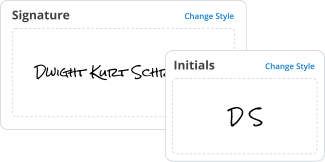
The signature page is a crucial component of various documents, including contracts and agreements. It serves as the final section where parties indicate their consent and acceptance of the terms outlined in the document. Typically, this page includes spaces for signatures, printed names, dates, and sometimes additional information such as titles or affiliations. In electronic workflows, the signature page can be completed and signed digitally, ensuring a streamlined process that enhances efficiency and accuracy.
How to use the signature page
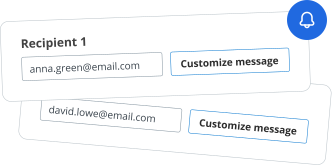
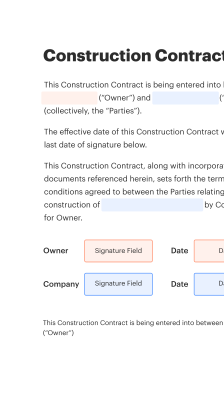
Using the signature page in an electronic format is straightforward. Begin by uploading your document to airSlate SignNow. Once uploaded, navigate to the signature page, where you can add signature fields for each party involved. You can also include other essential fields, such as date fields or checkboxes, to ensure all necessary information is captured. After setting up the document, send it for signature to the relevant parties. They will receive a notification, allowing them to review and sign the document electronically.
Steps to complete the signature page
Completing the signature page involves several key steps:
- Upload your document to airSlate SignNow.
- Locate the signature page within the document.
- Add signature fields for each signer, ensuring they are placed correctly.
- Include any additional fields required, such as dates or initials.
- Send the document for signature to the designated recipients.
- Once all parties have signed, download or store the completed document securely.
Legal use of the signature page
The signature page holds legal significance, as it represents the agreement between parties. In the United States, electronic signatures are recognized under the Electronic Signatures in Global and National Commerce (ESIGN) Act and the Uniform Electronic Transactions Act (UETA). This means that a properly executed electronic signature on a signature page is legally binding, provided that the signers have consented to use electronic means for signing. It is essential to ensure compliance with state-specific regulations regarding electronic signatures to maintain the document's legality.
Key elements of the signature page
Several key elements are essential for a comprehensive signature page:
- Signature fields: Designated areas for each party's signature.
- Printed names: The full names of the signers to clarify who is signing.
- Date fields: Spaces for signers to indicate when they signed the document.
- Titles or roles: Optional fields to specify the position of the signers, if applicable.
- Witness or notary sections: Additional areas for witnesses or notaries, if required by law.
Examples of using the signature page
The signature page is commonly used in various contexts, including:
- Contracts between businesses, such as service agreements or sales contracts.
- Legal documents, including leases and real estate transactions.
- Employment agreements, where both the employer and employee sign.
- Partnership agreements, outlining the terms of collaboration between parties.
These examples illustrate the versatility of the signature page in formalizing agreements across different sectors.