











We spread the word about digital transformation
signNow empowers users across every industry to embrace seamless and error-free eSignature workflows for better business outcomes.






Free 7-day trial. Choose the plan you need and try it risk-free.

Honest pricing for full-featured plans. airSlate SignNow offers subscription plans with no overages or hidden fees at renewal.

Enterprise-grade security. airSlate SignNow helps you comply with global security standards.
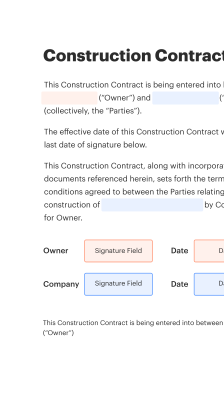

Place electronic signatures and send records in moments instead of hours. Our eSignatures have the identical legal power as wet-ink ones.

Take advantage of the signature tips function and improve your files without any concerns about the safety of your information.

Modify existing forms and save changes, and airSlate SignNow will immediately inform your entire crew that there are updated templates.

Place fillable areas, create or collect electronic signatures, get supplementary documents and payments, and discover different ways to boost your workflows.

Use airSlate SignNow API, the easiest way to create and collect eSignatures. Do so within your CRM systems, on your website, or even in specific apps.

Generate a public link for your template and collect signatures while not having to directly send your document to specific consumer email addresses.
Guía rápida sobre cómo poner una firma en Google Docs
La solución de firma electrónica airSlate SignNow está lista para reemplazar tu autógrafo manuscrito y mejorar casi cualquier proceso manual basado en papel. Firmar formularios electrónicamente ayuda a ahorrar tiempo, reduce costos y te brinda la versatilidad para aprobar contratos y formularios oficiales desde cualquier lugar y en cualquier momento, en cualquier dispositivo. Sigue leyendo para aprender cómo puedes comenzar a mejorar tus flujos de trabajo de aprobación y firmar y enviar documentos para firmar electrónicamente.
Sigue los pasos a continuación para aprender cómo poner una firma en Google Docs:
- Inicia tu navegador y visita signnow.com.
- Suscríbete a una prueba gratuita o inicia sesión utilizando tu correo electrónico o credenciales de Google/Facebook.
- Selecciona Avatar de Usuario -> Mi Cuenta en la parte superior derecha de la página.
- Personaliza tu Perfil de Usuario agregando información personal y ajustando configuraciones.
- Crea y gestiona tu(s) Firma(s) Predeterminada(s).
- Regresa a la página del panel de control.
- Pasa el cursor sobre el botón Subir y Crear y selecciona la opción necesaria.
- Haz clic en la tecla Preparar y Enviar junto al título del documento.
- Escribe el nombre y la dirección de correo electrónico de todos los firmantes en la ventana emergente que se abre.
- Utiliza la opción Comenzar a agregar campos para proceder a modificar el documento y firmarlo tú mismo.
- Haz clic en GUARDAR Y INVITAR cuando hayas terminado.
- Continúa configurando tu flujo de trabajo de firma electrónica utilizando funciones adicionales.
No podría ser más fácil aprender cómo poner una firma en Google Docs que con airSlate SignNow. Crea tu perfil, modifica y firma plantillas, solicita firmas y monitorea cada actividad realizada en tus documentos.
How it works


Understanding the purpose of putting a signature on Google Docs
Putting a signature on Google Docs serves the essential function of authenticating documents in a digital format. It allows users to verify their identity and indicate agreement or approval of the content within the document. This process is crucial for various scenarios, including contracts, agreements, and forms that require formal consent. By integrating eSignature capabilities, users can streamline their workflows, reduce paper usage, and enhance the overall efficiency of document management.
Steps to complete the signature process in Google Docs
To effectively put a signature on Google Docs, users can follow these straightforward steps:
- Open the Google Doc that requires a signature.
- Navigate to the section where the signature is needed.
- Use the drawing tool to create a signature or upload an image of a handwritten signature.
- Resize and position the signature appropriately within the document.
- Save the document to ensure the signature is included.
These steps enable users to add their signatures seamlessly, ensuring that the document is ready for sharing or further processing.
Legal use of signatures in Google Docs
When using signatures in Google Docs, it is important to understand the legal implications. In the United States, electronic signatures are generally recognized as valid under the Electronic Signatures in Global and National Commerce (ESIGN) Act and the Uniform Electronic Transactions Act (UETA). This means that signatures added to documents in Google Docs can hold the same legal weight as traditional handwritten signatures, provided that the intent to sign is clear and the process meets applicable legal standards.
Security and compliance guidelines for eSigning
Ensuring the security and compliance of signed documents is vital. Users should consider the following guidelines:
- Utilize secure platforms for eSigning, such as airSlate SignNow, which offers encryption and secure storage.
- Maintain records of the signing process, including timestamps and IP addresses, to provide evidence of consent.
- Be aware of state-specific regulations regarding electronic signatures to ensure compliance.
By adhering to these guidelines, users can protect their documents and maintain the integrity of the signing process.
Examples of using signatures in various scenarios
Signatures in Google Docs can be utilized across multiple scenarios, including:
- Business contracts, where parties need to agree on terms.
- Employment agreements, requiring signatures from both employers and employees.
- Legal documents, such as waivers or consent forms, that necessitate formal approval.
These examples illustrate the versatility of signatures in facilitating agreements and ensuring that all parties are on the same page.
Sending and signing methods for Google Docs
Users can send documents for signature directly from Google Docs or through integrated platforms like airSlate SignNow. The process typically involves:
- Sharing the document with the intended signers via email or a shared link.
- Requesting signatures by specifying the areas where signers need to sign.
- Allowing signers to complete the document electronically, ensuring a quick turnaround.
This method enhances collaboration and ensures that documents are signed efficiently, regardless of location.
 Best ROI. Our customers achieve an average 7x ROI within the first six months.
 Scales with your use cases. From SMBs to mid-market, airSlate SignNow delivers results for businesses of all sizes.
 Intuitive UI and API. Sign and send documents from your apps in minutes.
Here is a list of the most common customer questions. If you can't find an answer to your question, please don't hesitate to reach out to us.
What is the easiest way to put a signature on Google Docs?
To put a signature on Google Docs, you can use airSlate SignNow, which allows you to easily upload your signature and insert it into your documents. This method is user-friendly and ensures that your signature looks professional. Simply create an account, upload your signature, and follow the prompts to add it to your Google Docs.
Can I use airSlate SignNow to put a signature on Google Docs for free?
While airSlate SignNow offers a free trial, using the full features to put a signature on Google Docs may require a subscription. The pricing plans are designed to be cost-effective, providing great value for businesses that need to eSign documents regularly. Check the website for the latest pricing details.
What features does airSlate SignNow offer for signing documents?
airSlate SignNow provides a range of features for signing documents, including the ability to put a signature on Google Docs, track document status, and send reminders. Additionally, it supports various file formats and integrates seamlessly with other applications, enhancing your workflow. These features make it a comprehensive solution for document management.
Is it secure to put a signature on Google Docs using airSlate SignNow?
Yes, it is secure to put a signature on Google Docs using airSlate SignNow. The platform employs advanced encryption and security protocols to protect your documents and signatures. You can confidently eSign documents knowing that your information is safe and compliant with industry standards.
How does airSlate SignNow integrate with Google Docs?
airSlate SignNow integrates seamlessly with Google Docs, allowing you to put a signature on your documents directly from the Google interface. This integration streamlines your workflow, enabling you to manage and sign documents without switching between applications. Simply install the add-on to get started.
What are the benefits of using airSlate SignNow for eSigning?
Using airSlate SignNow for eSigning offers numerous benefits, including the ability to put a signature on Google Docs quickly and efficiently. It saves time, reduces paper usage, and enhances collaboration among team members. Additionally, the platform is user-friendly, making it accessible for everyone in your organization.
Can I customize my signature when using airSlate SignNow?
Yes, you can customize your signature when using airSlate SignNow. The platform allows you to create a signature that reflects your personal style, whether by drawing it, uploading an image, or typing it out in a preferred font. This flexibility ensures that your signature is unique and professional when you put it on Google Docs.




airSlate SignNow is committed to protecting your sensitive information by complying with global industry-specific.

Tu guía completa de cómo hacerlo
Todo su negocio gana con software de firma electrónica. Genere una firma electrónica única e impulse los flujos de trabajo de sus documentos.


Cómo llenar y firmar un documento electrónicamente
¿Te gustaría aprender cómo poner una firma en Google Docs? Hay una posibilidad de que puedas pasar horas investigando las guías necesarias en línea o optar por una solución más conveniente como airSlate SignNow. Con airSlate SignNow, puedes firmar documentos al instante y solicitar firmas.
Para firmar un archivo sin perder tiempo y aprender cómo poner una firma en Google Docs, sigue estas instrucciones detalladas:
- Inicia sesión en tu cuenta o crea una.
- Selecciona y sube tu archivo en cualquier formato.
- Desde la caja de herramientas Rellenar Yo Mismo, haz clic en Mi Firma y crea tu autógrafo electrónico.
- Utiliza otros campos para completar y anotar tu documentación.
- Dirígete al Panel de Control y selecciona qué deseas hacer a continuación con un documento completado.
Obtén más control sobre tus flujos de trabajo de firma electrónica y asegúrate de que tus documentos se ejecuten de manera oportuna y se manejen correctamente. En lugar de descubrir cómo poner una firma en Google Docs, utiliza airSlate SignNow, un servicio de firma electrónica versátil.
The cost to signNow one signature is $10. Each additional signature signNowd is $2. Preparing to signNow a Document. ○ The document must be in English or ...
Add signature. Display a personalized signature on the photos. Help. Provide Help for each camera menu. Additional options on the front camera. Selfie shot.
Signaturely offers more features than Google Docs' built-in options, allowing for greater flexibility and control over your digital signatures. With this tool, ...
