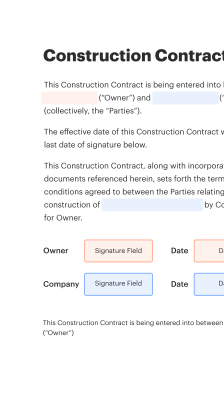
Firmar Como Firmante Con airSlate SignNow

Elimina el papeleo y automatiza el procesamiento de documentos para aumentar el rendimiento y oportunidades ilimitadas. Explora una forma más eficiente de gestionar tu negocio con airSlate SignNow.

Solución de firma electrónica galardonada

What call signatory means in eSignature workflows

A call signatory is a process step and role within an electronic signature workflow where an intended signer receives a phone call as part of identity verification or signing coordination. The call can deliver a one-time code, confirm signer intent, or present instructions about where and how to apply a digital signature. In regulated U.S. environments, call-based verification is usually combined with other authentication factors such as email confirmation, SMS, or knowledge-based checks to satisfy ESIGN and UETA requirements and to improve non-repudiation.

Why use call signatory checks in your signing flow

Call signatory steps add a human-verification layer that helps confirm signer identity and intent, reducing the risk of unauthorized signatures while preserving a simple user experience.

Why use call signatory checks in your signing flow

Common challenges when implementing call signatory

  • Phone number mismatches can block verification if contact details are outdated or incorrect in the document workflow.
  • Automated calls risk lower completion rates compared with SMS or email, especially for international or carrier-restricted numbers.
  • Auditing requirements increase when voice verification is used; ensure call metadata is captured and stored securely.
  • Regulatory differences across states and industries can complicate the required evidence for signer intent and identity.

User roles involved with call signatory

Compliance Officer

A compliance officer reviews regulatory requirements for phone-based verification, documents evidence retention policies, and specifies what call metadata must be logged to meet ESIGN and UETA standards across transactions.

Signature Administrator

The signature administrator configures call triggers within the signing workflow, maps phone verification to signer roles, and monitors call success rates and exceptions to maintain process reliability.

Who typically uses call signatory functionality

  • Healthcare providers verifying patient consent during telehealth enrollment and documentation.
  • Financial services firms confirming account openings or loan approvals with voice or code verification.
  • Real estate and title companies validating buyer or seller identity before closing documents.

These use cases favor call signatory where combining voice contact with electronic records enhances trust and meets industry compliance expectations.

Advanced capabilities that enhance call signatory reliability

Beyond basics, these capabilities support scale, security, and integration of call signatory steps in enterprise workflows.

Conditional routing

Route calls based on location, role, or document attributes to apply verification only where needed and comply with regional rules.

Call transcription

Optional text transcripts of verbal confirmations provide additional evidence tied to the signature audit trail.

International number support

Global dialing and carrier handling reduce failures for cross-border signers.

Custom voice prompts

Tailored messages clarify signer actions and reduce user confusion during verification calls.

API access

Programmatic triggers allow systems to invoke call verification from external applications and CRMs.

Analytics dashboards

Monitor call success, latency, and exception trends to optimize verification policies.

prepárate para obtener más

Elige una mejor solución

Essential tools for reliable call signatory workflows

Implementations vary, but these four features are central for accuracy, security, and operational monitoring when using call signatory steps.

Call-trigger rules

Flexible conditional logic to call only specified recipients, based on role, document type, or geographic rules, reducing unnecessary calls and focusing verification where required.

One-time codes

Secure generation and validation of short numeric codes delivered by call; codes are time-limited and logged with expiration metadata for non-repudiation.

Call outcome logging

Comprehensive capture of call events including timestamps, call status, duration, and success/failure codes linked directly to the signed document record.

Fallback channels

Automated fallback to SMS or email when calls fail, ensuring higher completion rates and preserving a clear trail of attempted verification methods.

How call signatory integrates into electronic signing

The sequence below shows where voice-based verification typically fits in a digital signing flow and what each step accomplishes.

  • Initiate: Sender starts the signing request and assigns roles.
  • Trigger call: System places a verification call at the configured step.
  • Authenticate: Signer confirms via code or spoken acknowledgment.
  • Complete: Signature applied and call metadata saved in the audit trail.
Recoger firmas
24x
más rápido
Reduce los costos en
$30
por documento
Guardar hasta
40h
por empleado / mes

Step-by-step: Adding a call signatory to a signing workflow

Follow these practical steps to configure a call signatory check and capture verification evidence in the signing record.

  • 01
    Identify signer: Select the recipient role to receive the call.
  • 02
    Collect number: Ensure phone number is validated and current.
  • 03
    Configure call: Set verification type: code, confirmation prompt, or informational.
  • 04
    Record outcome: Log timestamp, call result, and code entry status.

Checklist: operational steps to support call signatory

Use this checklist to coordinate technical, legal, and operational tasks when enabling call signatory checks in production.

01

Verify phone data:

Normalize and validate numbers before sending.
02

Define authentication policy:

Specify when calls are required and what evidence to collect.
03

Configure fallback options:

Set SMS or email alternatives for failures.
04

Update privacy notices:

Inform signers about call use and data handling.
05

Test end-to-end:

Run scenarios across carriers and regions.
06

Train support staff:

Equip teams to resolve call verification issues.
prepárate para obtener más

Por qué elegir airSlate SignNow

  • Prueba gratuita de 7 días. Elige el plan que necesitas y pruébalo sin riesgos.
  • Precios honestos para planes completos. airSlate SignNow ofrece planes de suscripción sin cargos adicionales ni tarifas ocultas al renovar.
  • Seguridad de nivel empresarial. airSlate SignNow te ayuda a cumplir con los estándares de seguridad globales.
illustrations signature

Example configuration settings for call signatory workflows

Use these common configuration settings as a starting point when designing a call-based verification workflow and adjust to match compliance and operational requirements.

Workflow Setting Name and Configuration Default configuration values shown below
Reminder frequency for outstanding signatures 48 hours; two retries
Verification code expiration time 10 minutes
Fallback channel after call failure SMS with one-time code
Maximum call attempts per signer 3 attempts
Audit log retention period Seven years encrypted

Supported platforms and device considerations for call signatory

  • Web browser compatibility: Modern desktop browsers supported
  • Mobile OS support: iOS and Android handled via app or mobile web
  • API integration options: REST APIs for programmatic calls

When implementing, evaluate device network conditions, carrier restrictions, and whether the signing experience will prefer in-app verification or out-of-band calls to maintain accessibility and reliability.

Security controls used with call signatory

Two-factor verification: Combines call codes with email or SMS
Call metadata logging: Records timestamp and call outcome
Encrypted call delivery: Protects transmitted codes in transit
Role-based access: Limits who can configure calls
Audit trail linkage: Associates call events with documents
Persistence controls: Retention aligned with policy

Practical examples of call signatory in different industries

These case narratives explain how adding a call signatory step solves a real business problem while preserving a defensible audit trail.

Healthcare consent verification

A clinic needs to confirm patient consent remotely and assigns a call signatory step to send a one-time code by phone

  • call delivers a numeric code to the patient
  • patient enters code and signs the consent form

Ensures a verifiable acceptance recorded in the audit trail, resulting in stronger evidence for compliance with HIPAA recordkeeping.

Mortgage closing validation

A lending team requires identity confirmation before final signoff and triggers a verification call to the borrower with instructions and a confirmation code

  • call confirms contact and intent
  • borrower provides code and completes the closing documents electronically

Leading to reduced risk of fraudulent closings and clearer provenance for ESIGN compliance and loan audits.

Best practices for secure and effective call signatory steps

Apply these practices to keep call-based verification reliable, auditable, and consistent with U.S. electronic signature standards.

Use multi-factor authentication alongside calls
Pairing a verification call with a separate channel such as email or SMS strengthens identity assurance and provides redundant evidence in case one channel is unavailable.
Log detailed call metadata for each transaction
Capture timestamps, call outcomes, any entered codes, and the caller ID or number used so that the complete event can be reviewed for compliance or disputes.
Establish clear retention and access policies
Define how long call recordings or logs are retained, who can access them, and how they are protected in line with HIPAA, FERPA, or organizational privacy policies.
Test and monitor delivery rates regularly
Regularly review call success rates, carrier issues, and fallback performance to ensure the verification channel remains effective and responsive.

FAQs and troubleshooting for call signatory workflows

Answers to frequent questions and steps to resolve common issues with call-based signer verification.

Feature availability comparison: call signatory capabilities

Comparing common call verification features across leading eSignature vendors to help assess functional fit for U.S.-focused workflows.

Feature or Criteria for Comparison signNow (Recommended) DocuSign Adobe Sign
Mobile app availability for verification
Bulk Send verification support
In-call one-time code delivery
Offline signing with queued verification Limited
prepárate para obtener más

¡Obtenga firmas legalmente vinculantes ahora!

Retention milestones and timelines for call signatory records

Retention schedules should align with legal and operational requirements; the items below illustrate common timeframes and their rationale.

Immediate capture and storage:

Log call events at transaction time.

30–90 day operational window:

Keep recent logs readily accessible for dispute resolution.

1–7 year compliance retention:

Retain records per industry regulations and contract law.

Disposition review:

Periodic checks before secure deletion.

Archival backups:

Ensure encrypted backups for long-term storage.

Risks and compliance penalties to consider

Evidence gaps: Potential disputes
Noncompliant retention: Regulatory fines
Improper authentication: Contract invalidation
Privacy violations: Breach remediation costs
Cross-border issues: Jurisdictional conflict
Operational delays: Transaction failures

Plan and feature overview across eSignature providers

High-level plan distinctions and typical pricing characteristics to consider; actual costs depend on selected plan, billing cycle, and add-ons.

Plan and Price Comparison signNow (Featured) DocuSign Adobe Sign PandaDoc Dropbox Sign
Entry-level monthly starting price From $8 per user per month billed annually From $10 per user per month From $9.99 per user per month From $19 per user per month From $15 per user per month
API access included Available with API plans Available with certain plans Available with business plans Available with paid plans Available with paid plans
Enterprise contracts and SSO Enterprise with SSO and compliance Enterprise with SSO Enterprise with SSO Enterprise with SSO Enterprise with SSO
HIPAA-ready options Offered via BAAs on qualifying plans Offered via BAAs Offered via BAAs Offered via BAAs Offered via BAAs
Free tier or trial availability Free trial or limited free use Free trial available Free trial available Free trial available Free trial available

¿Hacer más simple? flujos de trabajo desafiantes

Prepara, realiza y controla flujos de trabajo de cualquier complejidad, electrónicamente desde casi cualquier lugar. La funcionalidad escalable de firma electrónica asegura que puedas compartir documentos con los usuarios adecuados en la secuencia correcta y establecer roles para cada firmante. Completa los flujos de trabajo de documentos más rápido y más fácil que nunca.

Automatiza la gestión de documentos

Optimiza tareas complejas de firma con las capacidades altamente efectivas de airSlate SignNow para potenciar tu negocio. Controla tus flujos de firma electrónica automáticos para asegurarte de que operan a máxima funcionalidad con avisos y recordatorios rápidos.

Mejora la colaboración en equipo

Une a los compañeros en un entorno seguro y compartido. Gestiona documentos, usa plantillas y avisos para crear una colaboración más efectiva entre organizaciones. Libera a tu personal de tareas repetitivas para que puedan concentrarse en tareas valiosas y cruciales para el negocio.

Integra en tu red actual

Realiza tus tareas con una integración de primera clase. Conecta Salesforce, Microsoft Teams y SharePoint en un solo hilo empresarial. Vincula tu software a un entorno único para oportunidades ilimitadas y mayor eficiencia.

Permanece en conformidad con la mejor seguridad de datos

Siente seguridad sabiendo que tus datos están protegidos por la más reciente seguridad de cifrado. airSlate SignNow cumple con GDPR y eIDAS y te ofrece visibilidad en tu experiencia de firma con registros de auditoría admisibles en tribunales. Configura permisos de acceso y roles de usuario para gestionar quién tiene acceso a qué.


walmart logo
exonMobil logo
apple logo
comcast logo
facebook logo
FedEx logo
esté listo para obtener más

¡Obtenga ahora firmas vinculantes desde el punto de vista jurídico!