Control de calidad
Herramientas para detectar pérdida de legibilidad y alertar sobre imágenes con contraste insuficiente antes de su archivo.




La conversión a blanco y negro ayuda a unificar documentos, mejorar la legibilidad y reducir costes de impresión manteniendo calidad visual.

Un abogado que prepara expedientes escaneados utiliza conversiones a blanco y negro para garantizar que las copias impresas sean legibles y consistentes, facilitando la revisión de pruebas y la presentación en tribunales sin distracciones cromáticas.
Un editor de publicaciones convierte imágenes a escala de grises para controlar la estética de una revista impresa, ahorrar en costes de producción y asegurar que la reproducción tonal sea uniforme entre distintos lotes de impresión.
El uso frecuente refleja la necesidad de estandarizar materiales visuales y mejorar su gestión en procesos documentales.
Herramientas para detectar pérdida de legibilidad y alertar sobre imágenes con contraste insuficiente antes de su archivo.
Guardar múltiples ajustes por caso de uso, como archivo legal, impresión o archivado digital, para garantizar resultados reproducibles.
Mantener datos EXIF y marcas de documento para trazabilidad y referencia en procesos de cumplimiento.
Reglas para procesar nuevas cargas automáticamente según carpeta, etiqueta o tipo de documento.
Soporte para PNG, JPEG, TIFF y PDF, incluyendo escaneos multipágina para archivos legales.
Control granular para determinar quién puede convertir, descargar o eliminar archivos en la nube.
Permite convertir múltiples imágenes en una sola operación aplicando ajustes homogéneos de contraste, brillo y curvas para mantener uniformidad entre archivos.
Control selectivo de canales y curvas para preservar detalles en sombras y luces altas sin introducir ruido visible en la escala de grises.
Vista previa en tiempo real con comparación antes/después y opción de revertir o refinar parámetros antes de exportar.
Funciones para guardar perfiles y aplicar la misma conversión dentro de sistemas de gestión documental o procesos automatizados.

| Feature | Configuration |
|---|---|
| Carpeta de entrada automatizada | Monitor carpeta |
| Reglas de archivo | Por tipo de documento |
| Perfil de conversión predeterminado | Contraste medio |
| Notificaciones | Correo y registro |
Las herramientas modernas soportan conversiones en desktop, tablet y móvil con experiencias adaptadas según la plataforma.
Para flujos profesionales, use escritorio para control detallado, tablet para revisión rápida y móvil para conversiones puntuales y captura in situ.
Un bufete digitaliza cientos de contratos y actas para archivo estandarizado
Resulting in mayor eficiencia en auditorías y menor coste de almacenamiento.
Una imprenta recibe fotografías a color para una tirada en prensa en blanco y negro
Leading to entregas más rápidas y menos rechazo por calidad en el punto de producción.
| Criteria | signNow (Recommended) | DocuSign | Papel |
|---|---|---|---|
| Disponibilidad inmediata | Sí | Sí | |
| Trazabilidad | Registro de cambios | Historial limitado | Física sin registro |
| Automatización por lotes | Sí | Limitada | |
| Almacenamiento y búsqueda | Indexación digital | Indexación parcial | Archivo físico |
7 años
Diaria
Archivo permanente
Anual
Borrado certificado
| Criteria | signNow (Recommended) | DocuSign | Adobe Sign | Dropbox Sign | PandaDoc |
|---|---|---|---|---|---|
| Plan principal | Business plan disponible | Standard plan | Individual y Business | Essentials plan | Essentials y Business |
| Periodo de prueba | Prueba gratuita limitada | Prueba gratuita | Prueba gratuita | Prueba gratuita | Prueba gratuita |
| Acceso API | REST API pública | API robusta | API empresarial | API disponible | API incluida |
| Plantillas y automatización | Plantillas y Bulk Send | Plantillas avanzadas | Integración con Creative Cloud | Plantillas básicas | Automatización de documentos |
| Almacenamiento y integraciones | Integraciones con Dropbox y Google | Integración con Salesforce | Integración Adobe | Integración con Dropbox | Integración CRM disponible |
La aplicación móvil de airSlate SignNow te permite capturar imágenes de documentos con tu cámara digital y subirlas directamente a tu cuenta de airSlate SignNow. Las imágenes se convierten luego a formato PDF y pueden ser editadas y firmadas electrónicamente. Además, la aplicación te permite subir imágenes existentes desde tu galería de fotos.
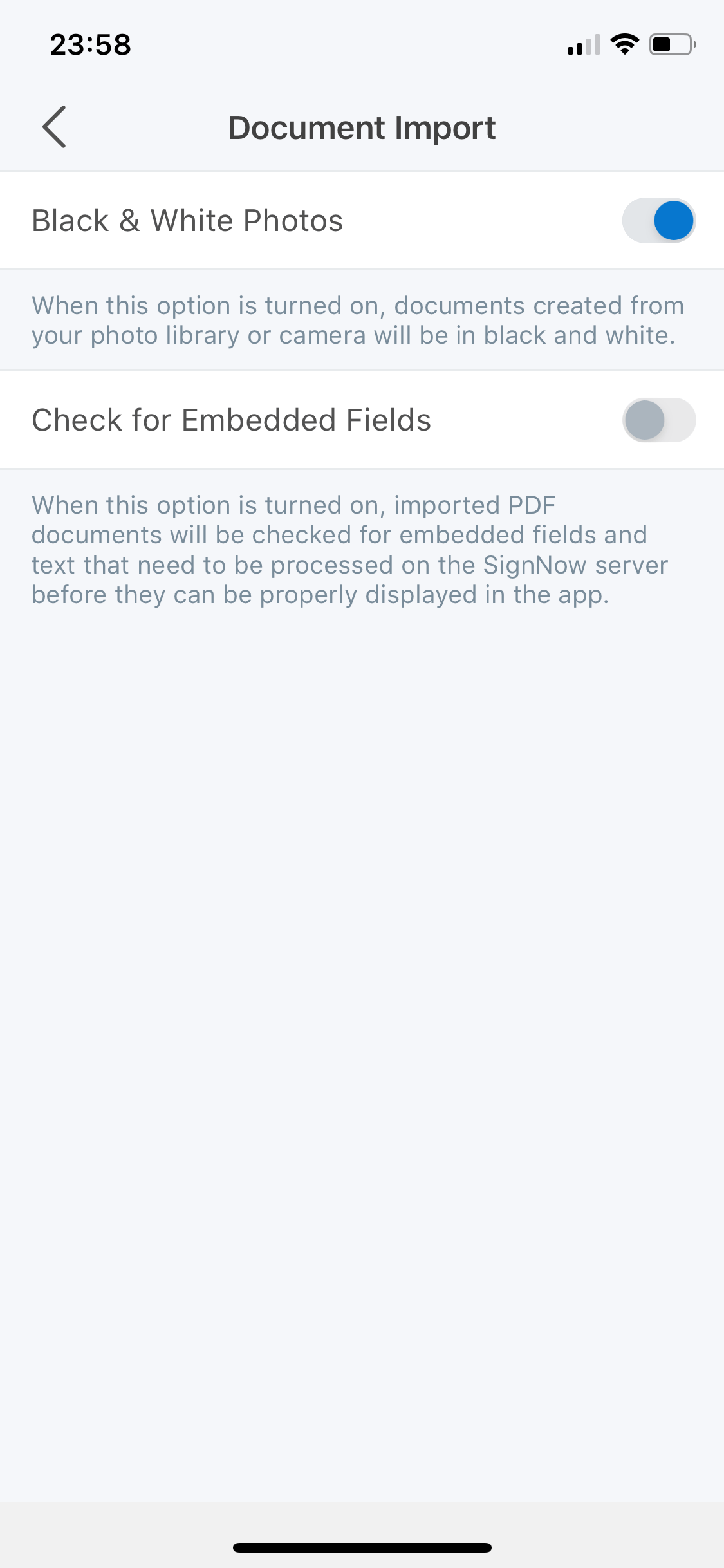
Si necesitas que las imágenes de tus documentos se conviertan automáticamente a blanco y negro, asemejándose a un documento impreso estándar, puedes activar la opción correspondiente en la configuración de la aplicación.
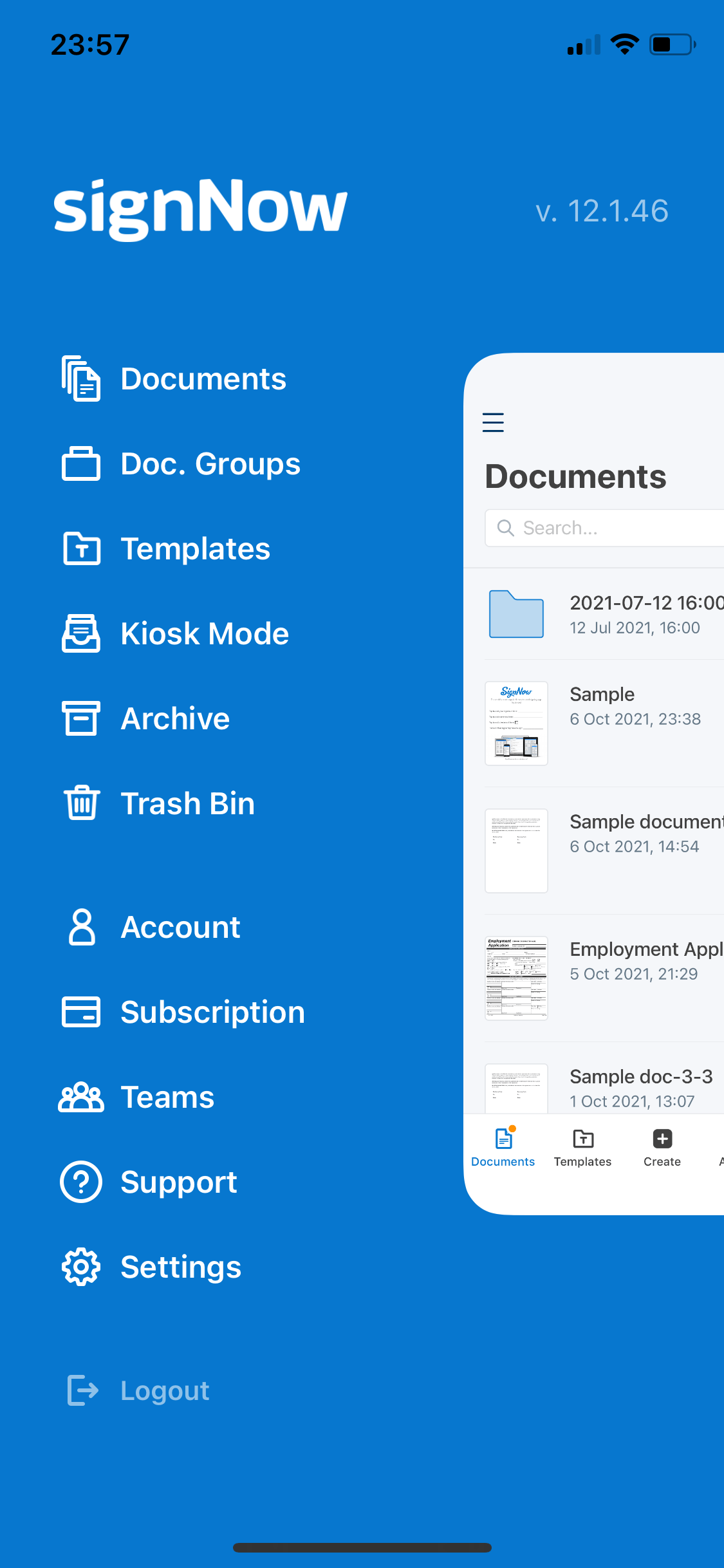
Haz clic en el menú hamburguesa en la esquina superior izquierda de la aplicación de airSlate SignNow y selecciona Configuración.
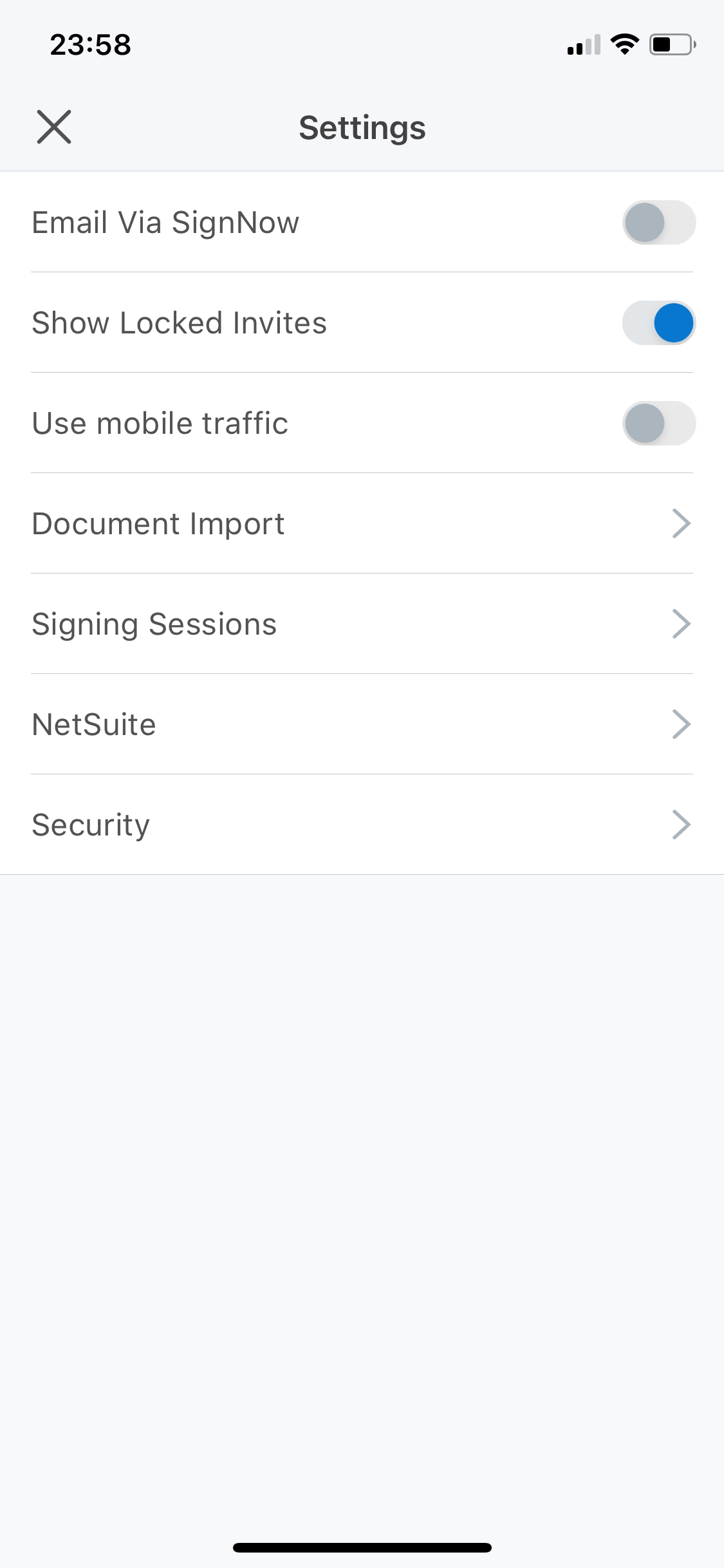
Ve a Importación de Documentos.
Activa Fotos en Blanco y Negro.