Crea Una Factura Vacía Para Servicios Financieros Sin Esfuerzo

Optimiza tu proceso de facturación con las funciones fáciles de usar de airSlate SignNow. Disfruta de firma electrónica sin complicaciones y gestión de documentos adaptada para profesionales financieros.

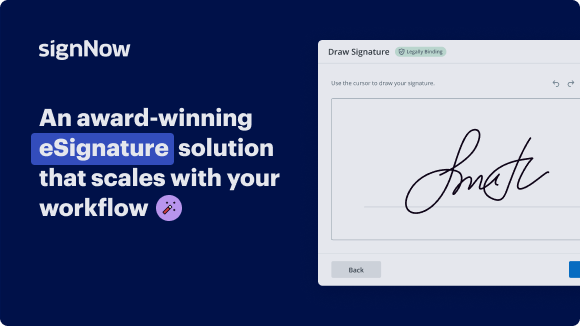
Solución de firma electrónica galardonada

What an empty invoice for financial services is and when to use it

An empty invoice for financial services is a preformatted invoice template that omits transaction-specific amounts or client details so it can be completed later or reused across clients. Organizations use empty invoices to standardize billing, streamline approvals, and allow authorized staff to populate amounts, tax codes, and client identifiers when services are rendered or finalized. When combined with secure eSignature and document controls, an empty invoice becomes a verifiable record of billing intent, acceptance, and authorization while keeping sensitive financial fields editable until the final approval and signature steps.

Why standardized empty invoices matter in financial services

Using an empty invoice template reduces data entry errors and ensures consistent billing format across accounts, improving auditability and reconciliation speed.

Why standardized empty invoices matter in financial services

Common operational challenges when using empty invoices

  • Delayed approvals when required fields are left incomplete or routed to the wrong approver.
  • Version control problems if multiple staff edit the same invoice without a locking mechanism.
  • Regulatory exposure when invoices lack proper signature, authentication, or retention tracking.
  • Risk of incorrect billing if tax codes or service codes are inconsistently applied.

Representative user roles for empty invoice workflows

Billing Manager

Oversees invoice templates and approval chains, ensures invoice fields match chart of accounts and tax requirements, and audits completed invoices for accuracy before final posting and archiving.

Financial Advisor

Uses empty invoice templates to document advisory fees after confirming client instructions, adds authorization notes, and signs electronically to create an auditable acceptance of billed services.

Typical teams that rely on empty invoices for financial services

Billing, accounts receivable, finance operations, and client services commonly use empty invoice templates to standardize billing workflows and approvals.

  • Billing teams that prepare recurring or customized client invoices.
  • Finance operations that require consistent records for reconciliation and audits.
  • Client success or account managers who finalize service details prior to billing.

These groups coordinate to populate, approve, and sign invoices while maintaining compliance and internal controls throughout the billing lifecycle.

Additional capabilities to enhance invoice handling and control

Advanced features support scale, security, and administrative control for empty invoices across organizations.

eSignature

Legally binding electronic signatures with timestamping and cryptographic verification to finalize invoices while maintaining an auditable signature trail.

Bulk Send

Ability to send many invoices at once using data-driven variables, enabling mass billing runs while preserving individualized invoice fields for each recipient.

Audit Trail

Immutable logs capture who viewed, edited, and signed invoices along with timestamps to support compliance and internal reviews.

Mobile Signing

Support for signing and approving invoices from mobile devices to accelerate turnaround when clients or approvers are remote.

Custom Branding

Customize invoice appearance to include company branding, legal disclaimers, and client-facing notes while preserving required regulatory text.

Templates

Preconfigured invoice templates for common service types reduce setup time and ensure consistent billing language and field placement.

prepárate para obtener más

Elige una mejor solución

Essential features that support empty invoice workflows

These core features make it practical to manage empty invoices, maintain consistency, and ensure secure finalization across teams.

Template Library

A centralized library stores empty invoice templates with version control, access restrictions, and the ability to clone or update templates to reflect changes in tax rules or billing practices.

Field Automation

Automatic population of invoice fields from CRM or accounting systems reduces manual entry, maps service codes and tax rates, and minimizes data entry errors in the billing process.

Conditional Logic

Show or hide fields depending on service type or jurisdiction so invoices adapt to different client arrangements while preserving a single standardized template per service line.

Integration Connectors

Prebuilt integrations enable population of client data and posting to accounting ledgers, reducing reconciliation time and ensuring invoice data aligns with financial systems.

How empty invoice workflows typically operate online

An empty invoice workflow routes a template through population, approval, signature, and archival steps using configured rules and authentication.

  • Prepare: Select template and populate non-sensitive fields.
  • Assign: Route to approvers or account managers.
  • Authenticate: Apply signer verification and identity checks.
  • Finalize: Lock amounts, obtain signatures, and archive.
Recoger firmas
24x
más rápido
Reduce los costos en
$30
por documento
Guardar hasta
40h
por empleado / mes

Quick steps to create an empty invoice template

Follow these essential steps to prepare a reusable empty invoice template for financial services billing.

  • 01
    Create template: Design layout with static and editable fields.
  • 02
    Add fields: Insert signature, date, amount, and tax fields.
  • 03
    Set permissions: Define who can edit versus who can sign.
  • 04
    Publish: Save template and assign to billing teams.

Managing audit trails for empty invoice transactions

Maintain and use audit logs to verify edits, approvals, and signatures for every invoice lifecycle stage.

01

Enable audit logs:

Turn on comprehensive activity tracking.
02

Record edits:

Capture field-level changes and timestamps.
03

Track approvals:

Log approver identity and time.
04

Capture signatures:

Store cryptographic signature data.
05

Export records:

Produce CSV or PDF audit reports.
06

Retain history:

Keep logs per retention policy.
prepárate para obtener más

Por qué elegir airSlate SignNow

  • Prueba gratuita de 7 días. Elige el plan que necesitas y pruébalo sin riesgos.
  • Precios honestos para planes completos. airSlate SignNow ofrece planes de suscripción sin cargos adicionales ni tarifas ocultas al renovar.
  • Seguridad de nivel empresarial. airSlate SignNow te ayuda a cumplir con los estándares de seguridad globales.

illustrations signature

Recommended workflow settings for empty invoice processes

Configure these workflow settings to enforce controls, reminders, and storage for invoice templates and transactions.

Setting Name Configuration
Reminder Frequency 48 hours
Signing Order Enforcement Sequential signing
Expiration Period 30 days
Authentication Method Email or SMS code
Document Storage Location US cloud region

Device and platform requirements for working with empty invoices

Basic browser and mobile compatibility ensures staff and clients can open, edit, and sign empty invoices across devices.

  • Desktop browsers: Modern Chrome, Edge, Safari
  • Mobile platforms: iOS and Android supported
  • PDF viewer: Standard PDF rendering

Ensure users update browsers and mobile apps to supported versions, enable secure network connections, and confirm corporate devices meet minimal OS and security patch requirements before approving or signing invoices.

Key security controls for empty invoice documents

Encryption in transit: TLS-based transmission
Encryption at rest: AES-256 storage
Access controls: Role-based permissions
Audit logging: Comprehensive activity logs
Data residency: US-based storage options
HIPAA support: Business associate controls

Illustrative use cases for empty invoices in finance teams

Practical scenarios show how empty invoices streamline billing across client engagements and audits.

Mid-sized accounting firm

The firm uses an empty invoice template for monthly advisory services to ensure consistent layout and data entry

  • Template fields enforce service codes and tax treatments
  • Standardization reduces billing errors and accounting rework

Resulting in faster client billing cycles and clearer audit trails for engagements.

Wealth management practice

A wealth manager prepares empty invoices for performance fees, leaving amounts to be inserted after monthly calculations

  • The template includes signature fields for client authorization and advisory disclosures
  • Electronic signatures and timestamps document client approval efficiently

Leading to documented client consent and simplified regulatory recordkeeping for fee assessments.

Practical best practices for secure, accurate empty invoices

Adopt these practices to lower errors, improve compliance, and make invoice finalization efficient and traceable.

Use standardized invoice templates across teams
Maintain a single approved template per service line and version it centrally; this prevents layout drift, ensures required legal language is always present, and simplifies training for staff who populate invoices.
Require role-based approvals before finalization
Configure multi-step approval chains so amounts entered into an empty invoice must be reviewed and approved by designated finance or compliance personnel before signatures are collected and the invoice is issued.
Capture signer identity and evidence
Use multi-factor authentication or identity verification for high-value invoices, and retain signed documents with cryptographic timestamps to support audit and dispute resolution.
Retain records according to policy and audits
Define retention schedules that meet tax, banking, and regulatory requirements, apply consistent archival metadata, and ensure secure, searchable storage for audit retrieval.

FAQs about empty invoice for financial services

Answers to common questions about setting up, securing, and using empty invoices within financial workflows.

Feature availability comparison for empty invoice workflows

Compare essential feature support across providers commonly used for electronic invoices and eSignatures in the United States.

Feature signNow (Featured) DocuSign Adobe Sign
HIPAA compliance
Bulk Send capability
API access REST API REST API REST API
US-based data residency Optional Limited Optional
prepárate para obtener más

¡Obtenga firmas legalmente vinculantes ahora!

Key dates and retention deadlines for invoice records

Set clear deadlines for invoice finalization, payments, and archival to meet operational and compliance needs.

Invoice creation date:

Record when template was populated

Payment terms deadline:

Net 30 or agreed term

Tax record retention:

Keep seven years standard

Contract expiration review:

Review before renewal window

Archival review date:

Annual verification process

Compliance and operational risks tied to invoices

Regulatory fines: Monetary penalties
Contract disputes: Damaged agreements
Tax audit exposure: Review complications
Fraud risk: Unauthorized changes
Rejected claims: Billing denials
Reputational harm: Client trust loss

Pricing and plan comparison for eSignature platforms

Representative starting prices, core limits, and compliance options to consider when choosing an eSignature provider for invoice workflows.

Platform signNow (Featured) DocuSign Adobe Sign PandaDoc Dropbox Sign
Starting price per user Economical entry-level monthly pricing for single users Entry-level plans with broader enterprise options Subscription tiers with document cloud bundle Mid-market pricing focused on sales workflows Simple per-user pricing with Dropbox integration
Per-user document limits Reasonable document allowances for small teams Flexible quotas depending on plan Generous limits with Adobe ecosystem Limits oriented toward sales document volume Standard limits with Dropbox file counts
Bulk send availability Included in business plans with data merge support Available on business-plus tiers Included with advanced plans and templates Available on professional plans focused on mass sends Offered on higher-tier plans
API and developer access Full REST API with SDKs and webhook support for integrations Comprehensive API suite and SDKs with enterprise features Robust API integrated into Adobe ecosystem API access with developer tools and templates REST API available with developer documentation
HIPAA and enterprise compliance Offers HIPAA-capable controls and BAA options for covered entities Enterprise compliance features and BAAs for eligible customers Compliance program including BAAs under specific agreements Compliance features with enterprise contract options Compliance support available through enterprise agreements
walmart logo
exonMobil logo
apple logo
comcast logo
facebook logo
FedEx logo
esté listo para obtener más

¡Obtenga ahora firmas vinculantes desde el punto de vista jurídico!