Try Seamless eSignatures: how to electronically sign a Word doc





We spread the word about digital transformation
signNow empowers users across every industry to embrace seamless and error-free eSignature workflows for better business outcomes.







Free 7-day trial. Choose the plan you need and try it risk-free.

Honest pricing for full-featured plans. airSlate SignNow offers subscription plans with no overages or hidden fees at renewal.

Enterprise-grade security. airSlate SignNow helps you comply with global security standards.
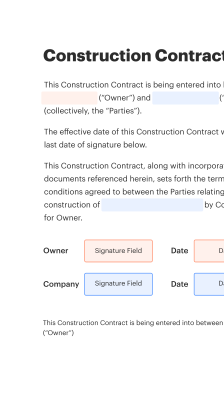

Place electronic signatures and send records in moments instead of hours. Our eSignatures have the identical legal power as wet-ink ones.

Take advantage of the signature tips function and improve your files without any concerns about the safety of your information.

Modify existing forms and save changes, and airSlate SignNow will immediately inform your entire crew that there are updated templates.

Place fillable areas, create or collect electronic signatures, get supplementary documents and payments, and discover different ways to boost your workflows.

Use airSlate SignNow API, the easiest way to create and collect eSignatures. Do so within your CRM systems, on your website, or even in specific apps.

Generate a public link for your template and collect signatures while not having to directly send your document to specific consumer email addresses.
Quick-start guide on how to electronically sign a Word doc
The airSlate SignNow eSignature solution is here to substitute your handwritten signature and streamline virtually any paper-based, manual processes. Signing forms electronically helps save time, cuts costs, and offers you the power to sign agreements and official forms from anyplace and at any time, on any system. Continue reading to learn about tips on how to begin enhancing your approval workflows and sign and send documents for signature electronically.
Complete the following steps below to find out how to electronically sign a Word doc:
- Launch your browser and visit signnow.com.
- Sign up for a free trial run or log in using your electronic mail or Google/Facebook credentials.
- Select User Avatar -> My Account at the top-right area of the webpage.
- Customize your User Profile with your personal information and changing configurations.
- Make and manage your Default Signature(s).
- Get back to the dashboard webpage.
- Hover over the Upload and Create button and choose the needed option.
- Click on the Prepare and Send option next to the document's name.
- Type the name and email address of all signers in the pop-up box that opens.
- Make use of the Start adding fields option to begin to edit file and self sign them.
- Click SAVE AND INVITE when you're done.
- Continue to configure your eSignature workflow using advanced features.
It can't get any simpler to find out how to electronically sign a Word doc than it is with airSlate SignNow. Make your account, edit and sign templates, ask for signatures, and keep track of every action taken to your documents.
How it works


Electronic Signature Legality
What is the process for electronically signing a Word document?
Electronically signing a Word document involves using a digital signature to authenticate the document and confirm the signer's identity. This process ensures that the document remains secure and unaltered after signing. With airSlate SignNow, users can easily upload their Word documents, fill in any necessary information, and apply their eSignature. The signed document can then be securely stored or shared with others, ensuring compliance with legal standards.
Steps to complete the electronic signing of a Word document
To electronically sign a Word document using airSlate SignNow, follow these steps:
- Upload the Word document to your airSlate SignNow account.
- Open the document and fill in any required fields, such as names, dates, or other relevant information.
- Select the area where you want to place your eSignature.
- Choose your eSignature style or create a custom signature.
- Review the document to ensure all information is correct.
- Send the document for signature to other parties, if necessary.
- Once all signatures are collected, download or store the completed document securely.
Legal use of electronically signed Word documents
Electronically signed documents are legally binding in the United States, provided they meet specific criteria outlined in the Electronic Signatures in Global and National Commerce (ESIGN) Act and the Uniform Electronic Transactions Act (UETA). These laws establish that eSignatures hold the same legal weight as traditional handwritten signatures. It is essential for users to ensure that their eSignature process complies with these regulations to maintain the enforceability of the signed documents.
Security and compliance guidelines for electronic signatures
When using airSlate SignNow for electronic signatures, it is crucial to adhere to security and compliance guidelines to protect sensitive information. This includes:
- Utilizing strong authentication methods, such as two-factor authentication.
- Ensuring that documents are encrypted during transmission and storage.
- Maintaining an audit trail that records all actions taken on the document.
- Regularly updating security protocols to align with industry standards.
Examples of using electronically signed Word documents
Electronically signed Word documents can be utilized in various scenarios, including:
- Contracts and agreements between businesses and clients.
- Employment contracts and HR documents.
- Legal documents such as affidavits or powers of attorney.
- Forms for tax submissions or financial agreements.
Sending and signing methods for Word documents
With airSlate SignNow, users can send and sign Word documents using multiple methods, including:
- Web platform: Access your account through a web browser to upload and manage documents.
- Mobile app: Use the airSlate SignNow mobile app to sign documents on the go.
- Email: Send documents directly via email for signature requests.
 Best ROI. Our customers achieve an average 7x ROI within the first six months.
 Scales with your use cases. From SMBs to mid-market, airSlate SignNow delivers results for businesses of all sizes.
 Intuitive UI and API. Sign and send documents from your apps in minutes.
FAQs
Here is a list of the most common customer questions. If you can't find an answer to your question, please don't hesitate to reach out to us.
What is the process of how to electronically sign a word doc using airSlate SignNow?
To electronically sign a Word document with airSlate SignNow, first upload your document to the platform. Then, select the area where you want to add your signature and choose the option to sign. You can either draw your signature, type it, or upload an image of your signature. Finally, save the document, and it will be securely signed and ready for sharing.
Is there a cost associated with learning how to electronically sign a word doc?
airSlate SignNow offers various pricing plans, including a free trial that allows you to explore how to electronically sign a Word doc without any initial investment. After the trial, you can choose a plan that fits your needs and budget. The pricing is competitive, making it a cost-effective solution for businesses of all sizes.
What features does airSlate SignNow offer for electronically signing documents?
airSlate SignNow provides a range of features for electronically signing documents, including customizable templates, in-person signing, and the ability to add multiple signers. Additionally, it offers secure storage and compliance with e-signature laws, ensuring that your signed documents are legally binding. These features make it easy to learn how to electronically sign a Word doc efficiently.
Can I integrate airSlate SignNow with other applications?
Yes, airSlate SignNow integrates seamlessly with various applications such as Google Drive, Dropbox, and Microsoft Office. This integration allows you to streamline your workflow and easily access your documents. By using these integrations, you can simplify the process of how to electronically sign a Word doc and enhance your productivity.
What are the benefits of using airSlate SignNow for electronic signatures?
Using airSlate SignNow for electronic signatures offers numerous benefits, including increased efficiency, reduced turnaround time, and enhanced security. It eliminates the need for printing and scanning documents, allowing you to focus on more important tasks. Learning how to electronically sign a Word doc with airSlate SignNow can signNowly improve your document management process.
Is it safe to electronically sign a Word document with airSlate SignNow?
Absolutely! airSlate SignNow employs advanced encryption and security measures to protect your documents and personal information. When you learn how to electronically sign a Word doc using our platform, you can be confident that your data is secure and compliant with industry standards. This ensures that your signed documents are safe from unauthorized access.
How can I get support while learning how to electronically sign a word doc?
airSlate SignNow offers comprehensive support resources, including tutorials, FAQs, and customer service representatives available to assist you. If you have questions while learning how to electronically sign a Word doc, you can access our help center or contact support for personalized assistance. We are committed to ensuring you have a smooth experience.




airSlate SignNow is committed to protecting your sensitive information by complying with global industry-specific.

How to electronically sign a Word doc versus with airSlate SignNow
Explore the easiest way to eSign, modify, and send out documents for eSignature, regardless of where you’re or your device.


How to complete and eSign a a file online
Would you like to find out how to electronically sign a Word doc? There’s a chance you can waste hours researching the required guides online or go with a more useful solution like airSlate SignNow. With airSlate SignNow, you can immediately execute paperwork and request signatures.
To add a signature to a document without wasting your time and learning how to electronically sign a Word doc, go through these step-by-step guidelines :
- Log into your account or register one.
- Choose and upload your document in any format.
- From the Fill Out Myself toolbox, click My Signature and generate your digitized autograph.
- Use other fields to fill out and annotate your document.
- Head to Dashboard and select what you wish to do after that with an completed document.
Get more control over your eSignature workflows and ensure that your paperwork are executed on time and rightfully managed. Rather than discovering how to electronically sign a Word doc, use airSlate SignNow, a versatile eSignature solution.
Discover powerful features with airSlate SignNow
Open a Word document or create a blank document · Select Draw from the main menu · Select the pen tool labeled Draw to enter Draw mode.Read more
To add a digital signature, open your Microsoft Word document and in the body of the document, click where you'd like to add your signature line.
Acrobat Reader DC allows you to fill, sign, and send forms. You can add text, use autofill, and sign by typing, drawing, or using an image.
