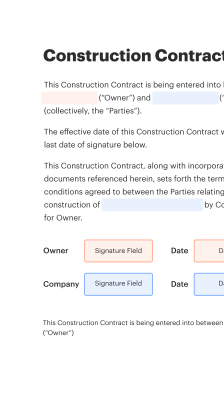
Call Customer Phone Number with SignNow

Get rid of paper and automate digital document managing for more efficiency and unlimited opportunities. Sign any papers from your home, quick and professional. Explore a greater strategy for doing business with airSlate SignNow.

Award-winning eSignature solution

Understanding call customer phone number in document workflows

call customer phone number describes the use of a recipient's telephone number as part of an electronic signing process, including voice notifications, phone-based identity checks, and SMS fallback. In eSignature workflows this contact point can be used to trigger automated calls, send SMS one-time passcodes, or provide a secondary authentication channel. Incorporating a phone number supports multi-channel delivery and helps teams reach signers who are away from email. When implemented alongside secure authentication and audit logging, phone-based steps become a practical component of compliant signature workflows.

Why include a call customer phone number step

Using a phone number increases delivery flexibility, supports identity verification, and helps close transactions faster when email is delayed or unavailable.

Why include a call customer phone number step

Common challenges when using phone numbers in signing flows

  • Incorrect or outdated numbers cause failed deliveries and require manual follow-up to obtain updated contact details.
  • Regulatory limits on automated calls and SMS vary by state and purpose, complicating uniform deployment.
  • Phone-based verification can be bypassed if one-time codes are intercepted or devices are compromised.
  • Collecting phone numbers raises privacy and data retention concerns that must be managed under HIPAA or FERPA where applicable.

Typical user roles for phone-enabled signing

Account Manager

Account managers use phone contact to confirm document receipt, coordinate signers, and resolve delivery issues. They often update phone records and escalate failed deliveries to ensure documents progress on schedule.

Compliance Officer

Compliance officers review phone-based authentication settings and retention policies, ensuring telephone steps meet ESIGN and UETA requirements and that audit trails capture necessary verification data for regulatory review.

Organizations that commonly use phone contact in signature processes

Financial services, healthcare providers, HR teams, and field sales frequently add a call customer phone number to ensure rapid recipient contact and verification.

  • Banks and lenders for quick borrower confirmations and identity checks.
  • Healthcare administrators for appointment confirmations and consent follow-up.
  • Field sales and logistics teams for rapid document delivery to on-site contacts.

These sectors combine phone-based notifications with secure authentication and logging to balance speed with compliance across varied workflows.

Key platform features to support call customer phone number workflows

When assessing eSignature tools for phone-based actions, look for integrated delivery, authentication methods, logging, and flexible configuration to meet compliance and operational needs.

Phone Authentication

Built-in phone authentication provides one-time passcodes or voice validation tied to the recipient, enabling an additional identity factor that is recorded in the transaction log for audit purposes.

Automated Calls

Automated voice notifications can deliver instructions or codes to signers, reducing dependence on email and improving completion rates for recipients in the field or with limited inbox access.

SMS Delivery

SMS fallback delivers codes or links when voice is unavailable, offering a lightweight, cost-effective alternate channel that can increase reach for mobile-first recipients.

Configurable Retry Policies

Retry and rate limit settings allow administrators to balance delivery persistence with carrier policies and cost considerations, minimizing failed attempts while avoiding overuse.

Comprehensive Audit Trail

Detailed, timestamped logs capture phone delivery attempts, code issuance, and verification outcomes to support ESIGN/UETA compliance and internal recordkeeping requirements.

Role-based Controls

Permissions that restrict who can enable phone authentication or modify contact fields help maintain control and reduce the risk of misconfiguration across teams.

be ready to get more

Choose a better solution

Integrations that enhance phone-enabled signing

Integrations with CRM, cloud storage, and telephony platforms streamline phone contact management and automate delivery in signature processes.

CRM synchronization

Two-way CRM sync updates contact phone numbers automatically and pulls verified phone fields into signature workflows, reducing manual entry and ensuring consistent recipient data across systems.

Cloud storage

Cloud storage integrations attach signed documents to existing customer records automatically, preserving the phone-linked transaction history alongside other client files for centralized access.

Telephony connectors

Connectors to SIP or cloud telephony providers enable direct call routing and delivery control, allowing voice interactions to originate from corporate numbers and meet caller ID expectations.

Identity providers

Integration with identity providers centralizes authentication, letting phone verification complement single sign-on flows and reducing friction for enterprise users.

How phone interactions fit into an eSignature flow

Phone-based steps typically attach to a recipient record, trigger at send time, and record results in the transaction audit trail.

  • Attach contact: Associate the phone number with the recipient profile.
  • Trigger call: System initiates an automated call or SMS at send.
  • Authenticate: Recipient confirms via code or voice interaction.
  • Log outcome: System stores success or failure in audit logs.
Collect signatures
24x
faster
Reduce costs by
$30
per document
Save up to
40h
per employee / month

Step-by-step: adding a call customer phone number to a signature request

Follow these steps to include a phone contact in an eSignature transaction, ensuring delivery and verification are configured correctly.

  • 01
    Collect number: Obtain a current phone number from the signer.
  • 02
    Choose method: Select voice call or SMS verification channel.
  • 03
    Set authentication: Enable one-time passcode or phone authentication.
  • 04
    Monitor delivery: Check logs and handle failed attempts.
be ready to get more

Why choose airSlate SignNow

  • Free 7-day trial. Choose the plan you need and try it risk-free.
  • Honest pricing for full-featured plans. airSlate SignNow offers subscription plans with no overages or hidden fees at renewal.
  • Enterprise-grade security. airSlate SignNow helps you comply with global security standards.
illustrations signature

Recommended workflow settings for phone-based verification

The following settings help standardize phone verification in signature workflows and ensure deliverability, security, and compliance.

Setting Name Configuration
Authentication Method One-time passcode
Retry Attempts 2 attempts
Retry Interval 5 minutes
SMS Fallback Enabled Yes
Audit Logging Level Detailed

Platform requirements for reliable phone delivery

Ensure your eSignature platform supports voice and SMS channels, secure transport, and configurable authentication before embedding phone steps in workflows.

  • Voice/SMS support: Required
  • Secure transport: TLS enabled
  • Configurable auth: One-time codes

Validate carrier and regional limitations, confirm logging and retention meet ESIGN and HIPAA requirements, and test delivery using representative phone numbers to ensure consistent behavior before wide deployment.

Security controls for phone-based interactions

One-time passcode: Temporary numeric code
Caller ID verification: Displayed origin number
SMS fallback: Alternate delivery channel
Encrypted transport: TLS for messages
Rate limiting: Prevents abuse
Audit logging: Timestamped events

Industry use cases for calling a customer phone number

Phone contact is used across several industries to accelerate signing, verify identities, and provide alternate delivery when email is unavailable.

Mortgage closing coordination

A loan officer schedules a signing and triggers an automated call to confirm borrower availability

  • Automated voice notification confirms appointment
  • Reduces missed closings and reschedules

Leading to faster funding and fewer administrative delays.

Patient consent confirmation

A clinic sends a consent form and uses phone-based one-time passcodes for identity verification

  • Short code validates user presence
  • Ensures consent is tied to a verified individual

Resulting in stronger documentation for HIPAA compliance and better patient record integrity.

Best practices when using call customer phone number

Adopt clear procedures and technical controls to maximize reliability, maintain privacy, and preserve evidentiary value when phone steps are part of signing workflows.

Validate and standardize phone data collection
Collect numbers in E.164 format, validate during input to reduce formatting errors, and sync with CRM records to avoid mismatches that cause failed deliveries or misdirected verifications.
Use multi-factor approaches for high-risk transactions
Combine phone verification with additional authentication such as identity document checks, knowledge-based prompts, or digital certificates to raise assurance for sensitive agreements and regulatory requirements.
Document consent and retention for compliance
Capture explicit consent to receive calls or SMS, record the consent timestamp in the audit trail, and retain phone-related logs according to ESIGN, UETA, and sector-specific retention policies.
Monitor delivery metrics and adjust policies
Track failed call rates, retry success, and regional carrier differences; use metrics to tune retry intervals, fallback channels, and carrier routing for consistent performance.

FAQs and troubleshooting for call customer phone number

These common questions and remedies help resolve delivery, authentication, and compliance issues related to using phone numbers in signature workflows.

Phone feature availability across major eSignature providers

This comparison shows whether key phone-related capabilities are present and how providers handle basic delivery and verification requirements.

Feature availability across leading eSignature providers signNow (Featured) DocuSign Adobe Sign
Phone-based recipient verification availability
Automated voice call delivery support
SMS one-time passcode support
IVR or interactive voice signing support Limited Limited
be ready to get more

Get legally-binding signatures now!

Risks and compliance considerations

TCPA exposure: Potential fines
Data breach: Regulatory penalties
Invalid consent: Contract disputes
Retention failures: Audit noncompliance
Misdelivery: Unauthorized access
Credential theft: Compromised codes

Pricing and support considerations for phone-enabled signing

Costs and included services vary by provider; review plan details for voice and SMS usage, as some vendors charge per-message or per-call fees beyond base subscriptions.

Plan Type signNow (Featured) DocuSign Adobe Sign Dropbox Sign PandaDoc
Starting price (per user/month) $8 $25 $9.99 $15 $19
SMS/voice included Limited credits No included credits Limited credits Per-message fees Limited credits
Bulk send support Yes Yes Yes Yes Yes
Enterprise phone controls Role-based controls Enterprise plan only Enterprise controls Admin settings Enterprise features
Support for telephony connectors Yes Yes Yes Limited Yes

Simplify complex workflows

Create, execute, and manage workflows of any complexity, electronically from virtually anywhere. Scalable eSignature capabilities allow you to share documents with the right people in the correct order and define roles for each recipient. Execute document workflows faster and easier than ever before.

Automate document management

Optimize complex signing processes with airSlate SignNow’s powerful features to enhance your business. Control your automated eSignature workflows to ensure they're running at peak performance with instant notifications and reminders.

Optimize in team collaboration

Bring teams together in a secure, shared environment. Manage documents, use form templates and notifications to create more efficient cross-organization collaboration. Free your employees from having to spend time on repetitive activities so that they can focus on valuable, business-critical tasks.

Integrate into your existing systems

Run your projects with industry-leading integration. Collect Salesforce, Microsoft Teams, and SharePoint all in one business flow. Connect your software to a single system for endless possibilities and more productiveness.

Stay compliant with best-in-class data safety

Feel safe understanding that your data remains secure by the latest in encryption security. airSlate SignNow is GDPR and eIDAS compliant and offers you exposure into your signing procedure with court-admissible audit trails. Configure user authorization and rights to manage who has access to what.


walmart logo
exonMobil logo
apple logo
comcast logo
facebook logo
FedEx logo
be ready to get more

Get legally-binding signatures now!