Template versioning
Maintain and audit changes to invoice templates to ensure consistent fields and compliance across updates.



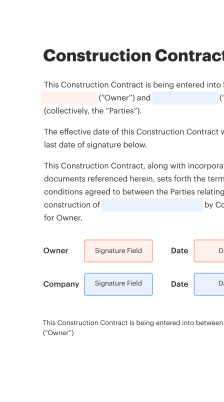
A standardized digital invoice speeds verification, reduces errors, and supports automated banking workflows.
Banks receive consistent records that simplify funding decisions, reconciliation, and regulatory reporting for automotive-related transactions.

An auto repair shop owner coordinates invoicing for financed repairs, ensuring each invoice lists parts, labor, taxes, and approval signatures so banks can release funds quickly and reconcile payments.
A loan officer reviews repair invoices submitted for disbursement; they require clear line items, verified authorization, and an unbroken audit trail to comply with lending policies and approve payments.
Auto repair shop owners, finance departments, and bank loan officers rely on accurate invoices to process funds efficiently.
These users value repeatable formats, secure signatures, and traceable metadata to reduce processing time and audit effort.
Maintain and audit changes to invoice templates to ensure consistent fields and compliance across updates.
Send standardized invoices to multiple recipients or batch delivery to a bank for consolidated processing.
Assign creation, approval, and view-only roles to control who can modify or approve invoices.
Enable single sign-on for enterprise banking users to centralize access control and simplify authentication.
Apply configurable retention rules to meet bank recordkeeping and audit requirements.
Allow authorized parties to review and sign invoices securely from mobile devices for faster turnaround.
Templates enforce required invoice fields such as VIN, PO number, line-item breakdown, tax calculations, and lender reference numbers so banks receive consistent, machine-readable documents for faster processing.
Comprehensive, tamper-evident logs capture signer identity, timestamps, IP addresses, and document versions to support bank audits and dispute resolution with verifiable metadata.
Support for multi-factor authentication, SMS codes, and knowledge-based verification ensures signing parties are validated to meet banking verification expectations.
Connectors for loan servicing systems, CRMs, and cloud storage automate delivery of completed invoices to bank systems and reduce manual upload errors.
| Feature | Configuration |
|---|---|
| Required fields enforcement | VIN, PO, tax |
| Approval routing | Auto-route to loan officer |
| Reminder frequency | 48 hours |
| Retention setting | 7 years |
| Signature authentication | MFA required |
Ensure the digital invoice solution supports common operating systems and browsers so shops and bank staff can access documents reliably.
Cross-platform compatibility, responsive design, and PDF fidelity reduce errors during review and ensure signatures and fields render consistently for both repair shops and banking reviewers.
A regional dealer submits digital repair invoices with itemized parts and labor
Leading to reduced funding time and clearer reconciliation for both dealer and bank.
A fleet operator invoices routine maintenance using a template with VIN, PO number, and authorized signature
Resulting in timely reimbursements and simplified audit trails for fleet accounting.
| Criteria | signNow (Recommended) | DocuSign | Adobe Sign |
|---|---|---|---|
| Legal eSignature validity in U.S. | |||
| Bulk Send for invoices | |||
| Advanced authentication options | MFA, SMS | MFA, phone-auth | MFA, ID verification |
| API and integration availability | REST API included | REST API included | REST API included |
Submit within 30 days of repair
Bank review completed within 7 business days
Keep records for at least seven years
Resolve disputes within 60 days
Audit templates annually
| Plan Feature | signNow (Recommended) | DocuSign | Adobe Sign | PandaDoc | HelloSign |
|---|---|---|---|---|---|
| Free trial or plan | Free trial available | Free trial available | Free trial available | Free trial available | Free trial available |
| API access included | API on paid plans | API on paid plans | API on paid plans | API on paid plans | API on paid plans |
| Advanced authentication options | MFA and SMS codes | Phone and KBA options | ID verification options | SSO and MFA | Two-factor authentication |
| Bulk Send availability | Bulk Send feature | Bulk Send feature | Bulk Send feature | Bulk Send feature | Bulk Send feature |
| Starting price (monthly) | $8 per user (approx) | $10 per user (approx) | $9.99 per user (approx) | $19 per user (approx) | $15 per user (approx) |