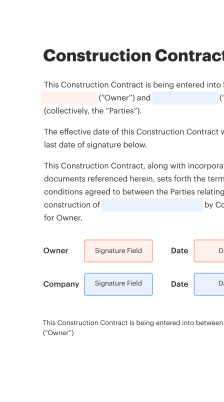
Credit Invoice Template for Research and Development

See your billing procedure become fast and seamless. With just a few clicks, you can perform all the required actions on your credit invoice template for Research and Development and other crucial files from any gadget with internet access.

Award-winning eSignature solution

What a credit invoice template for research and development is and why it matters

A credit invoice template for research and development standardizes how labs, institutions, and contractors document credit or rebate adjustments tied to R&D projects. It typically includes fields for project identifiers, grant or contract numbers, expense categories, credit amounts, justification notes, and approvals. Using a consistent template reduces errors, accelerates reconciliation with finance systems, and creates a single source of truth for audit purposes. Templates also enable digital workflows and eSignature capture to validate approvals and maintain tamper-evident records compliant with U.S. electronic signature laws.


Benefits of using a standardized credit invoice template for research and development

A template keeps credit calculations consistent, improves auditability, and reduces administrative overhead for research finance teams while supporting regulatory and grant reporting needs.

Benefits of using a standardized credit invoice template for research and development

Common challenges when managing R&D credit invoices

  • Inconsistent formats across teams cause reconciliation delays and manual corrections during month-end close processes.
  • Missing project or grant identifiers lead to misapplied credits and additional effort to reallocate costs.
  • Lack of signer authentication increases exposure to disputed approvals and potential compliance issues with funders.
  • Poor version control creates uncertainty about the approved credit amount and complicates audit trails.

Example user profiles for credit invoice template workflows

R&D Manager

Leads project budgeting and approves credit adjustments submitted by lab leads. Uses templates to verify project codes, confirm eligible expenses, and provide an approval signature for finance to process refunds or offsets.

Finance Officer

Reconciles credit invoices with the general ledger and grant accounting. Validates template fields, matches credits to expense records, and ensures retention of signed copies to satisfy audit and sponsor documentation requirements.

Who typically uses credit invoice templates in R&D settings

Research finance groups, principal investigators, grant administrators, and external vendors rely on templates to standardize credit documentation and approvals.

  • University grants offices managing federal and private-funded project credits and adjustments.
  • Biotech and pharmaceutical R&D teams reconciling subcontractor credits and shared lab expenses.
  • Contract research organizations coordinating billing credits with sponsors and partner labs.

Consistent templates help these stakeholders reduce back-and-forth, speed accounting processes, and preserve compliant records for audits and sponsor reviews.

Core features to look for when templating R&D credit invoices

Selecting the right feature set reduces manual work, enforces compliance, and preserves a clear record of financial adjustments related to research projects.

Template Library

Centralized storage for reusable credit invoice templates with version control and team access, enabling consistent documentation across multiple projects and reducing duplicate setup work while supporting rapid deployment for recurring adjustments.

Field Validation

Configurable validation rules to enforce project ID formats, numeric ranges, and required fields so submitted credits meet accounting and grant requirements before routing for approval, minimizing rework.

Automated Routing

Conditional approval flows that send templates to appropriate signers based on project, amount, or grant source, streamlining multi-step approvals and maintaining a clear routing history for audits.

Pre-filled Data

Auto-populate templates from integrated systems or previous transactions to reduce manual entry, ensure consistent identifiers, and accelerate processing for high-volume credit adjustments.

Audit Trail

Comprehensive, tamper-evident logs capturing signer identity, timestamps, and IP information to support compliance reviews, sponsor audits, and internal control requirements for R&D finances.

Reporting Tools

Built-in export and reporting capabilities to aggregate credit activity by project, sponsor, or period, aiding reconciliations and management reporting without manual consolidation.

be ready to get more

Choose a better solution

Integration and template features that speed R&D credit processing

Key template and integration features streamline data capture, transfer, and approvals between research teams and finance systems.

Google Docs

Create and store templates directly in Google Docs, enabling collaborative editing and one-click transfer into the signing workflow while preserving version history and comments for audit purposes.

CRM Integration

Link credit template fields to CRM records to automatically populate client or sponsor details, reducing manual entry and ensuring consistent entity identifiers across billing and accounts receivable.

Cloud Storage

Save signed credit invoices to cloud repositories like Dropbox for centralized retention, applying folder rules and access controls to meet institutional retention policies.

Custom Fields

Add bespoke fields for grant numbers, project phases, or lab codes and map those to accounting systems to maintain traceability between credits and underlying cost objects.

How the digital process works for template completion and signature

This overview explains the typical online workflow from document preparation to finalized signed credit invoice.

  • Upload Document: Start with a template or upload a completed invoice file.
  • Place Fields: Drag-and-drop data and signature fields onto the document.
  • Authenticate Signer: Choose verification via email, SMS, or two-factor methods.
  • Complete Transaction: Signer finishes, system records timestamped audit events.
Collect signatures
24x
faster
Reduce costs by
$30
per document
Save up to
40h
per employee / month

Step-by-step: creating and applying a credit invoice template for R&D

Follow these core steps to prepare a reusable credit invoice template that integrates with electronic approval workflows.

  • 01
    Create Template: Define fields for project ID, account codes, and credit reason.
  • 02
    Add Calculations: Include automatic credit amount and tax adjustments if applicable.
  • 03
    Set Approvals: Route to PI or finance for electronic signature and verification.
  • 04
    Record Transaction: Archive signed copy and update ledger entries.
be ready to get more

Why choose airSlate SignNow

  • Free 7-day trial. Choose the plan you need and try it risk-free.
  • Honest pricing for full-featured plans. airSlate SignNow offers subscription plans with no overages or hidden fees at renewal.
  • Enterprise-grade security. airSlate SignNow helps you comply with global security standards.
illustrations signature

Typical workflow settings for automated credit invoice processing

The following configuration items are common when automating credit invoice templates to ensure reliable routing, reminders, and record retention.

Setting Name Configuration
Reminder Frequency 48 hours
Approval Order Sequential
Retention Period 7 years
Signer Authentication Method Email and SMS
Document Storage Location Secure cloud

Platform and device requirements for working with credit invoice templates

Basic compatibility and minimum system requirements help ensure reliable template editing, signing, and audit logging across devices.

  • Supported Browsers: Chrome, Edge, Safari
  • Mobile Operating Systems: iOS and Android
  • Desktop Operating Systems: Windows and macOS

Keep browser and app versions current, enable JavaScript and cookies for web functionality, and ensure network policies allow TLS encrypted connections so templates and audit features function correctly on all authorized devices.

Security controls relevant to credit invoice templates

Encryption at rest: AES-256 standard
Encryption in transit: TLS 1.2 or higher
Access controls: Role-based permissions
Multi-factor authentication: Optional or required
Audit logging: Immutable event trail
Document watermarking: Visual tamper deterrent

How credit invoice templates work in real research scenarios

Two concise case examples show template use for academic and commercial R&D billing adjustments and how digital workflows reduce processing time.

University Lab Adjustment

A campus research office issues a credit invoice to correct a cross-charged equipment expense, specifying grant number and PI approval

  • Template fields capture grant ID, expense code, and reason
  • The finance team applies the credit to the correct ledger entry

Resulting in a clear audit trail and faster sponsor reporting with reduced reconciliation time.

Biotech Vendor Credit

A contract research vendor submits a credit for unused assay services with attached supporting logs

  • The template requires project code, invoice reference, and signed approval
  • Automated validation cross-checks the original invoice and purchase order

Ensures the credit posts accurately to the client account and prevents delayed reconciliations or disputes.

Best practices to ensure secure and accurate credit invoices in R&D

Adopt these practices to reduce errors, protect sensitive data, and maintain audit-ready records for research funding and billing adjustments.

Standardize field naming and format across templates
Use consistent, institution-wide labels for project and grant identifiers, date formats, and currency fields to avoid misinterpretation and support automated matching to ledgers and grant records.
Enforce signer authentication and role-based approvals
Require appropriate authentication for PIs and finance approvers, and gate template submission until required approvals are attached to prevent unauthorized or incomplete credits from being processed.
Retain a tamper-evident audit trail for every signed template
Ensure each signed credit invoice includes a secure audit log with timestamps, IP addresses, and signer identity verification steps to support internal and external audits.
Map template fields to accounting and grant systems
Integrate templates with finance and grant management platforms so credit entries feed directly into reconciliations, reducing manual intervention and reconciliation errors.

FAQs and troubleshooting for credit invoice templates and eSignature workflows

Common questions and practical fixes addressing template errors, signing problems, and integration hiccups encountered when using digital credit invoices.

Quick feature comparison for digital signature platforms used with R&D credit invoices

A concise comparison showing support for common features across three established eSignature platforms with signNow listed first as Recommended.

Feature signNow DocuSign Adobe Sign
ESIGN and UETA compliance
Mobile app availability
Offline signing capability Limited Limited
Template automation
be ready to get more

Get legally-binding signatures now!

Retention and deadline considerations for research credit invoices

Establish clear retention windows and schedule review deadlines to satisfy institutional, sponsor, and regulatory obligations for research-related financial documents.

Minimum retention period:

Retain signed invoices for at least seven years for grant audits.

Annual reconciliation deadline:

Complete reconciliations within 60 days of fiscal year close.

Sponsor reporting window:

Align credit records with sponsor submission deadlines.

Document disposal schedule:

Purge expired records after retention period with logging.

Periodic review cadence:

Audit templates and workflows every 12 months.

Risks and potential penalties for improper credit invoice handling

Invalid approvals: Disallowed costs
Data exposure: Privacy breach
Grant audit findings: Financial adjustments
Regulatory fines: Monetary penalties
Reputational harm: Trust loss
Operational delays: Payment hold-ups

Representative pricing and plan differences for credit invoice eSignature needs

High-level pricing characteristics across platforms capture starting prices, availability of free tiers, API and bulk capabilities, and typical enterprise features. signNow is listed first as Recommended.

Plan signNow DocuSign Adobe Sign PandaDoc Dropbox Sign
Starting Monthly Price $8/user $10/user $9/user $19/user $15/user
Free Tier Available Yes No No Yes Yes
API Access Included Paid Paid Included Paid
Bulk Send Support Yes Yes Yes Yes Yes
HIPAA/Enterprise Options Yes Yes Optional Yes Optional
walmart logo
exonMobil logo
apple logo
comcast logo
facebook logo
FedEx logo
be ready to get more

Get legally-binding signatures now!