Driver Bill Format for Insurance Industry

Watch your billing procedure turn fast and seamless. With just a few clicks, you can perform all the required actions on your driver bill format for Insurance Industry and other crucial documents from any gadget with web connection.

Award-winning eSignature solution

What the driver bill format for insurance industry is and why it matters

A driver bill format for insurance industry is a standardized document used to record billing, incident details, driver information, and repair or loss costs for claims and subrogation. It combines structured fields for policy, vehicle, and driver identifiers with sections for estimated charges, itemized labor and parts, and required signatures. In digital form the document supports attachments such as photos and repair estimates, enforces required fields, and integrates audit trails so insurers, adjusters, and repair shops can validate entries, maintain chain of custody, and close claims faster with improved accuracy.

Why a digital driver bill format improves insurance workflows

A standardized digital driver bill format reduces manual errors, accelerates claim settlement, and preserves a verifiable audit trail for regulatory and recovery purposes, improving operational consistency across carriers, shops, and third parties.

Why a digital driver bill format improves insurance workflows

Common challenges when managing driver bills in insurance

  • Inconsistent field names across vendors cause data mapping errors and processing delays.
  • Missing or unclear signatures lead to rejected claims or disputed payments.
  • Manual routing between adjusters, repair shops, and billing creates slow turnaround times.
  • Lack of secure storage increases exposure to data breaches and regulatory noncompliance.

Representative user profiles for driver bill workflows

Claims Adjuster

A claims adjuster reviews submitted driver bills to verify insured details, confirm coverage, and validate itemized charges. They rely on required fields and attachments to make payment determinations and to document the decision for audit and potential subrogation.

Fleet Manager

A fleet manager or repair coordinator submits driver bills on behalf of drivers or shops, tracking maintenance, downtime, and repair expenses. They use templates and bulk processing to send consistent bills across multiple vehicles and drivers.

Typical users and stakeholders for driver bill formats

The driver bill format touches multiple roles across insurance, repair, and recovery operations that need clarity and accountability.

  • Claims adjusters who verify incident and coverage details before approving charges.
  • Repair shop administrators who prepare itemized bills and attach estimates or photos.
  • Subrogation analysts who extract liability and cost data for recovery actions.

Each of these stakeholders benefits from consistent formatting, mandatory fields, and a reliable signing record to speed decisions and reduce disputes.

Additional capabilities that enhance driver bill workflows

Beyond core features, advanced capabilities improve scale, integrations, and compliance for large insurer workflows and vendor ecosystems.

Integrations

Prebuilt connectors to policy management systems, CRM platforms, and repair shop management software reduce manual entry, auto-populate fields, and keep driver bill data synchronized across systems for faster claims processing.


Bulk Processing

Bulk Send and batch processing handle high volumes of driver bills for fleets or mass incidents, tracking recipient status and consolidating responses to reduce administrative overhead.

Conditional Logic

Advanced conditional fields and form rules ensure only relevant sections appear based on policy type or incident details, simplifying completion and reducing entry errors for repair shops and adjusters.

Role Management

Granular roles and permissions let administrators separate edit, view, and sign privileges, ensuring only authorized users change billing data or approve charges and maintaining separation of duties.

Reporting and Analytics

Built-in reporting surfaces bottlenecks, average turnaround times, and dispute rates for driver bills, helping insurers optimize workflows and set realistic SLA targets with vendors.

Compliance Tools

Features like BAA support, configurable retention policies, and exportable audit trails help insurers meet HIPAA, state privacy, and recordkeeping requirements while supporting legal defensibility.

be ready to get more

Choose a better solution

Core features to look for in a digital driver bill solution

Vendor solutions should provide template management, conditional logic, secure signing, and comprehensive audit capabilities to support insurance workflows and regulatory requirements.

Template Library

Centralized templates let insurers enforce field consistency, pre-populate policy and vehicle data, and iterate templates without breaking historical records, improving processing accuracy across shops and adjusters.

Conditional Fields

Conditional logic displays only relevant fields based on incident type or policy, reducing form complexity and preventing irrelevant or incorrect entries that slow claims handling.

Bulk Send

Bulk Send enables sending the same driver bill template to multiple recipients or fleets, supporting high-volume billing workflows and consolidating return tracking and status reporting.

Audit Trail

An immutable audit trail records signer identity, timestamps, IP addresses, and document version history, supporting compliance with ESIGN and state UETA requirements and insurer recordkeeping practices.
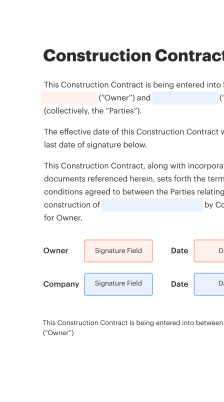
How to create and use a driver bill format online

A clear online workflow reduces friction: create a template, populate fields, add attachments, collect signatures, and store the signed record with its audit trail.

  • Create Template: Define required fields and conditional sections.
  • Populate Data: Auto-fill from policy and vehicle records.
  • Collect Signatures: Send to signers via email or secure link.
  • Archive Record: Store signed file with full audit metadata.
Collect signatures
24x
faster
Reduce costs by
$30
per document
Save up to
40h
per employee / month

Step-by-step: completing a driver bill format for insurance industry

Follow these practical steps to prepare and complete a driver bill for claims, ensuring required data and signatures are captured consistently.

  • 01
    Collect Details: Gather policy, driver, vehicle, incident, and estimates.
  • 02
    Use Template: Open a verified driver bill template with required fields.
  • 03
    Attach Evidence: Upload photos, estimates, and supporting invoices.
  • 04
    Sign and Submit: Place signatures and route to adjuster for approval.
be ready to get more

Why choose airSlate SignNow

  • Free 7-day trial. Choose the plan you need and try it risk-free.
  • Honest pricing for full-featured plans. airSlate SignNow offers subscription plans with no overages or hidden fees at renewal.
  • Enterprise-grade security. airSlate SignNow helps you comply with global security standards.
illustrations signature

Typical workflow settings for driver bill automation

Configure workflow defaults to control reminders, signing order, retention, and notifications for driver bill processing to match your insurer policies and SLA expectations.

Workflow Configuration Setting Name Header Default configuration value used by workflow
Automatic Reminder Frequency Setting Days 48 hours between reminders, two retries
Multi-Party Sequential Signing Order Sequential signer flow enforced
Template Storage and Folder Policy Central template folder per line
Notification Recipients and Escalation Rules Adjuster and manager on failure
Document Retention and Legal Holds Retain seven years by default

Supported platforms and devices for driver bill workflows

Digital driver bill formats must be accessible on common devices and browsers used by shops, adjusters, and drivers.

  • Desktop browsers: Chrome, Edge, Safari support
  • Mobile support: iOS and Android apps
  • Offline capability: Limited offline signing

Ensure your solution supports current browser versions, responsive mobile interfaces for field agents, and a reliable offline or low-connectivity workflow so shops and drivers can complete and sign bills even in limited network conditions.

Key security controls for driver bill documents

Encryption at rest: AES-256 encryption
Encryption in transit: TLS 1.2+ connections
Two-Factor Authentication: Optional MFA methods
Access logging: Comprehensive access logs
Document watermarking: Dynamic watermark options
Digital signature records: Immutable signature metadata

Industry use cases showing driver bill format value

Practical examples illustrate how a standardized driver bill format streamlines claims, reduces disputes, and preserves compliant records across stakeholders.

Repair Shop Billing

A regional collision center adopted a standardized digital driver bill format to collect photos, labor rates, and parts lists

  • Template enforcement ensured all estimates contained required policy and VIN fields
  • Adjusters received consistent, machine-readable bills that matched policy data

Resulting in faster approvals and fewer return requests from insurers due to missing documentation.

Claims and Subrogation

An insurer integrated driver bill formats into its claims intake to auto-populate driver and vehicle data from the policy system

  • Conditional fields guided shops to include subcontractor costs and towing invoices
  • The centralized format preserved full audit trails for each signature and attachment

Leading to clearer liability assignments and higher subrogation recoveries through earlier evidence collection and fewer disputes.

Best practices for secure, accurate driver bill management

Adopt consistent processes and technical controls to reduce disputes, accelerate payments, and preserve compliance when using driver bill formats across your insurance operations.

Standardize field naming conventions across templates
Use a single naming standard for fields such as VIN, policy number, and labor codes to ensure data maps correctly between repair shops, claims systems, and subrogation tools, reducing manual reconciliation.
Include required field validation and conditional logic
Make mandatory fields truly required and use conditional rules to prevent incomplete submissions; validate numeric fields, date formats, and currency to avoid downstream processing errors.
Use role-based signing order and permissions
Define signing roles such as shop manager, driver, and adjuster with controlled access to edit or only sign; enforce sequential signing where legal or business rules require signer order.
Maintain clear retention and versioning policies
Implement retention schedules that meet regulatory needs, archive signed originals, and preserve version history so audits and subrogation teams can access prior states of a driver bill.

FAQs About driver bill format for insurance industry

Answers to common questions about preparing, signing, and storing digital driver bills, and how to avoid common implementation issues.

Feature comparison for driver bill format eSignature providers

A concise comparison of common platform capabilities that affect driver bill workflows, security, and integrations.

eSignature Vendor Feature Comparison Matrix signNow (Recommended) DocuSign Adobe Sign
Mobile signing support
Bulk Send capability
API availability and SDKs REST API REST API REST API
HIPAA / BAA options BAA available BAA available BAA available
be ready to get more

Get legally-binding signatures now!

Risks and penalties from poor driver bill handling

Regulatory fines: Monetary penalties
Claim denials: Payment withheld
Subrogation losses: Reduced recovery
Data breaches: Liability exposure
Contract disputes: Legal costs
Operational delays: Longer cycle times

Pricing and plan comparison for driver bill eSignature platforms

Pricing often varies by user tier, API usage, and enterprise features; compare baseline costs and included capabilities to estimate total cost of ownership.

eSignature Pricing and Feature Matrix signNow (Recommended) DocuSign Adobe Sign HelloSign PandaDoc
Starting monthly price estimate Estimated $8 per user monthly Estimated $10 per user monthly Estimated $12 per user monthly Estimated $8 per user monthly Estimated $19 per user monthly
Free tier or trial availability Free trial available Free trial available Free trial available Free tier limited Free trial available
API access included in plan Included in business plans Paid API plans Paid API plans Included with business plan Included with enterprise
Enterprise support and SLA options Enterprise SLAs offered Enterprise SLAs offered Enterprise support available Enterprise available Enterprise SLAs available
Typical onboarding or setup fee Optional professional services fee Optional setup fee Optional onboarding fee Minimal services fee Professional services available
walmart logo
exonMobil logo
apple logo
comcast logo
facebook logo
FedEx logo
be ready to get more

Get legally-binding signatures now!