Electronic Contract Management System for Engineering

Streamline your document workflows with airSlate SignNow’s user-friendly and affordable eSigning solution. Empower your team to send and sign contracts effortlessly.

Award-winning eSignature solution

What an electronic contract management system for engineering does

An electronic contract management system for engineering centralizes creation, execution, and storage of contracts specific to engineering projects, such as change orders, subcontracts, vendor agreements, and NDAs. It combines eSignature, version control, template libraries, and workflow automation to reduce manual handoffs and transcription errors. Integrations with design repositories, project management tools, and procurement systems enable quicker approvals and better traceability. Built-in audit trails and configurable retention policies help engineering teams maintain compliance, speed procurement cycles, and preserve contractual history across long project lifecycles.

Why engineering teams adopt electronic contract systems

Engineering projects involve complex, time-sensitive contracts; an electronic contract management system reduces delays, improves accuracy, and centralizes approvals while providing an auditable record aligned with project schedules and regulatory needs.

Why engineering teams adopt electronic contract systems

Common contract challenges in engineering

  • Fragmented approvals across disciplines cause schedule drift and unclear acceptance conditions.
  • Manual data entry between design and procurement systems increases risk of inconsistent contract terms.
  • Paper signatures and scanned documents create version control issues on long-duration projects.
  • Inadequate audit trails complicate dispute resolution and regulatory review during project closeout.

Representative user roles

Project Manager

A Project Manager coordinates contract milestones, monitors approval progress, and ensures timely signatures for change orders and subcontracts. They use the system to track routing, verify scope alignment, and secure auditable approval records across design and construction phases.

Contract Administrator

A Contract Administrator maintains templates, enforces clause standardization, and manages renewals and amendments. They ensure contract metadata is accurate for reporting, apply retention policies, and support dispute resolution with complete version histories and signed copies.

Primary users and stakeholders

Engineering organizations that manage frequent vendor agreements and change orders rely on contract systems to coordinate approvals, signatures, and document versions.

  • Project managers overseeing budgets, schedules, and contractual milestones across multiple vendors.
  • Procurement teams issuing purchase orders and vendor contracts tied to project deliverables.
  • Site engineers and contractors needing timely approvals for change orders and submittals.

Adoption typically spans project teams, legal, procurement, and document control groups to ensure consistent execution and enforceable records.

Core features that support engineering use cases

An effective system combines signing, workflow controls, integrations, and compliance features tailored for engineering contracts and long project timelines.

eSignature

Legally binding electronic signatures that meet ESIGN and UETA requirements and provide signer intent, authentication options, and a tamper-evident final PDF with audit trail for dispute resolution.


Template Library

Centralized templates ensure standardized clauses, pre-filled metadata, and consistent formatting across projects to reduce drafting time and improve legal consistency across multiple contracts.

Bulk Send

Send identical documents to multiple recipients with individualized signing links and tracking to streamline vendor acknowledgements and mass subcontractor certifications.

Integrations

Connectors to project management, procurement, CRM, and cloud storage systems automate data exchange and keep contract status synchronized with operational workflows.

Audit Trail

Comprehensive event logs capture timestamped actions, IP addresses, and signer authentication events to support compliance and forensic review of contract history.

Permissions

Role-based access and granular permissions control document visibility, editing rights, and approval authority across legal, procurement, and engineering teams.

be ready to get more

Choose a better solution

Common integrations that speed engineering workflows

Integrations reduce manual tasks by synchronizing contract data with document sources, cloud storage, and CRM systems commonly used by engineering organizations.

Google Docs

Direct integration enables generating contracts from collaborative drafts, preserving formatting and revision histories, and transferring final documents into the signing workflow without manual downloads or re-uploads.

CRM connectors

CRM integrations auto-populate customer and project metadata into contracts, attach signed documents to account records, and trigger downstream billing or procurement activities based on signature events.

Dropbox sync

Cloud storage connectors archive signed contracts automatically to designated folders, maintain consistent naming conventions, and provide off-system backups accessible to project teams and auditors.

REST API

APIs allow custom automation for creating, sending, and retrieving signed documents, enabling integration with in-house project controls, ERP, and document management systems for end-to-end contract lifecycle automation.
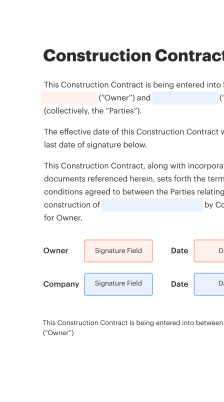
How online contract creation and use typically works

Online contract workflows streamline document creation, signature capture, and final archival while maintaining visibility for distributed teams.

  • Upload or create: Start from a template or upload PDF
  • Add fields: Place signature, date, and data fields
  • Route for approval: Assign signers and approval order
  • Store and report: Archive signed copy with audit trail
Collect signatures
24x
faster
Reduce costs by
$30
per document
Save up to
40h
per employee / month

Quick setup steps for engineering contracts

A concise onboarding sequence helps engineering teams establish templates, approval chains, and storage rules before sending live documents.

  • 01
    Create templates: Standardize clauses and metadata
  • 02
    Define approvers: Set sequential or parallel routing
  • 03
    Configure storage: Apply retention and backup rules
  • 04
    Test flow: Send pilot contracts to reviewers
be ready to get more

Why choose airSlate SignNow

  • Free 7-day trial. Choose the plan you need and try it risk-free.
  • Honest pricing for full-featured plans. airSlate SignNow offers subscription plans with no overages or hidden fees at renewal.
  • Enterprise-grade security. airSlate SignNow helps you comply with global security standards.
illustrations signature

Typical workflow configuration for engineering contracts

Standard workflow settings support approval chains, reminders, retention, and signature authentication tailored for multi-stakeholder engineering processes.

Feature Value
Approval Sequence Sequential or parallel routing
Reminder Frequency 48 hours
Signature Authentication Email, SMS OTP, or certificates
Retention Policy 7 years or project life
Change Order Handling Versioned amendments with approvals

Device and platform considerations

Verify that desktop, mobile, and browser environments used by your engineering teams are compatible with the contract system to ensure consistent signing experiences.

  • Supported browsers: Chrome, Edge, Safari
  • Mobile platforms: iOS and Android
  • Desktop OS: Windows and macOS

Confirm browser versions and mobile OS minimums, enable TLS and JavaScript, and test access from field networks to avoid signing interruptions during site work or vendor reviews.

Key security and protection controls

Encryption in transit: TLS 1.2+ required
Encryption at rest: AES-256 storage
Access controls: Role-based permissions
Multi-factor authentication: Supports MFA options
Audit logging: Immutable activity logs
Data residency: Configurable regional storage

Industry examples and real-world scenarios

Engineering teams use electronic contract management to accelerate procurement, control change orders, and maintain a single source of contractual truth across multi-year projects.

Large civil infrastructure project

A regional transit authority converted vendor agreements and change orders to electronic workflows to consolidate approvals and reduce field delays

  • Template-based change orders
  • Faster approvals and fewer work stoppages

Resulting in measurable schedule stability and clearer audit records for regulators

Industrial plant expansion

An engineering firm integrated contract workflows with its procurement system to auto-populate supplier terms and compliance checks

  • Automated supplier vetting
  • Reduced contract cycle time and fewer manual errors

Leading to reduced procurement cost and consistent contractual obligations across subcontractors

Best practices for secure and accurate contract handling

Adopting consistent practices reduces risk and improves contract throughput across engineering projects and long procurement cycles.

Standardize templates and clauses
Maintain approved template libraries with version control, centralized clause libraries, and required metadata to ensure consistency and reduce negotiation time across similar projects.
Enforce role-based approvals
Define clear approval chains aligned to financial thresholds and technical authority so signers and approvers are consistent and accountable for contract acceptance.
Preserve audit trails and metadata
Enable immutable logs that capture signer authentication, timestamps, and IP addresses to support compliance, claims handling, and post-project audits.
Define retention and backup policies
Set retention schedules tied to contract type and project lifecycle, and maintain secure backups to ensure long-term availability and regulatory compliance.

Frequently asked questions about engineering contract workflows

Common questions address legal validity, signature authentication, integrations, and handling exceptions during multi-party engineering approvals.

Feature availability comparison

A concise comparison of common technical capabilities highlights what engineering teams should evaluate when choosing an electronic contract system.

Feature or Criteria signNow (Recommended) DocuSign Adobe Acrobat Sign
ESIGN and UETA compliance ESIGN/UETA ESIGN/UETA ESIGN/UETA
Bulk Send support
API availability REST API REST API REST API
Max single file size 100 MB 25 MB 100 MB
be ready to get more

Get legally-binding signatures now!

Potential legal and operational risks

Non-compliance: Regulatory fines
Invalid signatures: Contract unenforceable
Data breaches: Confidentiality loss
Version disputes: Claims and delays
Retention failures: Litigation exposure
Unauthorized access: Operational disruption

Plan and pricing snapshot

Pricing and plan features vary by vendor; this snapshot reflects typical starting points and support levels relevant to engineering teams evaluating options.

Pricing and Plans signNow (Recommended) DocuSign Adobe Acrobat Sign HelloSign PandaDoc
Monthly starting price From $8 per user per month From $10 per user per month From $9.99 per user per month From $15 per user per month From $19 per user per month
Free trial length 7-day trial typically offered 30-day trial for some plans 7-day trial available 14-day trial available 14-day trial available
API access included Available on select plans Available with developer account Available on most plans Available on paid plans Available on paid plans
Ideal customer type SMBs and project teams Enterprises and large teams Enterprises and legal teams SMBs and small teams Sales and proposal teams
Support level Email and chat support; enterprise options Priority enterprise support options Phone and chat support options Email and chat support Email and chat support
walmart logo
exonMobil logo
apple logo
comcast logo
facebook logo
FedEx logo
be ready to get more

Get legally-binding signatures now!