Enterprise Contract Management Software for Manufacturing

Effortlessly send and eSign documents with airSlate SignNow's intuitive, cost-effective solution, designed specifically for the manufacturing industry.

Award-winning eSignature solution

What enterprise contract management software for manufacturing does

Enterprise contract management software for manufacturing centralizes creation, routing, approval, signature, storage, and lifecycle tracking of contracts used across procurement, supplier management, distribution, and service agreements. It standardizes templates, automates approval flows, enforces role-based access, and preserves searchable contract records while integrating with ERP and PLM systems to reduce manual entry, improve visibility into obligations, and support audit readiness. Implementation planning normally includes template libraries, user roles, retention policies, and integration mapping to existing operational systems to ensure consistent adoption.

Legal validity, compliance, and practical benefits

Electronic signatures and structured contract processes supported by enterprise contract management software for manufacturing generally satisfy U.S. legal standards when configured and documented correctly, helping organizations create admissible records and reduce administrative delays while maintaining enforceability.

Legal validity, compliance, and practical benefits

Common implementation and operational challenges

  • Fragmented contract storage across email and shared drives delays approvals and obscures renewal dates, increasing compliance risk and missed obligations.
  • Manual signature and routing processes create bottlenecks in supplier onboarding and extend procurement lead times while raising administrative costs.
  • Inconsistent templates and clause use lead to nonstandard terms, lengthened negotiations, and greater exposure to adverse obligations.
  • Poor integration with ERP and quality systems causes duplicate data entry and reconciliation errors across manufacturing workflows.

Representative user profiles and roles

Procurement Manager

Oversees supplier selection, negotiates terms, and ensures contracts align with production schedules and cost targets. Uses standardized templates and automated approval flows to speed onboarding, track renewals, and monitor supplier performance metrics tied to contractual obligations.

Legal Counsel

Drafts and approves clauses, manages risk exposure, and maintains compliance with ESIGN and UETA. Relies on audit logs, version control, and redline histories to support dispute resolution and regulatory audits while enforcing governance policies.

Who typically uses enterprise contract management software in manufacturing

Procurement, legal, operations, quality, and plant managers commonly use enterprise contract management software for manufacturing to manage supplier contracts and compliance obligations.

  • Procurement teams managing supplier selection, contract lifecycle, pricing, and renewal schedules.
  • Legal and compliance teams reviewing contract language, approvals, and complete audit trails.
  • Operations and supply chain teams tracking SLAs, change orders, and delivery commitments.

Cross-functional adoption reduces silos, accelerates approvals, and creates a single source of truth for contract obligations across both plant operations and corporate functions.

Core capabilities to look for in manufacturing deployments

Core capabilities in enterprise contract management software for manufacturing support eSignature, compliance, automated routing, and analytics to manage contract lifecycles effectively and transparently.

eSignature

Legally binding electronic signature capture with tamper-evident sealing, multiple authentication options, and timestamped evidence to support enforceability and regulatory compliance in U.S. jurisdictions.


Templates

Central template library with conditional fields, clause libraries, and version control to standardize agreements and reduce drafting errors across procurement and supplier contracts.

Workflow Automation

Configurable approval flows, conditional branching, escalations, and reminders to move contracts through legal, procurement, and operations with minimal manual intervention.

Integrations

APIs and prebuilt connectors synchronize contract data with ERP, CRM, and document storage systems, minimizing duplicate entry and enhancing operational visibility and auditability across manufacturing processes.

Audit Trail

Comprehensive, immutable activity logs capture edits, views, signatures, IP addresses, and timestamps for each contract, creating verifiable evidence for audits and dispute resolution.

Reporting

Dashboards and exportable reports track expiry, compliance status, approval cycle times, and financial exposure, enabling data-driven procurement and executive decision-making.

be ready to get more

Choose a better solution

Integrations and document tools that streamline contract work

Integrations with content and business systems plus robust template capabilities reduce drafting time and keep contract data synchronized across manufacturing systems.

Google Docs

Native integration enables editing contracts inside Google Docs while preserving version history and allowing direct conversion to sign-ready PDFs with synchronized metadata in the contract repository.

CRM Connectors

Prebuilt connectors for Salesforce, Microsoft Dynamics, and other CRMs map account and opportunity data into contracts to reduce duplication and enable clause selection based on customer or supplier tiers.

Dropbox

Automatic saving of signed documents to Dropbox or other cloud folders simplifies backup and sharing while maintaining original filenames, timestamps, and secure folder-level access controls for teams.

Templates

Customizable templates for NDAs, purchase agreements, and service contracts enforce approved language, auto-populate fields, and speed repetitive transactions while maintaining version control and auditability.
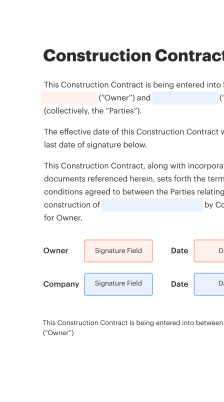
How online creation, routing, and signing work

A concise flow showing how documents are prepared, routed, and executed online within enterprise contract management software for manufacturing.

  • Upload Document: Import Word, PDF, or scanned contracts for processing.
  • Prepare Fields: Add signature, date, and data fields for recipients.
  • Route for Approval: Set sequential or parallel approvers with deadlines.
  • Execute Signature: Recipients sign via web or mobile with audit trail.
Collect signatures
24x
faster
Reduce costs by
$30
per document
Save up to
40h
per employee / month

Quick setup: getting started with enterprise contract management software

Quick setup steps to begin using enterprise contract management software for manufacturing across procurement, legal, and operations teams to ensure immediate value.

  • 01
    Create Templates: Standardize clauses and fields for common manufacturing contracts.
  • 02
    Define Roles: Assign approvers and permission levels for each team.
  • 03
    Integrate Systems: Connect ERP, CRM, and document repositories for data sync.
  • 04
    Train Users: Provide role-based training and test signing workflows.

Setting up and maintaining an auditable contract trail

Practical steps to configure audit logging and evidence collection that supports compliance and dispute resolution across manufacturing contracts.

01

Enable Logging:

Turn on immutable audit logging for all actions.
02

Define Events:

Specify which events are recorded and retained.
03

Secure Storage:

Use encrypted, tamper-evident storage for records.
04

Access Monitoring:

Limit and monitor who can view logs.
05

Export Capability:

Enable secure exports for compliance audits.
06

Retention Schedule:

Apply retention rules consistent with policy.
be ready to get more

Why choose airSlate SignNow

  • Free 7-day trial. Choose the plan you need and try it risk-free.
  • Honest pricing for full-featured plans. airSlate SignNow offers subscription plans with no overages or hidden fees at renewal.
  • Enterprise-grade security. airSlate SignNow helps you comply with global security standards.
illustrations signature

Typical workflow settings and recommended defaults

Suggested workflow configuration options to streamline approvals, reminders, and API usage when deploying enterprise contract management software for manufacturing.

Setting Name Configuration
Reminder Frequency 48 hours
Approval Timeout 7 days
Signature Method eSignature
Default Template PO Template v1
API Rate Limit 1000 req/min

Supported platforms and device considerations

Supported platforms include modern browsers, iOS and Android apps, and desktop administration tools for use across corporate and plant environments.

  • Browser Support: Chrome, Edge, Safari supported
  • Mobile OS: iOS and Android apps
  • Desktop Requirements: Windows and macOS admin tools

Ensure devices meet corporate security policies, keep OS and browsers updated, and prefer managed devices for access. For constrained networks or offline scenarios, evaluate local caching and synchronization features to preserve signing capability and evidence collection.

Security controls and compliance building blocks

Encryption: AES-256 at rest; TLS in transit
Access Controls: Role-based permissions and granular sharing
Audit Logs: Immutable event history with timestamps
MFA: Optional two-factor authentication support
SOC 2 / ISO: SOC 2 Type II and ISO attestations
Legal Standards: ESIGN and UETA compliance

Manufacturing use cases and practical examples

Real-world examples show how manufacturing teams use contract management to speed supplier onboarding and control change orders while preserving compliance.

Supplier Onboarding

A mid-sized automotive supplier consolidated disparate paper and email agreements into a centralized contract system to accelerate onboarding and reduce manual errors.

  • Standardized onboarding templates and automated approvals reduced setup complexity and ensured consistent terms.
  • The team cut supplier setup time and eliminated redundant data entry across systems.

Resulting in faster procurement cycles, fewer data entry errors, and improved compliance reporting while legal accessed complete audit trails during vendor reviews.

Change Order Control

An electronics manufacturer used automated workflows to manage engineering change orders and supplier approvals across multiple plants to provide traceability.

  • Automated approval routing and version control ensured each change used the correct contract reference.
  • This reduced miscommunication between engineering and suppliers and minimized incorrect parts entering production.

Leading to reduced production delays, clearer traceability of responsibilities, and faster reconciliation of contractual terms with manufacturing schedules, lowering rework and inventory hold costs.

Operational best practices for secure and accurate contract management

A set of recommended practices to help manufacturing teams maintain consistent, auditable, and secure contract processes.

Use standardized templates and clause libraries
Maintain a validated template library with approved clauses for procurement, NDAs, and service agreements. Regularly review and update clauses to reflect regulatory changes and supplier terms, ensuring consistent risk posture across manufacturing contracts.
Define clear approval matrices and SLAs
Document who can sign, approve, and amend contracts at each monetary threshold. Configure automated approval paths with time-bound SLAs, escalations, and reminders to prevent delays and maintain accountability across procurement and legal functions.
Integrate with ERP and PLM systems
Map contract fields to ERP and PLM records to synchronize pricing, lead times, and BOM-related obligations. Automation reduces manual reconciliation, supports compliance reporting, and ensures contract commitments align with production planning.
Enforce retention and archival policies
Set retention schedules, secure archival, and legal hold procedures aligned with corporate governance. Regularly audit stored contracts for completeness, encryption status, and access logs to meet internal and regulatory requirements.

FAQs About enterprise contract management software for manufacturing

Frequently asked questions about using enterprise contract management software for manufacturing, with concise answers to common legal, technical, and operational queries.

Comparing digital signing to paper-based processes

A concise comparison of digital signing capabilities versus traditional paper workflows across popular eSignature providers relevant to manufacturing operations.

Criteria signNow (Recommended) DocuSign Adobe Sign
Paper Reduction
Advanced Workflows
Bulk Send
Native CRM integration
be ready to get more

Get legally-binding signatures now!

Key dates, reminders, and retention policies to configure

Configure key lifecycle dates, reminders, and retention settings to support compliance and operational planning across manufacturing contracts.

Contract Creation Date:

Record initial signing date for lifecycle calculations.

Signature Deadline:

Set automatic reminders before required signature date.

Renewal Reminder:

Configure reminders 90 and 30 days before renewal.

Retention Period:

Retain contracts per policy, often seven years.

Legal Hold Duration:

Suspend deletion until hold released by legal.

Key risks and potential penalties to monitor

Contract Breaches: Damages and litigation risk
Regulatory Fines: Noncompliance penalties
Data Breach: Loss of IP and customer data
Operational Delays: Production downtime risks
Invalid Signatures: Enforceability challenges
Retention Failures: Legal hold violations

Pricing and plan-level comparisons for major providers

High-level plan and capability comparison across leading eSignature providers to illustrate entry points, mid-tier options, and enterprise capabilities for manufacturing contexts.

Plan Tiers signNow (Recommended) DocuSign Adobe Sign PandaDoc HelloSign
Entry Plan Free trial with basic functionalities Personal plan for single users with limited envelopes Individual plan with core eSignature features Free plan with limited document sending Free tier for light usage
Mid-tier Plan Business plan with team features and admin controls Standard plan with enhanced workflows and support Business plan with centralized admin and branding Business plan with templates and analytics Business plan with team management capabilities
Enterprise Plan Availability Enterprise-grade plans with SSO, dedicated support Enterprise-grade plans with advanced admin and SLA Enterprise features for governance and control Enterprise support with advanced integrations Enterprise tier with compliance options
Bulk Send Support Bulk Send for high-volume document distribution Bulk sending support for mass distributions Bulk send capability for batch signatures Bulk sending available via paid plans Limited bulk functionality, primarily via API
API Access API access included with developer documentation Comprehensive API with SDKs and support API available with robust integration tools API access for document generation and sending API available; some features behind paid tiers
HIPAA Compliance Option Offers HIPAA-compliant options with BAA HIPAA support with BAA and configurations HIPAA-ready configurations and BAA options Does not advertise formal HIPAA-ready offering Limited HIPAA features; BAA available upon request
walmart logo
exonMobil logo
apple logo
comcast logo
facebook logo
FedEx logo
be ready to get more

Get legally-binding signatures now!