Online Bill Book Format for Quality Assurance

Watch your invoicing process turn fast and smooth. With just a few clicks, you can complete all the required actions on your online bill book format for Quality Assurance and other important files from any gadget with internet access.

Award-winning eSignature solution

What an online bill book format for quality assurance entails

An online bill book format for quality assurance is a structured digital template and workflow designed to standardize bill records, verification checkpoints, and approval steps across an organization. It centralizes invoice data fields, validation rules, metadata, and a tamper-evident audit trail so teams can confirm accuracy, trace changes, and enforce quality controls. The format supports electronic signatures, role-based approvals, and integrations with accounting or CRM systems to reduce manual reconciliation and to ensure consistent application of internal controls and regulatory requirements.

Compliance and record reliability for online bill books

Using a defined online bill book format improves record integrity and supports U.S. legal frameworks such as ESIGN and UETA, while enabling appropriate safeguards for sensitive data under HIPAA or FERPA where applicable.

Compliance and record reliability for online bill books

Common challenges with manual bill books

  • Inconsistent templates cause missed fields and slow downstream reconciliation, increasing processing time and human error.
  • Lack of an immutable audit trail makes it difficult to verify who changed invoice details and when.
  • Limited access controls lead to unauthorized edits or exposure of sensitive billing and payer information.
  • Paper-based approvals and postal or fax delays create bottlenecks and lengthen payment cycles.

Representative user profiles

QA Manager

A QA Manager configures bill book templates, defines validation rules and approval sequences, and reviews exception reports. They coordinate with finance and legal teams to ensure templates meet internal policies and regulatory requirements, and they use audit logs to investigate discrepancies or recurring issues.

Accounts Payable Specialist

An Accounts Payable Specialist processes incoming invoices using the bill book format to validate fields, match supporting documents, and trigger payments. They rely on role-based access, standardized templates, and integrated workflows to minimize manual entries and speed invoice cycle times.

Teams and roles that rely on an online bill book format

Quality assurance and finance teams adopt online bill book formats to standardize verification, reduce disputes, and accelerate approvals.

  • Quality assurance managers ensuring bill structure consistency and compliance across vendors and departments.
  • Accounts payable staff reconciling invoices, matching purchase orders, and scheduling payments efficiently.
  • Compliance officers monitoring retention, access controls, and evidence trails for audits and regulatory reviews.

These stakeholders use the format to improve traceability, reduce exceptions, and provide documented proof of review and approval.

Core features for effective bill book quality assurance

A robust bill book format includes signing, conditional fields, bulk processing, reporting, and permission controls to enforce quality and scale operations.

eSignature

Legally binding electronic signatures validated through compliant audit trails, applicable identity checks, and integration with records to finalize invoices reliably.


Form Fields

Configurable fields for amounts, dates, vendor IDs, and attachments with validation rules to prevent incomplete or incorrect entries and to standardize data capture.

Conditional Logic

Rules that reveal or require fields based on vendor type, amount thresholds, or department, reducing clutter and enforcing relevant quality checks.

Bulk Send

Batch processing and Bulk Send capabilities let teams distribute standardized bill book entries or signature requests to many recipients efficiently.

Reporting

Built-in reports surface open exceptions, approval cycle times, and validation failure rates to inform process improvements and compliance reviews.

Role Permissions

Granular, role-based permissions control who can edit templates, approve invoices, view audit logs, and export records for security and segregation of duties.

be ready to get more

Choose a better solution

Integrations and tools that enhance bill book quality

Connectors and built-in tools extend the bill book format to accounting, document storage, and productivity platforms for seamless workflows.

Template Library

Centralized templates let teams maintain consistent bill formats, pre-populate common fields, and apply company-standard validation rules so every invoice follows the same structure and reduces manual entry errors.

Integration Connectors

Native connectors for CRM, ERP, and cloud storage synchronize invoice data and attachments, enabling automatic field mapping and reducing time spent moving documents between systems.

Audit Trail

Comprehensive, timestamped logs record each change, user action, and signature event to provide verifiable evidence for internal reviews and external audits.

Mobile Access

Mobile-enabled templates and signing allow approvers and QA personnel to review, annotate, and sign invoices from phones or tablets without returning to a desktop environment.
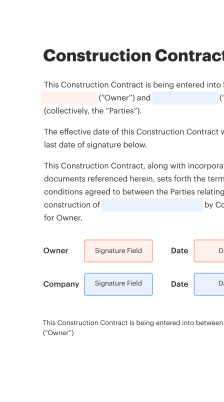
How the online bill book format works in practice

A typical flow uses templates, automatic validation, approvals, and final archival to maintain accuracy and compliance for each billed item.

  • Select Template: Choose or clone a bill book template.
  • Populate Fields: Auto-fill with system or manual entries.
  • Validate Data: Run predefined checks and flag exceptions.
  • Finalize Record: Apply signatures and store the finalized file.
Collect signatures
24x
faster
Reduce costs by
$30
per document
Save up to
40h
per employee / month

Quick setup steps for your online bill book format

Follow these concise steps to create a reusable bill book template and to begin routing invoices through a quality assurance workflow.

  • 01
    Create Template: Define standard fields and required attachments.
  • 02
    Upload Bills: Import invoices via CSV or PDF upload.
  • 03
    Add QA Fields: Insert validation rules and conditional checks.
  • 04
    Send for Approval: Route to approvers with signatures and audit logging.

Managing audit trails and transaction records

Maintain clear audit records for every bill book transaction to support QA reviews and regulatory inquiries.

01

Record Creation:

Log initial upload metadata and user ID
02

Change Logging:

Record field-level edits with timestamps
03

Signature Events:

Capture signature type and signer identity
04

Access History:

Track views and downloads
05

Export Capabilities:

Export full audit reports as PDF
06

Retention Actions:

Tag records per retention policy
be ready to get more

Why choose airSlate SignNow

  • Free 7-day trial. Choose the plan you need and try it risk-free.
  • Honest pricing for full-featured plans. airSlate SignNow offers subscription plans with no overages or hidden fees at renewal.
  • Enterprise-grade security. airSlate SignNow helps you comply with global security standards.
illustrations signature

Recommended workflow configuration settings

These suggested settings establish a repeatable workflow for bill validation, approval, and retention tailored to quality assurance needs.

Feature Value
Approval Sequence Order Default Setting Two-step approval required
Exception Routing and Escalation Policy Auto-escalate after 48 hours
Validation Check Frequency and Scope Run checks at upload and before approval
Reminder Notification Timing and Recipients Send reminders 48 hours prior
Retention and Archival Automation Setting Auto-archive finalized records after 7 days

Supported platforms and minimum requirements

The online bill book format is designed for use across modern web browsers and mobile operating systems with minimal local requirements.

  • Mobile: iOS 13+ or Android 9+
  • Tablet: Compatible with mainstream tablets
  • Desktop: Latest Chrome, Edge, Safari, Firefox

For best performance, use current browser versions, ensure stable internet connectivity, and enable TLS connections; mobile users should keep their operating systems updated and use secure device passcodes or biometric authentication.

Security features commonly included

Data Encryption: AES 256-bit encryption
Access Controls: Role-based permissions
Multi-Factor Authentication: Optional MFA for users
Document Integrity: Checksum and tamper-evidence
Session Management: Timed session expirations
Transport Security: TLS for data in transit

Industry use cases and examples

Real-world scenarios show how an online bill book format improves verification, audit readiness, and interdepartmental collaboration.

Healthcare Billing Review

A hospital billing team standardizes invoice fields and validation checks to reduce claim denials and ensure payer codes are consistent

  • automated validation flags invalid CPT and ICD entries
  • reduces resubmission time and improves cash flow

Resulting in fewer denials and faster reimbursement cycles.

Manufacturing Supplier Invoices

A manufacturer implements a template requiring PO references, part numbers, and inspection approvals to eliminate mismatched shipments

  • conditional fields enforce inspection evidence before approval
  • streamlines three-way matching and payment authorization

Leading to lower exception rates and reduced payment disputes.

Best practices for secure, accurate bill books

Adopt consistent standards and controls to maintain quality and legal defensibility across digital bill records.

Enforce Standardized Templates and Validation Rules
Create centrally managed templates with required fields and automated validation to reduce missing or malformed data. Keep templates versioned and restrict edit rights to administrators to ensure consistency across departments and over time.
Use Role-Based Access and Authentication
Limit template editing and approval actions to authorized roles, enable multi-factor authentication for privileged users, and maintain a least-privilege model to reduce risk of unauthorized changes or data exposure.
Maintain Complete Audit Trails and Export Options
Capture full, immutable logs of edits, signatures, and approvals. Ensure exportable reports are available for audits and regulatory reviews, and retain records according to your documented retention schedule.
Test Integrations and Automations Before Production
Validate field mappings, webhook delivery, and API behavior in a test environment to prevent data loss or mismatched records when connecting bill books to accounting systems or cloud storage.

FAQs and troubleshooting for bill book formats

Common questions and resolution steps for implementing and maintaining an online bill book format.

Digital signing vs. paper-based signing for bill books

A concise feature comparison highlights where digital bill book formats provide distinct advantages over paper processes in compliance, speed, and traceability.

Document Signing Feature Comparison Criteria Heading signNow (Recommended) DocuSign Adobe Sign
ESIGN and UETA Legal Compliance
Comprehensive Audit Trail
Mobile Native Signing Support
Bulk Sending for Multiple Recipients Limited
be ready to get more

Get legally-binding signatures now!

Document retention and archival timelines

Define clear retention periods that meet legal, fiscal, and operational requirements for bill book records.

Minimum Retention for Financial Records:

Seven years retention for fiscal audits

Retention for Contracts and Agreements:

Keep records for duration plus statute of limitations

Temporary Hold for Disputed Invoices:

Place on hold until dispute resolution

Secure Deletion Policy:

Schedule secure purge after retention expires

Export and Backup Frequency:

Weekly backups with immutable storage options

Risks and potential compliance penalties

Regulatory Fines: Monetary penalties
Audit Failures: Negative findings
Contract Disputes: Liability exposure
Data Breach: Notification obligations
Operational Delays: Payment hold-ups
Reputational Harm: Trust erosion

Feature and pricing snapshot across providers

The following table compares starter pricing and plan features across common electronic signature providers relevant to bill book implementations.

Plan Pricing Comparison Header signNow (Recommended) DocuSign Adobe Sign Dropbox Sign PandaDoc
Starter Plan Name and Type Business Standard Individual Essentials Essentials
Monthly Starting Price Per User From $8/user/month From $10/user/month From $14.99/user/month From $12/user/month From $19/user/month
Included User Limits and Seats Single user with add-ons Per-user plans Per-user plans Per-user plans Per-user plans
Advanced QA and Workflow Features Templates, Bulk Send, API Templates, Workflows Templates, Adobe integrations Basic templates Templates, CRM focus
Support and SLA Options Email + Priority tiers Email + Phone tiers Enterprise support Email support Email + chat
walmart logo
exonMobil logo
apple logo
comcast logo
facebook logo
FedEx logo
be ready to get more

Get legally-binding signatures now!